


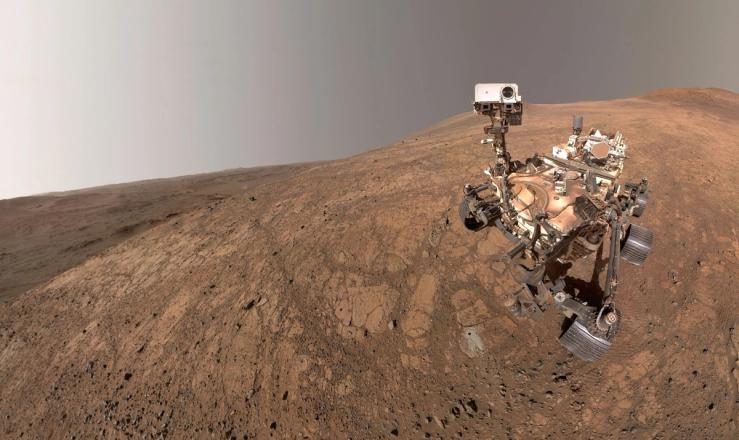
NASA allowed AI to control its Perseverance rover on Mars for two days.
Light takes up to 24 minutes to reach Mars from Earth, and piloting a one-ton remote-control car with a 48-minute signal delay is tricky. Its terrestrial drivers examine images from its cameras, work out the terrain, and program in waypoints for it to follow.
The demonstration involved letting AI set the waypoints, identifying hazards such as sand or boulders. It’s a first step towards more autonomous planetary exploration: There are already plans for AI-controlled drone swarms on Mars. Such robot explorers would be able to move faster than Perseverance, which covered about a quarter-mile in its AI-controlled 48 hours, slightly faster than a determined garden snail.