



Yusuf Tuggar’s view
For generations, Africa has been interpreted through a set of inherited templates that were never designed to explain its realities. These templates offer familiar stories about conflict and governance, not because they are accurate, but because they are comfortable.
They imagine African nations as predictable characters in an old script: driven by ancient divisions, reacting to global events rather than shaping them, and locked in cycles that outsiders believe they understand. The danger is not simply misinterpretation. It is that the imagined version becomes more influential than the real one.
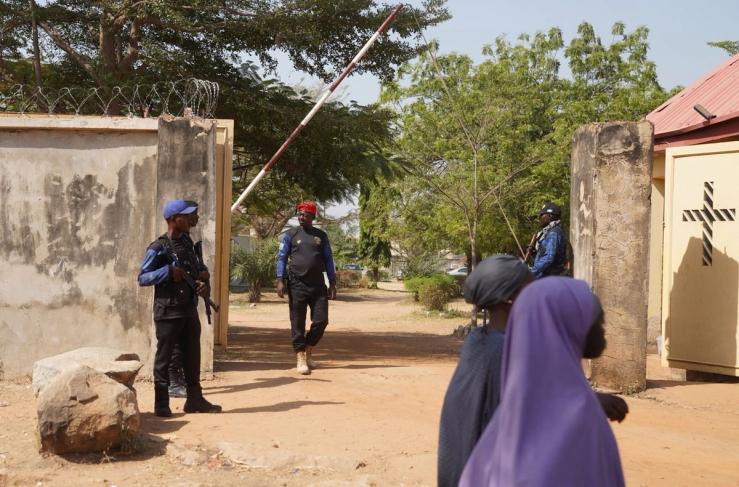
Nowhere is this clearer than in the way Nigeria’s security challenges are framed on the international stage. The persistent claim is that the violence the country faces is primarily religious. This interpretation spreads easily because it fits a long-standing narrative: that African conflict must always be traced to faith or culture.
But this explanation collapses under scrutiny. The security landscape cannot be understood without looking first to the wider Sahel subregion, where the collapse of Libya in 2011 set off a chain reaction that destabilized several states at once. Arms and fighters moved across borders, extremist groups expanded their reach, and communities from Mali to Chad found themselves confronting threats they had not faced before. Nigeria is one of those countries, responding not to an isolated crisis, but to a regional upheaval that reshaped the entire belt of West and Central Africa.
Within Nigeria, this regional shock interacts with local pressures in different ways. In the northeast, insurgent groups exploit institutional weaknesses and economic vulnerability. In the northwest, criminal banditry has taken root in areas where state presence is thin. In central states, climate change has sharpened competition over land and water, intensifying clashes between farmers and herders. These dynamics overlap, but they are not driven by faith. Both Christians and Muslims have been hit by these complex insecurities. Framing this violence as a religious conflict may satisfy an old storyline about Africa, but it obscures the forces actually shaping events and leads to responses that fail to address the roots of the crisis.
A similar gap exists in how Nigeria’s diplomacy is interpreted. The imagined African nation is expected to navigate the world reactively, bending toward whichever global power appears strongest in the moment. But the international environment today does not reward rigid alignment. It rewards agility.
Countries from Brazil to India to Turkey are restructuring their partnerships to reflect a multipolar world in which influence is dispersed and interests shift across issues. Nigeria is doing the same. Its support for Ecowas mediation during moments of regional instability in the West African bloc reflects a commitment to African-led diplomacy. Its cooperation with the United States on governance, technology, and intelligence continues even as both sides reassess parts of their security relationship. Its engagements with China, India, and Gulf states reflect economic opportunity and strategic diversification. These choices do not reveal confusion. They reflect a sober understanding of how power now moves, and the need for African states to be a part of that movement.
There are also practical constraints that very rarely appear in international commentary but shape Nigeria’s options in profound ways. For several years, restrictions under the US Leahy Law delayed equipment and assistance that Nigeria had already paid for. This occurred precisely as extremist networks spread across the Sahel and limited the tools available to confront these groups. Yet even with these constraints, Nigeria continued to contribute to regional stabilization efforts, from Guinea-Bissau to The Gambia to South Sudan.
These examples all point to the same issue: the frameworks used to interpret Africa have not kept pace with reality. Too often, analysis begins with the imagined African nation and then searches for facts to support it. When the frame is wrong, the conclusions will be too.
Nigeria, like many countries today, is navigating pressures that are regional, global, and generational all at once. It is reassessing long-standing partnerships, building new ones, strengthening its institutions, and working to stabilize a region that has experienced profound upheaval. None of this fits the caricatures that have long shaped external commentary about African states.
Africa is moving beyond the version imagined for it by others. It is young, increasingly interconnected, and central to global stability in ways that are only beginning to be acknowledged. Understanding this reality requires letting go of assumptions that were never accurate but have endured out of habit.
If the world continues to engage with an imagined Africa, it will continue to imagine solutions. The real work begins when nations are seen clearly, and when partnership is grounded not in old narratives, but in the demands and opportunities of the moment we actually share.
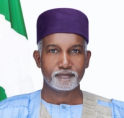
Yusuf Tuggar is Nigeria’s minister of foreign affairs.

Notable
- US military strikes may escalate the security crisis in the Sahel, argued a Nigerian political science professor for LSE Blogs.