



The News
The Nigerian government is mounting an aggressive lobbying campaign in Washington as it faces an onslaught of criticism over claims of Christian genocide from the Trump administration.
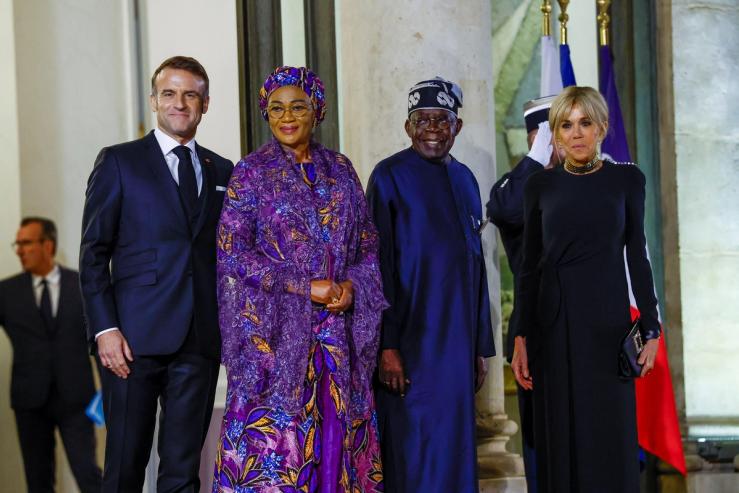
First Lady Remi Tinubu, an ordained Christian pastor, attended the annual National Prayer Breakfast gathering hosted by US President Donald Trump last week as part of the effort. She also spoke on several conservative US media outlets and met some members of Congress. Nigerian officials and their allies have emphasized Tinubu’s pastoral role as evidence that the government cannot credibly be accused of enabling religious persecution.
Last year, Trump designated Nigeria a Country of Particular Concern, accusing Nigerian officials of failing to protect Christian communities amid escalating violence in the country’s restive northern regions. In the following months, the US launched missile strikes targeting Islamic State-linked militants in northwest Nigeria and deployed a team of troops to the West African nation.
With the increased focus on the alleged Christian persecution, the Nigerian government signed a $9 million contract with the Washington-based lobbying firm DCI Group with the goal of convincing US lawmakers and officials that Nigeria is serious about protecting Christians and countering extremist violence.
A source close to the Nigerian government said the first lady “came to Washington to attend the National Prayer Breakfast” but used the visit to meet with officials and participate in “faith-community engagements.”
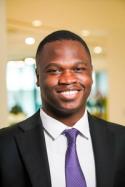
Caleb Muftwang — the governor of Nigeria’s Plateau State, which has seen numerous attacks on farming communities — was also in Washington last week, holding his own meetings with members of Congress and Trump administration officials.
The parallel efforts, however, appear to have done little to soften skepticism among key lawmakers. At a House Foreign Affairs Committee hearing on religious freedom last week, Republican Rep. Chris Smith, who chairs the panel’s Africa subcommittee, delivered a blunt rebuke of both the Nigerian government and its Washington lobbying push. “Christians in the Middle Belt are still being massacred,” he said. “The government of Nigeria has taken small steps, but a culture of denial by Nigerian officials persists.”
Trump’s allies on Capitol Hill are also looking to pressure Nigeria through legislation. On Feb. 10, Smith and fellow Republican Rep. Riley Moore, introduced the Nigeria Religious Freedom and Accountability Act. The bill would require the State Department to compile and submit a report to Congress detailing US and Nigerian efforts to address religious persecution and mass atrocities, and to identify Nigerian organizations and officials who could face sanctions.

Know More
The pressure has been building on Nigeria for months, as US officials intensify claims that Christians are being systematically targeted by militant groups and that Abuja has failed to respond with sufficient urgency.
But since the beginning of the year, hundreds of Nigerians have been killed, injured, or kidnapped in attacks across the country with responsibility attributed to a mix of militant and criminal actors, including Boko Haram, the Islamic State, and a group known as Lakurawa.
While the Nigerian government has framed the violence as a complex security crisis affecting Christians and Muslims alike, US critics argue that Christian communities are disproportionately targeted.
James Barnett, a Lagos-based research fellow at the conservative Hudson Institute, told Semafor that “while maintaining nuance and avoiding panic is important, there’s no denying that the overall trendlines don’t look good.” Barnett also noted that the expansion of jihadist and bandit violence has been a concern for Nigerian and US policymakers for a number of years, although it has been given added importance with Trump’s focus on Nigeria and his religious framing of the problem.

Step Back
Smith’s remarks reflect a broader frustration among some lawmakers and critics of the Nigerian government, who argue that Abuja is investing more in reputation management abroad than in structural reforms at home.
One longtime Washington-based Africa lobbyist, who asked not to be named, told Semafor that they had been contacted by teams from two other Nigerian officials independently making enquiries for lobbying services separate to the government.
Barnett said the Nigerian state had begun adapting its security efforts before Trump turned his focus to the country. “But there is a risk that the Nigerian government may see this solely as a ‘Trump problem’ or a ‘PR problem,’ especially given how unpredictable Trump can be, which would lead Abuja to focus on cosmetic changes or lobbying efforts at the expense of actual security sector reform and governance.”
As the violence continues and ties fray, Nigeria’s multimillion-dollar charm offensive risks reinforcing, rather than dispelling, concerns that the government is focused on optics while the bloodshed continues at home.

Notable
- Last year a Nigerian official argued in Al Jazeera that American media personalities like Bill Maher were misrepresenting the country’s security challenges as a Christian genocide.