




The Scoop
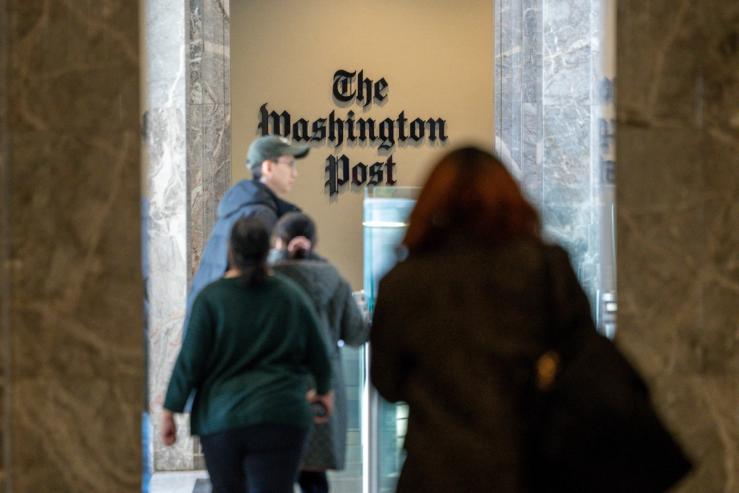
Late last year, before The Washington Post slashed its staff and ousted its CEO, the paper was looking to rehabilitate its public image.
It had been a tough 12 months for one of America’s most historic news brands: Owner Jeff Bezos’ decision not to endorse Vice President Kamala Harris had proved to be a savvy bet on the winner, but made subscribers cancel en masse. Bezos’ move to scale back coverage in the opinion section and install a more centrist, Trump-curious crop of editors and writers frustrated the paper’s remaining readers. The Post began to bleed talent while its competitors siphoned off its subscribers, at times directly appealing to Post readers.
So the paper had prepared a new brand campaign, with a new tagline meant to convey its connection to America: “We the People.”
But as the Post was about to debut the campaign, it ran into a major snag. As part of its rebranding as MS NOW, MSNBC announced that it was launching a $20 million brand campaign that would play across television, podcasts, and in physical spaces like airports. The tagline: “We the People.”
MS NOW’s campaign and its massive budget forced the Post to put its campaign on ice.
It was the second time the Post had tried to juice its brand in about a year.
In 2024, the Post paper announced it was rolling out a new marketing campaign with the tagline “Switch On.” While neither the “We The People” campaign nor the “Switch On” campaign were intended to supplant the paper’s slogan, “Democracy Dies in Darkness,” the paper had surveyed readers for the “Switch On” marketing campaign, and the “Dies in Darkness” motto hadn’t been testing as well.

Max’s view
The paper’s scrapped marketing campaign was yet another setback for Will Lewis, whose tenure as Washington Post CEO ended on Saturday when the paper abruptly announced his departure.
As Semafor reported, Lewis arrived at the Post surrounded by cautious optimism. The paper’s previous CEO, Fred Ryan, had been a good steward during the first Trump presidency, but the newsroom’s confidence had begun to waver as the paper’s subscriptions and web traffic sagged once Trump left office. Lewis promised to help modernize the paper’s business.
But Bezos and Lewis burdened the paper with their own problems; Bezos’ decision to pivot the paper ideologically, seemingly without warning, alienated a substantial portion of its audience. Lewis’ shiftiness when it came to previous scandals from his time in the UK further undermined trust among Post staff. Lewis’ plans were vague — most notably a confusing “third newsroom” idea that never truly materialized.
While a new tagline wouldn’t have substantially changed many minds, the campaign itself highlighted the Post leadership’s inability to the think creatively. The paper’s new tagline was so unoriginal that another politics-focused news media company needing to rebrand had the same idea, but executed faster with more money.
Now, the Post has wasted two precious years. With the appointment of a new CEO and a vastly scaled back newsroom, the paper is hoping to turn the corner.
Interim CEO Jeff D’Onofrio sent a short memo Saturday that suggested the paper will be making a “renewed commitment to building a sustainable business.” Journalists who spent their careers defending the paper may not be heartened to learn that “consumer data will drive our decisions, sharpening our edge in delivering what is most valuable to our audiences.”