



Mohammed’s view
The third edition of Web Summit Qatar this week was about scale. Some 1,500 startups took part alongside more than 30,000 people, including nearly 1,000 investors — a reflection of Doha’s aim to build a tech and venture capital ecosystem. More than a third of founders were women, a signal of inclusion in an industry where capital still overwhelmingly flows to men.
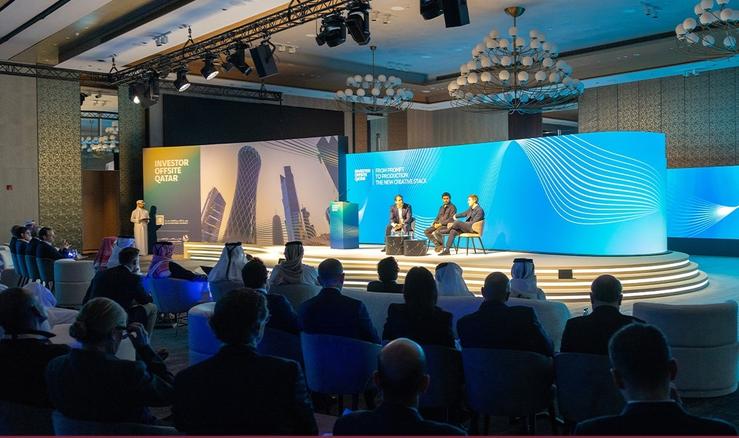
But the hottest ticket wasn’t for the masses. It was the Government Communications Office and Qatar Investment Authority’s private convening of more than 40 investors, including sovereign wealth funds, family offices, and asset managers from Asia, Europe, the US, and the Gulf — representing some $3 trillion in assets — for an invite-only gathering with around 45 of the world’s most promising AI companies.
QIA CEO Mohammed Al-Sowaidi opened the event stating that the Gulf is now a hub for AI, and Qatar’s prime minister also dropped by. The off-the-record meeting, which I briefly attended, got technical on code, cooling, and tokens.
I can confirm that Elon Musk wasn’t there, but his presence was felt. During panel discussions, many of the guests discussed their exposure to SpaceX and the xAI merger, and were uniformly looking ahead to the company’s IPO. Musk’s plan to launch data centers into space — and build a “Kardashev II-level civilization” — sparked serious debate. Some saw merit in placing compute in colder, energy-abundant orbits, potentially ending the current energy race to power AI infrastructure on Earth.
One message I heard repeatedly was how Gulf sovereign wealth funds are viewed differently by Silicon Valley than in previous years: The region is no longer seen as a passive pool of capital. Its funds have built in-house expertise, make quick decisions, and offer patient capital — giving them access to allocations in coveted startups that, until recently, would have come through external managers.

Notable
- The record-setting merger of SpaceX and xAI shows that Elon Inc. has always been about Mars, writes Semafor’s Liz Hoffman.