


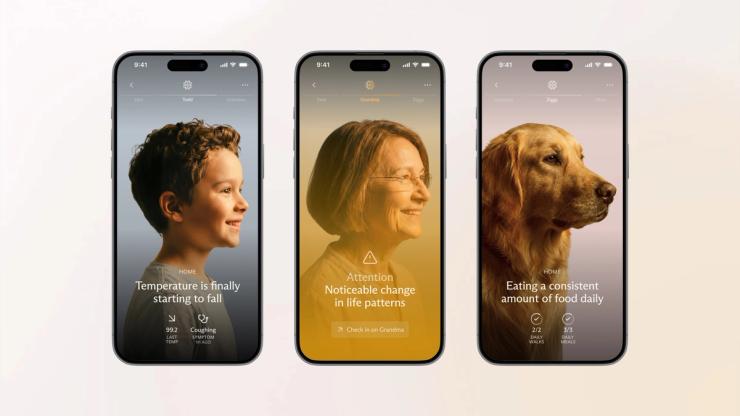
The team behind Fitbit is launching a new consumer health company, betting on AI to help people wade through the morass of family health care.
Called Luffu, the app tracks a person’s diet, fitness, daily activity, and lab results, and paints a comprehensive picture of a person’s health over time. It shares information with family members and flags changes to caretakers, such as an adult child of an aging parent.
Beyond the promise of fixing one of the world’s most vexing stresses, Luffu points to the burgeoning market for AI startups focused on serving average consumers rather than big businesses. Much of the AI hype comes from the B2B market, while average consumers haven’t yet committed to spending their own dough on the products they use. If Luffu hooks the market, it might be the first to do so. Free chatbots aside, it’s too early to point to any successful direct-to-consumer AI company, Luffu cofounder James Park told Semafor. Luffu is still working on pricing, but Park compared the app to emergency response systems like Life Alert, which cost between $30 and $50 a month.
Using bots to better track health information sounds great in theory, but in reality, the inputs still rely on inherently lazy, distracted, or busy human beings. For example, Luffu can alert a user that they haven’t taken their medication, but only if the user is diligently recording when they take their medicine. Luffu says it’s working on integrations with medical providers and devices to streamline some of the data entry, and is easing the manual workload by making inputs easier through voice prompts and photo submissions. But before its bots can revolutionize family health care, Luffu must first solve the human problem.