



The Signal Insight
The Gates Foundation’s influence has never been greater, its CEO says, but for the wrong reason. Steep aid budget cuts by Washington and other governments with which it typically partners have left it shouldering more of the burden in the fight against challenges from malaria to maternal mortality.
Mark Suzman, who joined the foundation in 2007 and has led it since 2020, used his annual letter this week to issue a call for “a new era of cooperation” in the fight against preventable deaths and diseases. But it came with the sobering reminder that last year, for the first time this century, child mortality rates rose rather than fell. Even though the foundation raised its annual budget to a record $9 billion this year, Suzman says it faces stronger political and economic headwinds than ever.
There have been reputational storms, too. Suzman, a onetime journalist, has led the foundation through the divorce of its co-founders, Bill and Melinda French Gates; hostility from some critics about the vaccines it funded during the COVID-19 pandemic; and questions — which made headlines again this week — about Bill Gates’ ties to Jeffrey Epstein. Gates has denied any wrongdoing, while saying he regrets “every minute” he spent with the late sex offender.
Suzman’s task is to get a quarter century of progress on the foundation’s core missions back on track, before a self-imposed deadline. Last year, the foundation announced that it would close in 2045, giving Suzman and his team 20 years to spend a final $200 billion of Bill Gates’ Microsoft fortune and achieve its goals.
He has responded by narrowing the foundation’s focus to three areas: ensuring that no mother or child dies of a preventable disease; eradicating polio and malaria while turning tuberculosis and HIV into manageable conditions; and supporting educational and agricultural reforms to free hundreds of millions of people from poverty.
Here’s how he is shaping the foundation’s plans for its last two decades.
This interview has been edited for length and clarity.
Andrew Edgecliffe-Johnson: What’s the main message of your letter?
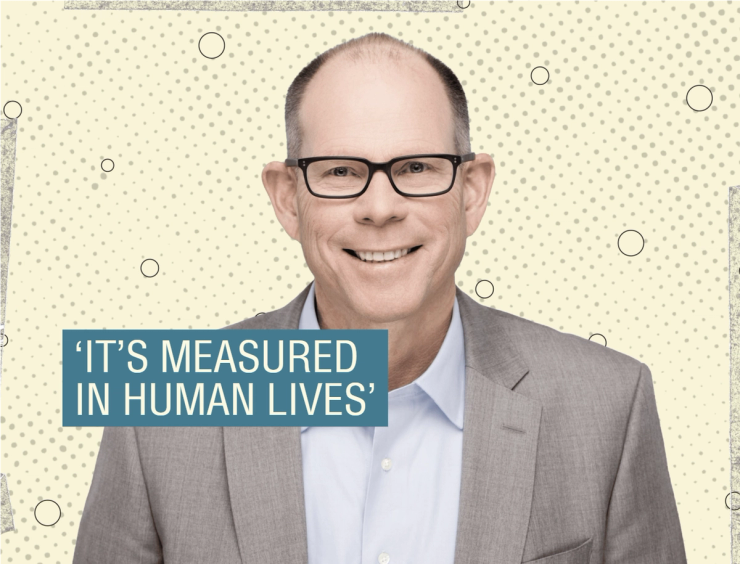
Mark Suzman: Last year was the most disruptive year in terms of global health and development this century, by far. And that disruption is not just a word. It’s measured in human lives. Last year was almost certainly the first year of the 21st century that preventable child mortality went up rather than down.
What do you attribute that to?
I think the primary reason is definitely the aid cuts. The level of disruption — particularly coming from the United States with the very abrupt closure of USAID, but combined with broader cuts [by] traditional European donors and the UK — does have a human impact.
Do you think that you and other members of the philanthropic community have somehow lost the argument? When push came to shove, governments found it easy to cut this funding.
Yes. We are hopefully not lost, but I’m very conscious that we are currently losing the argument, and that is very damaging. So part of the reason for this letter is to try and reframe [the argument], because it’s very easy in rich countries to target foreign aid as a big lump [and ask], “Why should we be paying money to foreign aid, at a time when we have strong domestic needs?” If we reframe it, and talk very specifically about [how] your marginal dollar or pound or euro is going to help provide a vaccination that will help save a child’s life, most people [support such spending]. So trying to articulate that case in its very human, deliverable context is a key part of reframing that and seeing if we can rebuild some support for this kind of targeted, high-impact aid.
Given the decline of government support for aid, are you seeing the private sector step up?
Neither more nor less, really, at this stage. The private sector is ultimately motivated by profit. It has to deliver a return to its shareholders. That’s appropriate. The private sector needs to be incentivized in order to enter some of these markets… Even if individual CEOs may be motivated to try and do things, in the end, they need some ability to create or see a market. And we can provide tools, [such as] direct investment [or] volume guarantees.
What guides you in deciding what not to do?
It’s particularly challenging in philanthropy because you don’t have the same bottom line indicating what you do as in the private sector. Because we are very mission-driven, and our staff and partners are very committed to their issue, frequently people will find a way to make a case why, even if the last thing hasn’t worked in [a certain mission-driven field], it’s very important that we keep funding it. Inertia is a very powerful force in any institution, but particularly in mission-driven ones, so it puts a burden on you to triage and focus and prioritize. Because, ultimately, [with] anything you do fund, you’re making a trade-off against something you’re not funding.
Have the aid cuts affected morale?
It’s been very sobering for people who’ve devoted their lives to these issues to suddenly see this withdrawal of global support. But at the same time, [the Gates Foundation’s spend-down announcement] has ended up being a very powerful call to action, both for our staff and for many of our partners. Paradoxically, we’re making a clear commitment that in a world of somewhat fickle and unreliable funders and partners, the Gates Foundation is firmly committed to be a strong, reliable, predictable partner at scale for the foreseeable future. Yes, it’s a foreseeable future with a deadline, but 20 years is still a decent amount of time to provide for some thoughtful planning.
Is the knowledge that there’s an end date to people’s careers with the foundation already posing any challenges?
Interestingly, not on the recruitment side. It does trigger a degree of uncertainty, which we’re managing with staff. But overall, I think staff are more motivated, but looking for as much clarity as we can provide from the leadership.
You’ve been the foundation’s CEO through a period of intense scrutiny of its founders. What impact have those headlines actually had on the foundation’s work?
Of course, any intense media scrutiny risks being distracting, especially when it is not directly related to the work of the foundation. However, as our employee survey reminds us every year, people are here to serve the mission, and over the last five years our founders and staff have never wavered in their commitment to helping build a world where every person has the opportunity to live a healthy and productive life. At a time when global health and development have faced the greatest setbacks in a generation, it has reinforced how important it is to stay disciplined, grounded, and focused on saving and improving millions of lives.
What leadership challenges has that public attention posed, and what have you done to keep people inside the foundation focused on the work rather than the headlines?
Leading through challenging moments requires steadiness, clear priorities, and transparency. My job is to keep our mission, vision, and commitment to impact front and center and to make sure our staff feel supported and able to stay focused on the work. Externally that requires clarity and consistency in outreach and engagement with critical partners, and internally [it has] meant spending more time engaging directly with employees through town halls and smaller conversations and being open about questions and concerns. It has also meant relying on strong governance: The creation of our board of trustees in the wake of Bill and Melinda’s divorce has been a real strength, bringing added perspective and accountability from strong, independent voices. And our rigorous annual strategy review process helps teams stay clear about what matters most and ensure we are focusing our time and resources on the innovations and interventions that can have the greatest impact. Together, that focus allows us to keep pushing forward on a long-term agenda that’s bigger than any single news cycle.

Notable
- The Gates Foundation and OpenAI have launched a $50 million program to bring AI capabilities to 1,000 primary health care clinics across Africa. The Horizon 1000 initiative aims to address an estimated 5.6 million-person shortfall in the health workforce in Sub-Saharan Africa. AI needs to improve people’s lives to turn from a scientific marvel into a “societal marvel,” said OpenAI CEO Sam Altman.
- The Chan-Zuckerberg Initiative, founded by Meta’s Mark Zuckerberg and his wife Priscilla Chan, is refocusing on AI-powered biomedical research. The new drive to “cure or prevent all disease,” coupled with 70 job cuts, marks a shift from the philanthropic group’s initial emphasis on education, criminal justice, and community development.