




Reed’s view
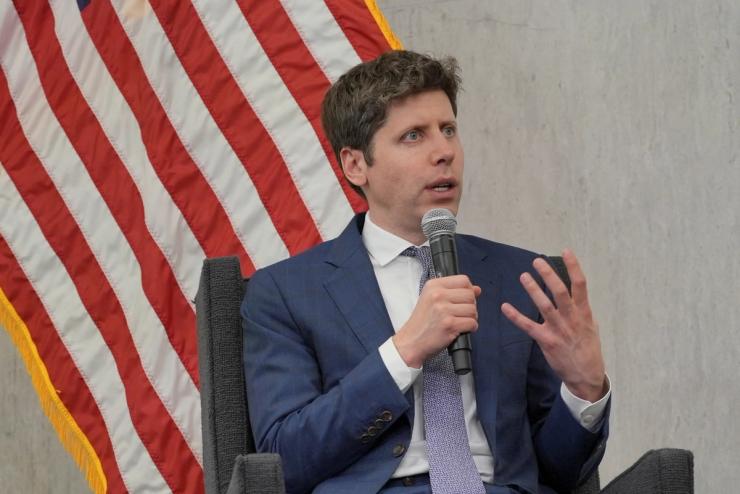
OpenAI executives, including Sam Altman and Chief Financial Officer Sarah Friar, have been floating a new revenue-generation idea lately: Give away OpenAI’s software for free to biotech companies in exchange for royalties on any drugs they might develop. It’s not going to work.
Biotech companies are doing a lot of innovative things with AI, including drug discovery. You can essentially ask AI to come up with candidates for potential drugs that likely won’t be toxic to humans, and AI can generate lots of them.
In phase 1 drug trials, which test drugs for safety, these AI-created drugs are generally more successful than traditional, human-generated candidates. But they aren’t actually any more likely to reach FDA approval than the old kind of drugs. In other words, drug discovery is not actually the bottleneck in medicine. Trials are. There’s a term for this: Eroom’s Law (Moore’s Law spelled backwards). The cost of drug trials keeps going up, while success rates are going down.
The problem is the AI models that help come up with drug candidates are still very inaccurate, largely because the data used to train these models is sparse and incomplete. We still don’t know why cells do what they do, or why proteins move the way they move.
AI could also help run clinical drug trials, bringing down costs. But that would give us marginal gains, not exponential ones.
So, OpenAI offering a drug company free AI in exchange for a percentage of drug revenues is a bit like offering free Microsoft Word to Stephen King in exchange for a percentage of royalties on his next book. Not going to happen.
In this article:

Room for Disagreement
Altman views the proposal as a way to supply funding to capital-intensive projects. “This is not something we’re doing now, but I think the frontier of scientific discovery with AI will require so much capital that maybe we think of ourselves as an investor in some of those cases,” he said.

Notable
- Big pharma companies including Pfizer, Sanofi, and AstraZeneca have inked major deals with Chinese biotech firms using AI for drug discovery, indicating the vast appetite for the use of the technology in the field, Rest of World reported.