


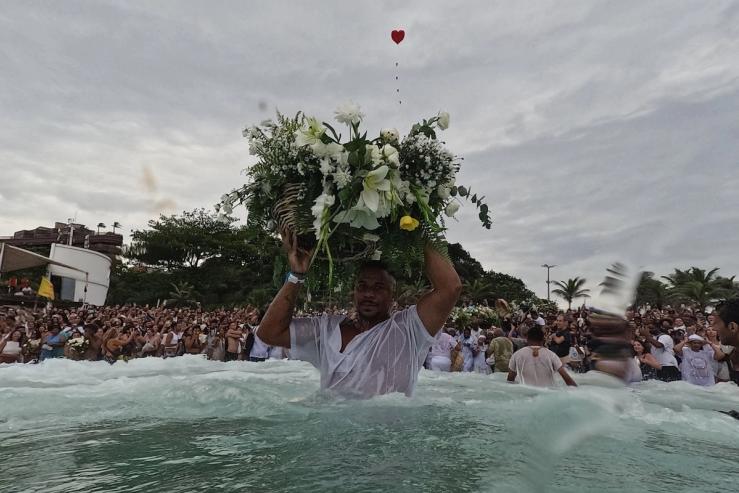
Brazil’s largest annual Afro-Caribbean festival kicked off on Monday. Thousands of observers lined the beaches of the city of Salvador to make offerings to Iemanjá, the Yoruba goddess of the sea. Fishermen transported large baskets of flowers by boat into open waters, while others threw flowers, costume jewelry, and vials of perfume into the sea.
The festival has its roots in the transatlantic slave trade: Brazil became a central destination for millions of people trafficked from the continent, and forms of worship were passed onto local populations. The festival is now a central tenet of Candomblé, an Afro-Brazilian religion that was once shunned in favor of Catholicism, but that is now gaining recognition. “By occupying public spaces with faith… supporters reaffirm the legitimacy of Afro-Brazilian religions and their fundamental role in shaping Brazil’s historical, spiritual and cultural landscape,” Adeyinka Olaiya wrote for Nigeria’s The Ancestral News.