


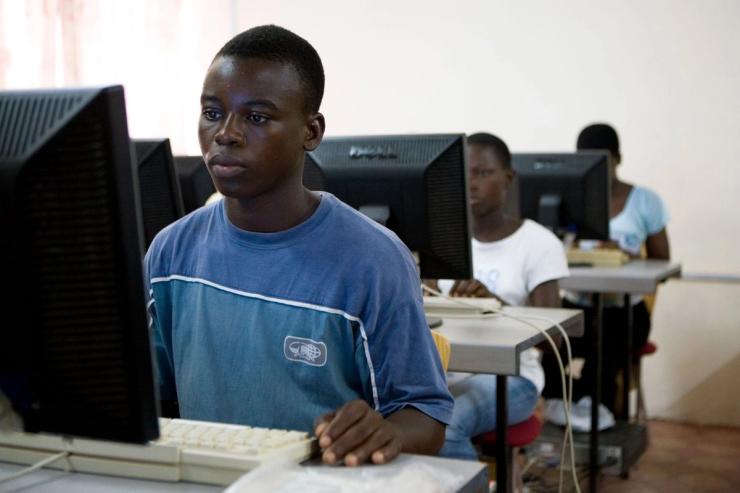
Ghana is partnering with Google to develop AI-powered education tools in local languages, starting with Twi, Ewe, Dagbani, and Hausa. The program will later be scaled up to cover all 12 approved Ghanaian languages.
Of the 7,000 languages used worldwide today, education instruction is limited to 351, leaving many students with huge learning gaps. A shift to bilingual and multilingual education in Africa — which is home to around 2,000 languages — rather than teaching exclusively in the colonial language, usually English or French, has already underscored the benefits of children learning in their mother tongue, the UN said.
Ghana’s education minister emphasized the importance of including Hausa — spoken by around 22 million people across West Africa — in the AI initiative. “Language accessibility determines who can benefit from digital transformation,” TechAfrica News founder Akim Benamara wrote in a column last year.