




what’s at stake
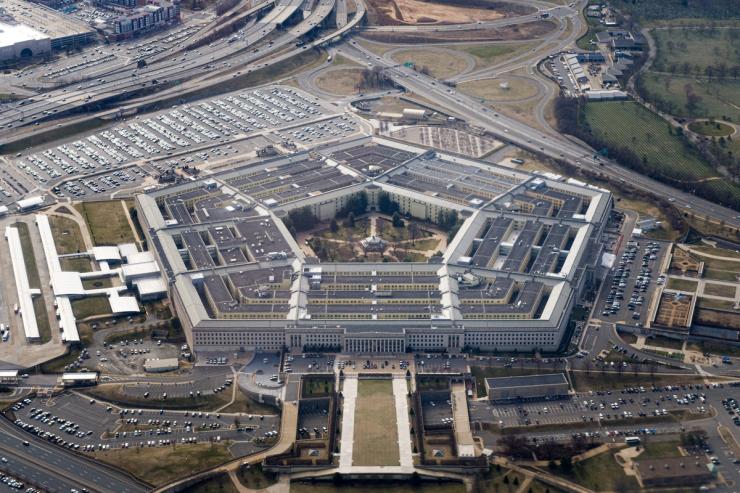
The new national defense strategy rolled out by President Donald Trump’s administration drew criticism for downplaying the threat posed by China compared to past iterations.
Deterring China’s aggression in the Asia Pacific is still among its listed priorities, but the document focuses first on defending the US and the Western Hemisphere, including maintaining “military and commercial access” to Greenland in order to defang threats. The document emphasizes the need of the US military to lean on “strength, not confrontation” to keep China in check and stresses that the goal is “not to dominate China; nor is it to strangle or humiliate them.”
While there is generally agreement in Washington that the US needs to devote resources to countering threats from China, lawmakers and experts diverge on whether the Trump strategy document presents an adequate framework for doing that.
In this article:
who’s making the case
Rep. John Moolenaar, R-Mich., who chairs the House select committee on China, commended Trump’s “peace through strength” approach to Beijing:
“China is the biggest national security threat facing our country. It is actively harming Americans: poisoning communities with fentanyl, stealing inventions, hacking telecommunications, and trespassing on military bases. China’s economic warfare threatens the world through rare earth blackmail, predatory trade practices, and supply chain dependencies. The CCP’s ideology is the very opposite of the freedoms our country was founded on 250 years ago, and China has taken advantage of our free society.
“No other hostile power presents such a comprehensive threat, which is why China is prioritized above all other foreign adversaries in President Trump’s National Defense Strategy. It calls for peace through strength and for our allies to join us in drawing the line against China and its ambitions against Taiwan and the First Island Chain. Wisely, the strategy also recognizes our strength is built at home. It emphasizes rebuilding our defense industrial base ‘not only for ourselves but also for our allies and partners.’ This is a Manhattan Project-sized mission that must be urgently addressed to beat China, and it is a bipartisan priority of Select Committee Republicans, Democrats, and the White House.”
Rep. Ro Khanna, D-Calif., newly installed as the top Democrat on the House select committee on China, criticized the strategy for not explicitly mentioning Taiwan:
“[The China threat] is a top priority, but unfortunately, President Trump’s National Defense Strategy downplays this threat and fails to recognize China’s increasingly aggressive behavior in the region. His policies are alienating America’s closest allies, who we need on our side to address the growing challenges posed by the [Chinese Communist Party].
“The most glaring omission from the NDS was any mention of Taiwan. We must take every opportunity to reiterate our commitment to peace and security in the Taiwan Strait and make clear that threats against any of our allies in the region are unacceptable. Rather than the ‘decent peace’ described in the NDS, we should aspire to a just and lasting peace in the Indo-Pacific.”
Lisa Curtis, director of the Center for a New American Security’s Indo-Pacific Security Program and a former National Security Council official during Trump’s first administration, argued the Pentagon document should focus more on China-Russia cooperation:
“This threat requires Washington to implement a multi-pronged strategy that includes expanding capacity of the US defense industrial base, especially in shipbuilding, where the United States has fallen far behind China’s production capabilities.
“It also requires working more closely with allies and partners to develop an integrated and cohesive deterrence strategy in the First Island Chain around Taiwan, Japan, and the Philippines. The new National Defense Strategy rightly focuses on balancing power in the Indo-Pacific, which involves preventing China from dominating the region and enabling allies and partners to play a greater role in collective defense.
“Where the NDS falls short, however, is its lack of focus on dealing with growing China-Russia collaboration, which threatens to undermine the global order that has largely kept the peace among the great powers over the past 80 years. The United States needs to consider the Russia-China nexus and recognize the importance of maintaining a strong NATO alliance to sustain American global leadership.”

Notable
Traditional US allies are increasingly reaching out to China as their relations with the US strain under Trump, NBC reported.