


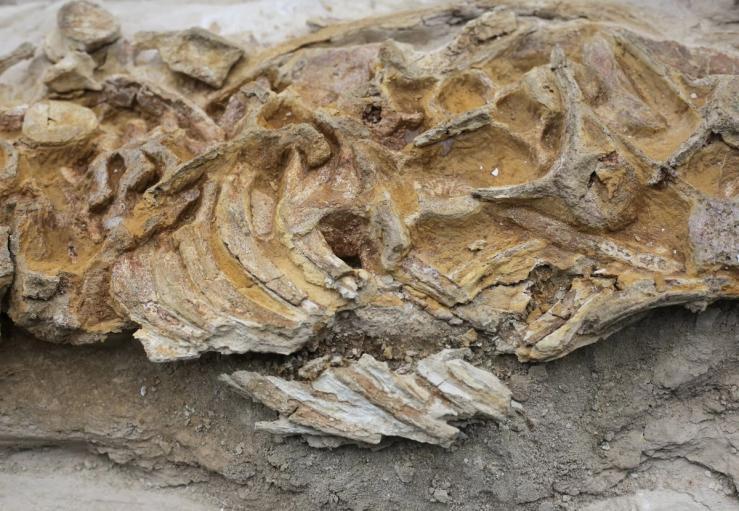
A huge find of 512-million-year-old fossils in southern China offered new insights into the first boom of complex life.
The “Cambrian explosion,” around 530 million years ago, saw a flowering of diversity. Before then, fossils revealed simple, mostly microbial life; in a brief few million years afterward, things like modern animals, and many weirder and since-lost things, emerged.
Most of what we know of the period comes from one famous site, Canada’s Burgess Shale; the new find has unearthed 8,681 fossils of ocean animals, including rarely preserved soft tissue.
The discovery dates to shortly after the Sinsk event, the first known mass extinction, which halted the Cambrian flourishing, and preserves “in vivid detail almost an entire ecosystem,” New Scientist reported.