




Tim’s view
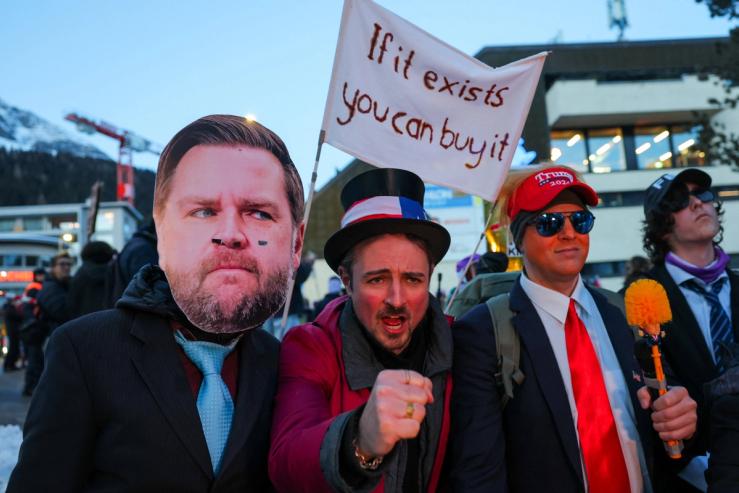
US President Donald Trump is due to arrive at the World Economic Forum in Davos tomorrow with a defiant message about American power projection, but one that could backfire for his domestic policy agenda.
Trump’s text-message threat to Norway’s prime minister that, after being snubbed for the Nobel Peace Prize, he “no longer feel[s] an obligation to think purely of Peace,” set an ominous tone for the fate of multilateralism here.
Climate was already almost absent from the agenda, reportedly as an inducement to Trump; all I saw were a few mini-EVs parked outside a sadly depopulated-looking “climate hub” along the main strip, a far cry from when BlackRock’s Larry Fink donned a global warming-themed scarf in 2020. But even for the fossil fuel trade, Trump’s belligerence toward Greenland, Venezuela, and elsewhere signals that the global energy market is an increasingly treacherous place.
China, Europe, and other top fossil fuel importers are looking at that situation and realizing the trade patterns of the past decade are no longer reliable, Jeff Currie, chief strategy officer of energy pathways at the private equity giant Carlyle, told me: “The immediate fundamental impact of Venezuela on oil markets is relatively limited, but the geopolitical impact is much more significant, because it creates exactly the kind of anxiety that leads to hoarding.”
Even as the US seeks to extend its grasp over more natural resources, in other words, its increasing unpredictability as a political and trade partner is driving key customers for those resources to find new suppliers and accelerate their non-fossil energy transitions. An underappreciated ripple effect, Currie said, is that even though the oil market appears to be oversupplied relative to total global demand, preemptive hoarding could actually drive prices higher — undermining Trump’s interest in domestic “affordability.”
The takeaway for Davos participants is clear: While the conference is ostensibly meant to promote a “spirit of dialogue,” for energy there’s now much more a spirit of competition, one that will ultimately be reflected in prices.

Notable
- As global trust erodes, countries move from “relying on just-in-time supplies to frantically finding and storing just-in-case supplies of all the same things,” Bloomberg wrote.