



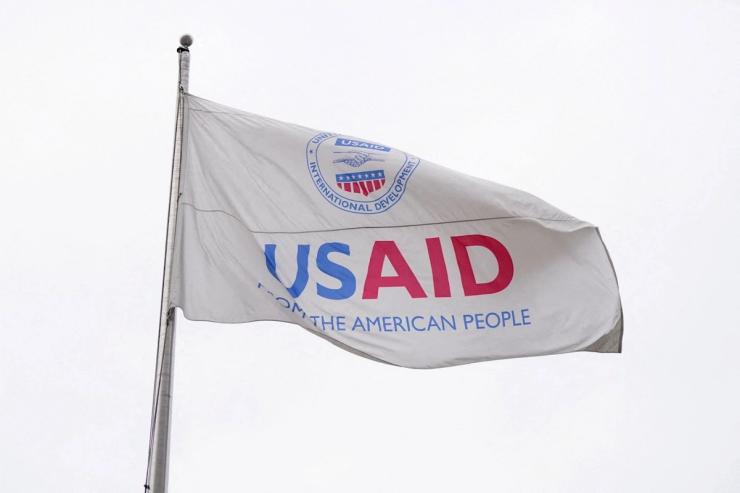
A year ago this week, Washington halted billions in US development assistance worldwide. I was then the USAID mission director in Uganda, overseeing one of the United States’ largest and most complex foreign assistance portfolios in Africa. Within weeks, investments from agriculture and energy to humanitarian and private sector development were frozen — many just as they were creating opportunities for deeper partnership with the US.
Five months later, the State Department unveiled a Commercial Diplomacy Strategy for Africa, recasting trade and investment as the centerpiece of engagement. The strategy recognizes an important truth: Africa’s growth depends on private capital, not perpetual aid. But it also assumes all African markets are already investment-ready, that local private sectors can absorb large-scale capital, and that governments remain eager to partner with the United States without the broader engagement that built those relationships.
“Trade not aid” has become a popular mantra. But the debate misses a crucial point: Trade and aid were never meant to compete. When strategically aligned, they unlock Africa’s growth. For decades, development assistance has built markets, strengthened governance, and catalyzed private investment — the foundations that make commerce possible.
Uganda illustrates what is at risk. Over 65 years, US engagement helped finance agricultural research that produced climate-resilient seed varieties, increasing productivity and positioning Uganda as East Africa’s food basket. It also established the Capital Markets Authority, advanced infectious-disease research, and rebuilt the northern region after conflict. These investments widened markets for American companies and stabilized a strategic partner. During my tenure, we worked closely with stakeholders in the energy sector to improve the regulatory and policy environment, and develop investable projects, which helped attract $25 million from the US Development Finance Corporation (DFC) and allowed us to mobilize an additional $120 million from commercial investors.
Commercial diplomacy without development capacity is not viable. In Uganda, the US embassy’s economic staff numbered just three people, compared to USAID’s nearly 100 technical experts. Expecting this skeletal crew to canvas markets and close complex deals is unrealistic.
Meanwhile, competitors advance integrated strategies. China’s Belt and Road Initiative secured billion-dollar infrastructure deals, combining concessional financing with technical assistance and diplomatic engagement. Last May, Uganda secured $800 million from the Islamic Development Bank with Turkish firms as contractors. The EU’s Global Gateway and Gulf investors blend finance, aid, and diplomacy in pursuit of national objectives.
Investments often favor headline projects over local businesses that actually create lasting markets for American goods. SMEs provide roughly 80% of employment on the continent, yet remain starved of credit. A deal-first approach will not deliver inclusive growth.
If Washington wants economic partnership with African countries, it must modernize — not minimize — its development engagement. The recent reauthorization of the DFC with expanded authorities is a welcome step. But more is needed: better coordination of tools like the US Trade and Development Agency, Millennium Challenge Corporation, and Export-Import Bank. The defunct Prosper Africa Initiative, which I oversaw during my time at the National Security Council, offers a baseline for how to do it. The US must also rebuild technical capacity at embassies and establish a formal mechanism for linking investments to tested opportunities.
“Trade not aid” makes for a catchy slogan. But Africa needs smart partnerships. The real opportunity lies in trade through development: leveraging development tools to crowd in private capital, build resilient markets, and unlock entrepreneurial energy. The US can still be part of that story — but only if it builds a fit-for-purpose architecture. America has done it before and can do it again.
Daniele Nyirandutiye is a partner at the Washington-based Desmos Capital Partners and founder of Frontiers Growth Partners, advising investors on emerging markets in Africa.