




The Signal Interview
This week’s bankruptcy filing by the corporate owner of Saks Fifth Avenue, Bergdorf Goodman, and Neiman Marcus seemed to hammer one more nail into the coffin of America’s department stores, a defining feature of US retailing since the mid-19th century.
Tony Spring, sitting in an oak-paneled conference room on the 13th floor of Macy’s 1902 Herald Square flagship, begs to differ. “No, we’re nowhere close to the death of the department store,” says the executive, who joined Bloomingdale’s in 1987 and became CEO of Macy’s Inc., the group behind Macy’s, Bloomingdale’s, and beauty chain Bluemercury in February 2024.
Saks was dragged down by its debts, Spring notes. “The customer likes multibrand shopping. They just want the stores to be good… They want colleagues that are warm and welcoming. They want an omnichannel experience. And I think if the department store can do that, the department store is here to stay.”
That analysis has defined Spring’s turnaround strategy. The plan he set out almost two years ago emphasized a focus on improved merchandising, beefed-up staffing, and customer service. But it also required closing 150 Macy’s stores, shrinking the brand’s footprint to the 350 US outlets where it sees a viable future.
Surveys told Spring that customers still had an affinity for the Macy’s brand. They loved its Thanksgiving Day parade, its July 4th fireworks, and its heritage, he says. “What they didn’t appreciate was the experience.” Poor assortments, confusing pricing, and thin staffing were alienating customers.
There is still work to be done. Even at Macy’s flagship, unfolded clothes marred a few displays on a quiet morning this week, and the display windows on 34th Street looked in need of a wash. But Spring’s back-to-basics efforts to fix those failings are starting to show results.
The Macy’s stores where he has focused investment reported 2.7% growth in comparable sales in the third quarter, while the more upmarket Bloomingdale’s delivered 9% growth amid robust spending by wealthier shoppers. The group’s shares are still 70% below their 2015 peak, but have rallied more than 50% in the past year.
Building credibility step by step
Spring took the reins at a moment of intense pressure. The activist investor Arkhouse Management launched a proxy fight, eventually settling for two board seats. Barrington Capital, another activist, agitated later that year for the group to consider selling Bloomingdale’s and Bluemercury and create a separate unit to extract more value from the real estate it owns – including the Herald Square store.
Despite this pressure, “we tried not to do everything overnight,” Spring says. His team set realistic goals towards which it could show step-by-step progress.
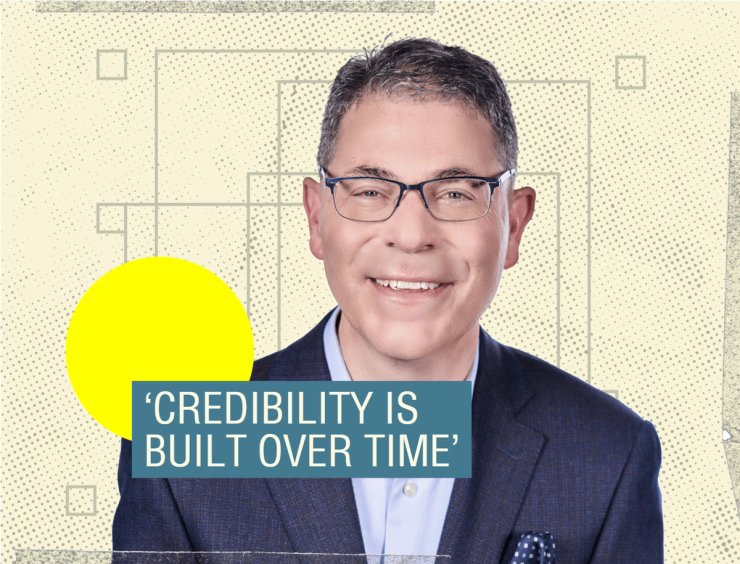
“We believe in [having a] retail portfolio. We believe in the value of department stores. We believe the thing that is wrong in the world is people who don’t necessarily deliver on what they say. So let’s not be one of those people,” Spring says. “Credibility is built over time.”
So he started by piloting his reforms in just 50 stores, setting up weekly calls so the head office could track progress, and implementing a “buddy system” so employees could learn from each other’s experiences. When sales and customer service scores started to climb, that gave the company confidence to expand the pilot to 125 outlets, adjusting as it went.
“We committed to tweak,” Spring says. “We didn’t say that we were going to get 100% of it right… It’s a very iterative process.”
Downstairs, in the country’s largest department store, Spring says “everything” has changed. “It’s the merchandise that we carry. It’s the presentation standards in the store. It’s the holiday market pop ups that we’ve done to bring in smaller brands,” he says. Among the staff, “I see more smiles. I hear more conversations. I feel more energy.”
The CEO as storyteller and teacher
Spring studied hotel and restaurant management at Cornell University, and has emphasized the need to create what he calls a culture of hospitality. “Graciousness and kindness don’t cost money,” he says, but they are “a great elixir for business.”
Building that ethos — and getting employees to believe that Macy’s can aspire to something better, even as it goes through a painful restructuring — has required Spring to focus hard on how he communicates his message.
CEOs don’t have the answers to everything, he notes, but should be asking the right questions of the people they count on to execute their strategy. So, while Spring tries to visit at least one store a week and sits in on meetings with merchandising and marketing teams, he aims to be “less the critic at the end of what I don’t like, and more the challenger at the beginning,” asking whether those teams’ plans would excite consumers.
His internal podcast helps spread such prompts across the company. Past guests have included Danny Meyer, the restaurateur, and Ralph Lauren CEO Patrice Louvet.
“I’m a storyteller,” Spring explains. “I try to bring the outside in. I try to make it very human. I try to help people see the potentiality in what we’re doing.” He’s not lecturing staff, he says, but trying to pull them up and help them understand the decisions he is making.
“It’s my opportunity to bring my emotional quotient to the company, to give a level of passion and conviction, a level of education,” he says. “We are all, as leaders, teachers as well.”
Some of Spring’s teachable moments have been uncomfortable ones. Late in his first year as CEO, Macy’s announced that an employee had hidden more than $150 million in delivery expenses. The news hit its stock, prompted a revision of past profit figures, and triggered a clawback of executive bonuses.
The company handled the core issues fast, Spring insists, from identifying what had gone wrong to tightening up its processes. But “what I didn’t anticipate was the opportunity that it gave for us to underscore our leadership values.”
He used the crisis to project a message about how the company should confront its mistakes. Macy’s looked not just at the core problem, he says, but at the “outer layer” of what it said about cultural norms in the company, how its leaders could encourage candor, and how it could learn from its errors.
The ‘zone of unfairness’ in a split economy
Spring’s internal efforts are taking place against the backdrop of disruptions to trade and uncertainty about US consumer spending. Several of its expectations this time last year turned out not to be true, he admits, while 2025 delivered other challenges “that no one was prepared for.”
Macy’s navigated through new tariffs on imports, for example, but not without cost. “The consumer is paying a little bit more. People are making a little bit less. It’s not the ideal structure, but we adjust to it.”
He expects the US economy to stay “K-shaped” in 2026, with wealthier consumers continuing to spend more freely than those earning under $100,000 a year. Last year’s tax bill and lower gasoline prices should help “value-conscious” shoppers, Spring says, but their experience of sustained inflation has forced Macy’s to watch its pricing carefully.
Consumers now look at prices that are higher than they were expecting and say, “That’s not fair,” he says. Different shoppers have different views on where that “point of unfairness” is, but “we’re definitely trying to stay out of that zone of unfairness.”
Capitalizing on a year of opportunities
Whatever 2026 delivers economically, Spring is confident that it will feature moments that will draw attention to the changes he has made in Macy’s stores. This Thanksgiving will mark its 100th parade, and its 50th July 4th fireworks display will play into the country’s 250th anniversary celebrations.
“It’s just a year filled with opportunities for people to engage,” Spring says, explaining why he stepped up investment in the entertainment side of Macy’s strategy. The parade already gives the brand “three-and-a-half hours of free advertising” at the start of the holiday shopping season, he notes, and was the highest rated non-sports broadcast on television last year, with a record 35 million viewers.
Macy’s has renewed its deal with NBC, which broadcasts the event, for an undisclosed multiple of the previous rate. The programming now includes coverage of the balloon inflation the night before, a preview show, and social media commentary from influencers along the route.
It also features stronger efforts to turn viewers into shoppers. Already last November, Spring ensured that characters featured in the parade, from Pac-Man to Labubu dolls, were also prominently displayed in its stores. The parade builds awareness about Macy’s, he says, but it needs to turn that into sales.
Spring’s investments in such events strengthen Macy’s positioning as an all-American brand at a moment where some Americans wonder whether the country’s birthday celebrations, coming at a moment of sharp political division, will unite it or divide it.
Spring is in the former camp. “I don’t think there’s two sides to throwing fireworks in the air and celebrating the birth of the country, so I think we’re actually a unifier. And I certainly hope that, because one administration is in charge during a year when we turn 250, it doesn’t become a politicized thing,” he says. “I’ll take the optimistic view.”

Notable
- Consultants at Bain estimate that global department-store sales fell by 4-6% in 2025. But Saks Global’s downfall was partly of its own making, The Economist writes. The heavy debts it took on to buy Neiman Marcus have left it following in Macy’s tracks: needing to close stores and rethink what it offers customers.
- The Saks bankruptcy is a make-or-break moment for Spring’s strategy at Macy’s, Bloomberg’s Andrea Felsted says. Bloomingdale’s has already benefited from its rival’s troubles, and has a chance to establish itself as the premier US luxury department store.