



US President Donald Trump’s energy dominance agenda is already tilting the balance of power in the market, as geopolitical tensions, oil oversupply, and the green transition come together in Venezuela and Iran.
In the past, major civil unrest and regime changes in oil-producing countries would often lead to dramatic, long-lasting oil price spikes, Natasha Kaneva, head of global commodities strategy at JPMorgan, noted this week. That’s no longer the case. The oil market is oversupplied, and the risk of US strikes on Iranian oil infrastructure appears to be low. Even if things do heat up there, the impact on the market is likely to be muted. The US intervention in Venezuela is, if anything, pushing prices in the opposite direction (even as TotalEnergies’s CEO joined the ranks of skeptics about the country’s near-term prospects).
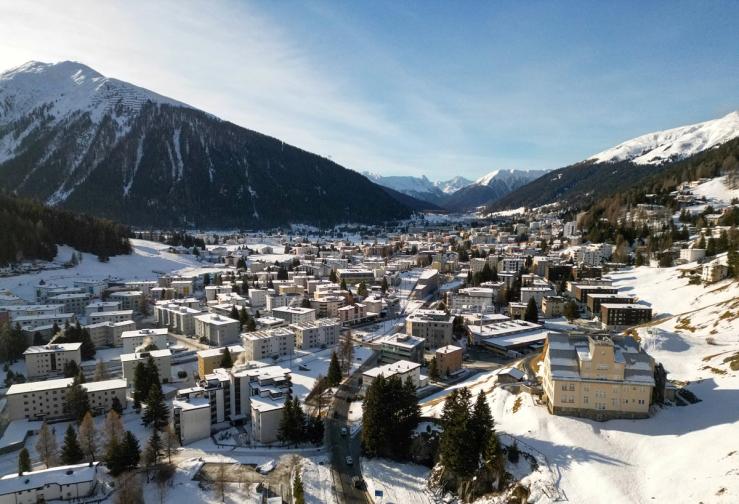
When the world’s business and political leaders meet at the World Economic Forum in Davos next week, many conversations will focus on competing visions for this new era of energy security. One critical question is how Trump will use the power he is accruing: Between the anticipated increase in drilling in Venezuela, and what ExxonMobil has already recently achieved in Guyana, the US has effectively added about 20% to its own oil production, Henning Gloystein, managing director for energy, climate, and resources at Eurasia Group, told me. That could give Trump a lot of new leverage in dealing with Iran, Russia, or other adversaries — but it’s far from clear if and how this leverage can be effectively utilized to achieve peace.
“There are huge risks in everything going on here,” Gloystein said. “But Trump clearly feels he can control the world in ways he didn’t realize even a month ago, and he’s willing to take big risks.”
Key to Trump’s strategy, Gloystein said, is an implicit offer to the US oil industry that lower prices are necessary to keep fossil fuel use elevated for a longer period. That petrostate strategy puts the US at odds with emerging electrostates like China and Europe, which are still banking on a plan to step away from, rather than compete to control, fossil fuels.
Marco Arcelli, CEO of Saudi Arabia’s ACWA Power, told me the focus of conversations at recent iterations of Davos has recently shifted so that “the centerpiece is affordability and security more than climate.” That’s not necessarily a bad thing for non-fossil energy, he said: “If you want the cheapest and most secure power, that’s renewables. It’s not a dogmatic discussion about decarbonizing, but simply where the technology has gone.”
These questions will be the focus of my reporting in Switzerland next week. Our Semafor Haus, returning to the Grandhotel Belvedere, is set to draw six G7 leaders and 65 heads of state. If you’ll be in town and have an insight or scoop to share about this remarkable moment in energy history, please drop me a line. And as always, we’re bringing back our pop‑up Davos briefing, where my colleagues and I will cover the convening in all its gossipy, productive, and pretentious glory.