



Charles’s view
As Uganda’s election approaches on Thursday, the atmosphere in Kampala carries that same thick, familiar weight of inevitability.
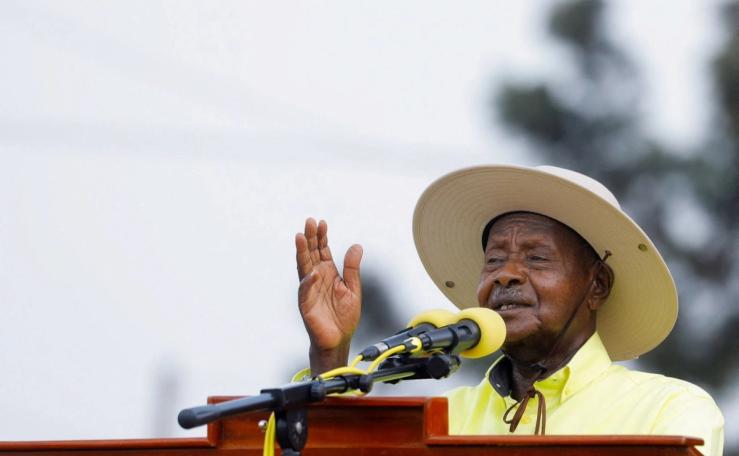
Should President Yoweri Museveni, who turns 82 this September, win again, he will embark on his ninth term. (That tally includes the two unelected terms he served after the 1986 Bush War victory that brought him to power.) By the close of this next period, he will have held power for 45 years. In the capital, long a traditional opposition bastion, armored trucks and soldiers have already settled at key intersections and roundabouts.
Ugandan elections follow a mystical arithmetic. For three decades, every contest has ended with impossible numbers and, ultimately, in court. In 2001 judges heard of polling stations where Museveni took over 90% of the vote, with ballot counts far exceeding registered voters.
To cripple rivals, the state has perfected a containment tactic: After votes are cast, military cordons are thrown around the homes of challengers such as Robert Kyagulanyi (Bobi Wine), or Kizza Besigye earlier. Collating evidence of rigging becomes near-impossible when police road spikes and armored cars block every exit.
The campaign trail feels like a low-intensity conflict zone. Kyagulanyi moves about in a ballistic helmet and flak jacket. Journalists covering him have traded press vests for body armour to survive the bullets and tear gas that have become standard features of Ugandan elections. Since late 2025, at least four deaths have been recorded, with more than 550 opposition supporters arrested or disappeared by unmarked “drone” vans.
Yet Museveni can also point to a genuine track record. He took over a shattered country in 1986, ended state-sponsored torture, and presided over an economic surge. Uganda’s GDP has climbed from $3.9 billion in 1986 to more than $64 billion by 2025. A growing middle class now crowds Kampala’s malls, even if they spend half their lives trapped in the city’s notorious, soul-destroying traffic.
Still, that progress is increasingly eclipsed by a “familiocracy.” The ruling National Resistance Movement (NRM) revolution has matured into a family enterprise. The First Lady, Janet, serves as education minister; Museveni’ son, General Muhoozi Kainerugaba, is Chief of Defence Forces. Corruption, once a useful instrument for keeping the elite loyal, has swollen into a monster so vast that Museveni seems to fear dismantling it will bring the entire structure crashing down.
Today, he governs one of the world’s youngest populations with a median age of around 17, yet he appears steadily more distant — a grumpy germaphobe still faithfully masked, years after COVID-19 mandates lifted. Roughly 73% of Ugandans were born after 1986. For them, “liberation” is ancient history. They chafe at Kampala’s cratered roads and persistent joblessness. As a result, young people have become an export commodity; over 317,000 Ugandans now labor in the Gulf, one of Africa’s highest rates of menial migration.
With the vote looming, the state has hinted at a repeat digital shutdown, restricting Starlink imports, and threatening to block peer-to-peer app Bitchat after its downloads spiked in the country as the opposition hopes to use it to bypass the feared blackout.
Kyagulanyi grasps this young country better, but he is unlikely to claim the crown. In Uganda, even when the opposition wins the ballots, they always lose the tally. Museveni will “safeguard the gains,” yet he will probably pass his ninth term gazing back at a celebrated past while the pressures of succession gather force around him.

Notable
- Bobi Wine, The People’s President, a documentary about the unlikely rise of the opposition politician, was released in 2022 and is available to watch on Disney+.