




The Scene
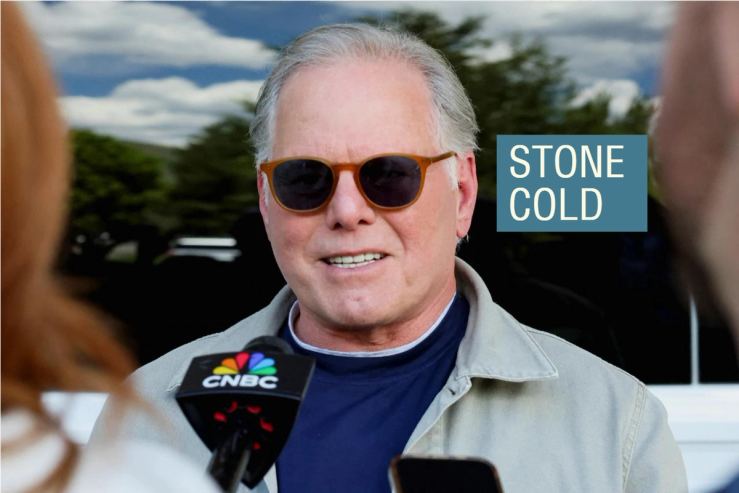
For a while, the silence from Warner Bros. Discovery CEO David Zaslav was golden for shareholders. Now, it just seems like silence — and it’s angering some of those big shareholders.
For weeks, Zaslav and his board have been steadfastly rejecting Paramount’s repeated, $108 billion overtures for all of WBD. They’ve argued that Netflix’s mixed $27.75-per-share cash-and-stock bid, combined with a spinoff of Warners’ linear networks (CNN, HGTV, and a tiny streamer) will give shareholders more value than Paramount’s $30-per-share bid. That argument has been ill-received by shareholders, who generally prefer money in hand to a gamble on a mix of stock, cash, and shares in a low-multiple spinoff.
Top WBD executives have privately said they are willing to open a dialogue with Paramount again if the company increases its bid, according to people familiar with their discussions. Paramount’s leaders feel like WBD has adopted an insulting posture towards their bids, despite repeated efforts to improve them, and also see any increase in price as bidding against themselves, according to other people familiar with the matter. There have been no substantive negotiations between WBD and Paramount since WBD rejected Paramount’s bid more than a month ago, according to people close to both companies. Instead, they’ve traded tit-for-tat messages in public letters to shareholders.
The standoff is starting to infuriate big shareholders, some of whom told Semafor they saw no other explanation for WBD’s refusal to negotiate with Paramount than what they believe is an inexplicable personal animus towards Paramount CEO David Ellison. (WBD’s chair has said they are “very open” to a Paramount deal.) Pentwater Capital, a large WBD shareholder and one of the top merger-arbitrage shops, publicly excoriated WBD’s refusal to play ball with Paramount on CNBC Wednesday and said the firm would block the deal with Netflix.
(Other big holders are fine with the board’s decision.)
WBD has questioned the durability of Paramount’s financing, a mix of Ellison family wealth, Middle East dollars, and a hefty debt package assembled by Apollo, Bank of America, and Citi. Paramount tried to solve for that by offering Larry Ellison’s personal guarantee.
But that wasn’t enough for WBD, which again rejected Paramount’s offer on Monday. WBD executives and advisors publicly compared Paramount’s bid to a leveraged buyout. Beyond the considerable debt that Paramount’s offer contains, the WBD board is also concerned about restrictions that Paramount would place on WBD’s ability to operate in between signing the deal and closing the deal, according to people familiar with the matter.
WBD’s board also continues to believe that the spinoff of its linear TV assets will offer shareholders more money in the long run, those people said — even given the fact that Versant, Comcast’s analogous TV spinoff that’s seen as a stronger business, has traded down 27% this week.
Spokespeople for Paramount and WBD declined to comment.
In this article:

Rohan’s view
Neither side wants to blink, and that’s a sensible M&A strategy — whoever talks first generally loses. Zaslav’s initial silence paid off handsomely. By ignoring or rebuffing Ellison’s early approaches, he managed to create tens of billions of dollars in value for WBD’s owners overnight. But now he runs the risk of aggravating important shareholders by continuing to cold-shoulder Ellison.
Some of WBD’s problems with Paramount’s offer — the amount of debt and the restrictions on how WBD could negotiate its rights and affiliate agreements — are sensible. But solving those problems requires serious, private negotiations, especially with an interested and deep-pocketed party. Choosing instead to negotiate through the press and public letters looks ridiculous to investors and risks muddling their message, especially given the possibility of a contested shareholder vote down the road.

The View From Makan Delrahim
“Netflix’s only remaining hope is to persuade the public and corporate board members that the Paramount deal is equally risky,” Paramount’s chief legal officer said in a statement provided to the House Judiciary Committee Wednesday. “That is flatly untrue. The Netflix proposed deal is presumptively unlawful. Paramount’s proposed deal is not. Those who reflexively oppose all mergers generally might find this view attractive, but it ignores truth. And those who support all mergers and view antitrust enforcement as inconvenient, should appreciate the consumer harm from lack of enforcement of mergers particularly involving dominant firms.”