


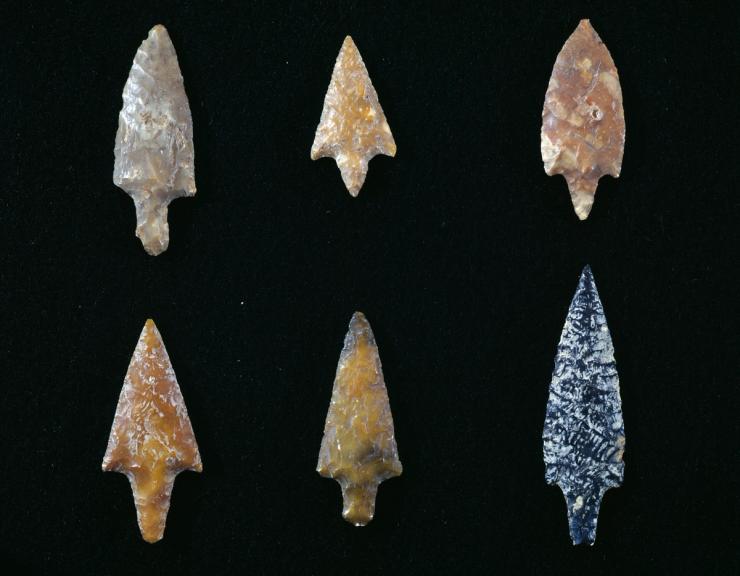
Ancient humans used poisoned arrowheads to hunt prey 60,000 years ago, archeologists discovered.
Traces of plant toxins were found on quartz Stone Age arrowheads in South Africa, the oldest known example, suggesting paleolithic hunters had more sophisticated techniques than previously thought. The toxin, derived from the gifbol or “poison bulb” plant, is still used by traditional hunters, to target springbok, wildebeest, and even giraffes and zebras.
Creating the substance involves a “complex cooking recipe” and is dangerous, one researcher told Nature. It would not kill prey instantly but weaken it slowly, meaning that hunters would have to track it for hours, implying “cause-and-effect thinking and the ability to anticipate delayed results,” an expert told CNN.