



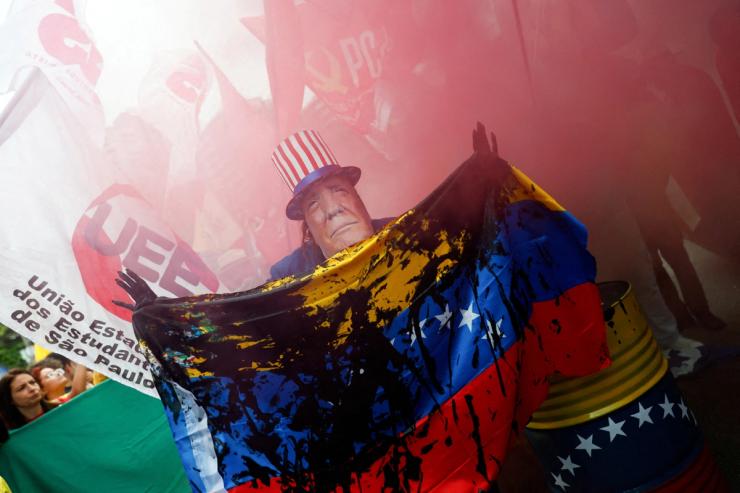

Tim’s view
President Donald Trump’s push to remake the US as an old-school, cudgel-wielding petrostate risks backfiring for its energy security, its economy, and the specific interests of oil company shareholders.
In promising to “take back” Venezuela’s oil, Trump seems to be offering an ever-more expansive view of what “energy dominance” entails: Control of Venezuela’s vast stated reserves on top of the US’ already world-leading exports could put Washington in a strong position to thumb its nose at OPEC and Russia, what Bloomberg’s Javier Blas called “a geopolitical game-changer.” A handful of investors, including a former Chevron executive, are already raising the first few billion dollars to snap up Venezuelan drilling assets, and production could probably jump 50% above its current levels without a huge amount of time, money, or headaches, analysts believe.
But among the most consequential barriers to “dominance” beyond that level is the possibility that the largest oil companies just aren’t interested. Trump’s first year back in office was a lesson in the extent to which an aggressive domestic deregulation push, plus public and private edicts to “drill, baby, drill,” would actually work to change oil companies’ spending choices in a market that doesn’t particularly want more oil right now. The takeaway was that they didn’t, and that CEOs tended to side with their shareholders over Trump. “Investors don’t care about energy dominance,” Clayton Seigle, senior energy security at the Center for Strategic and International Studies, told me. “They care about energy dividends.”
And those two agendas look increasingly at odds. Lower oil prices might sound nice when affordability is a hot political topic, but if they dip much lower, they’ll approach the breakeven point for US shale, below which oilfield layoffs await. Moreover, if it comes to fruition, Trump’s dominance vision could undermine the free trade ethos that has helped the oil market function smoothly over the past several decades, to the benefit of US energy security. As Columbia University’s Jason Bordoff wrote in Foreign Policy yesterday, “Trump’s rhetoric about ‘controlling’ Venezuelan oil misunderstands how power operates in the 21st-century oil system.”
The most important factor is what happens next in the Venezuelan government, and “a credible roadmap to political stability,” Seigle said. “And after this weekend, we have more questions than answers.”

Notable
- A month before the US captured Maduro, Trump hinted to big changes coming to Venezuela and told oil executives to “get ready,” The Wall Street Journal reported.