




Ben’s view
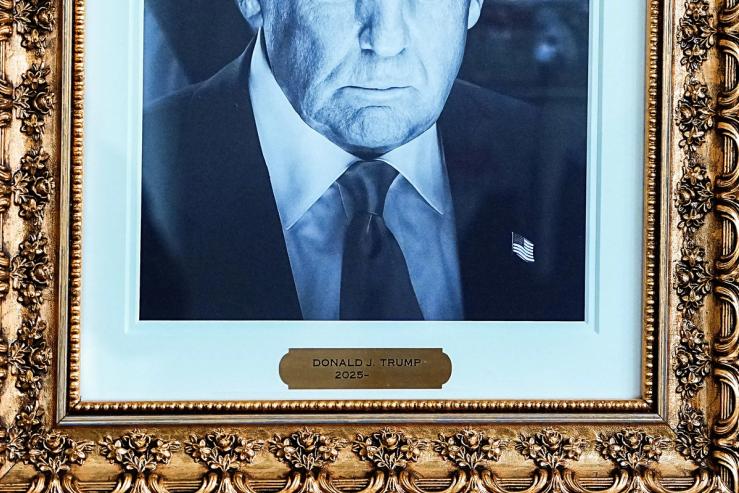
President Donald Trump reminded Americans this weekend that while his domestic politics have grown more complicated after his first year, he retains the kind of global initiative that only the American president has, and only sometimes.
The media, both parties, US citizens, and leaders, executives and traders around the world find themselves trying to predict his actions — and more often, reacting to them.
The question now is whether the seeds of weakness that began to sprout last fall will grow — or whether he can stop a slide toward lame-duck status. The signs are there: He has lost control of members of his own party, from Marjorie Taylor Greene to Indiana state senators; his chosen candidates suffered setbacks in state-level elections around the country; and he faces a Gallup favorable rating approaching his first-term low and a sour economic mood that defies topline indicators.
But Trump is hard to predict, and global markets continue to ignore confident forecasts. I surveyed reporters around the Semafor newsroom to come up with six of the big questions that await in 2026.

Questions
1. Can Susie Wiles get her groove back?
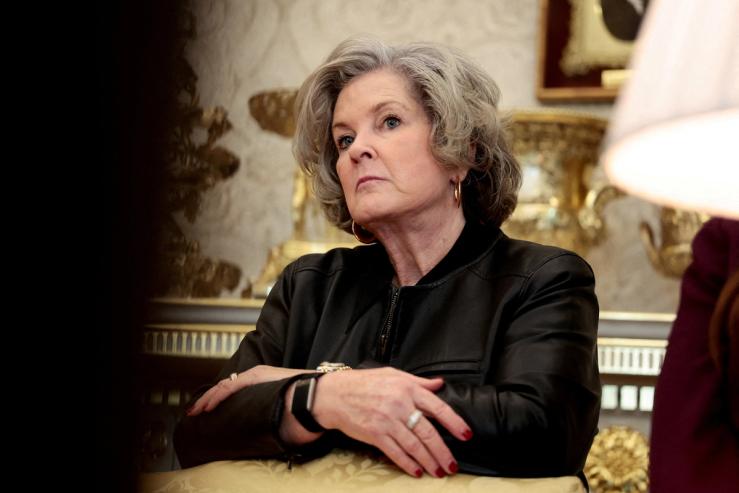
Susie Wiles is the only member of Trump’s inner circle wholly focused on the looming 2026 midterm elections. The men around her have foreign policy goals, government-led commercial deals, and social media wars to fight — not to mention family crypto portfolios. But Wiles closed the year on her heels from indiscreet conversations with Vanity Fair, in which she noted that voters would prefer more domestic policy and fewer Saudis on their screens. Trump’s decision to begin 2026 with the announcement that the US will “run” Venezuela is the White House political operation’s worst nightmare.
 Evelyn Hockstein/Reuters
Though early, most members of both parties (and online bettors) expect Democrats to take the House next November. Those expectations are prompting Republican retirements and energizing Democrats. Wiles’ job is to focus the president on, at least, stanching the bleeding Vice President JD Vance’s very public commitment to the midterms is good national politics and may help candidates raise money, but the Republican Party has lost since 2016 when Trump isn’t on the ballot — much less when he’s not paying attention. Wiles’ nightmare scenario: a competitive Senate cycle, where a Democratic victory would rely on upsets in places like Ohio, Iowa, Alaska, and Texas.
2. Will the bubbles burst?
The federal government and US private sector are making the same big bet on artificial intelligence. And the huge investments — in data centers, energy, and other infrastructure — are keeping the US economy humming, keeping foreign and domestic investors pouring billions into the country, and keeping Americans’ stock portfolios healthy. Everyone has a different theory on how a bubble like that bursts, but rarely has an investment cycle been so deeply intertwined with the political moment, and if one bubble bursts, they all burst.
But the fact that every bubble bursts at some point doesn’t tell you anything about the timing. Semafor’s Reed Albergotti thinks we’ve got at least another year of growth, writing that “there’s too much demand to sink the AI boom.”
3. Were tariffs really a non-event?
Trump, Peter Navarro, and pretty much nobody else defied the professional economic consensus on tariffs. Trump’s “Liberation Day” break with America’s trading traditions even rattled his loyal treasury secretary, Scott Bessent, as Bessent later acknowledged. Trump then chickened out, chickened in, and ended the year with an effective tariff rate of 16.8%, up from 2.4% in January and the highest since 1935.
So were the economists all wrong? Or are we just in one of those funny middle periods of American economic analysis — remember when Biden aides argued that spending wouldn’t drive inflation? — that ends with the grim laws of economic gravity reasserting themselves as businesses pass tariff costs through? We may never know: The Supreme Court will rule any day now in a group of lawsuits challenging Trump’s use of emergency powers to impose tariffs, and their ruling could end or alter Trump’s great economic heresy.
4. How much more can Beijing get out of Washington?
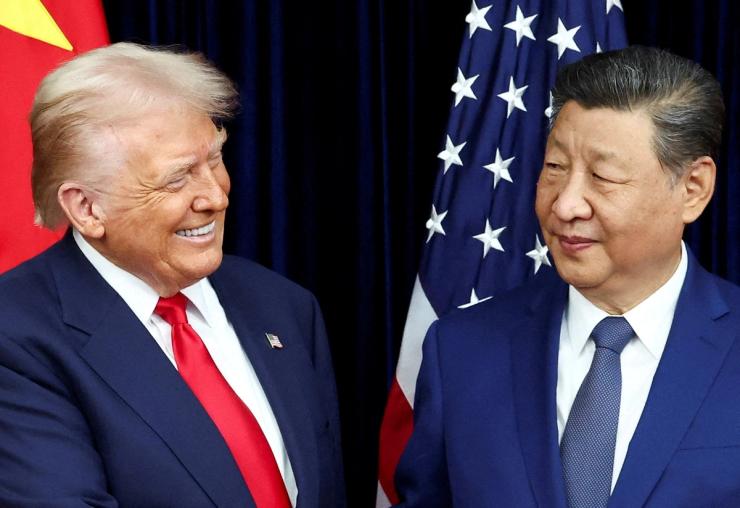
The Washington China hawk became an endangered species last fall with the realization that the US really is dependent on elements of the Chinese supply chain. Trump then reversed some tariffs, suspended port fees on Chinese ships, and approved sales of Nvidia’s powerful H200 chips. And yet a promised trade deal has yet to materialize.
 Evelyn Hockstein/Reuters
Of course, that’s not all Chinese leader Xi Jinping wants from the US, and there are more deals to be made, Semafor’s Andy Browne notes. China-watchers speculate that Trump and Commerce Secretary Howard Lutnick could negotiate Chinese investments into the United States on the model of deals struck with Japan. They could relax rules on the export of chipmaking equipment on the same logic — maintaining Western export markets — that re-opened China to Nvidia. And of course, there’s Taiwan, where even a slightly softer US line would move Xi closer to retaking the island.
5. Can you run against AI?
A wave of candidates right and left have begun to define their political identities around criticism of AI. The campaigns have shifted away from warnings of killer robots to blaming AI (with varying degrees of accuracy) for all kinds of ills: rising energy and water prices; sprawling data centers; teen mental health issues; declining educational standards; and association with the Antichrist. The issue has migrated from local races to a high-profile New York congressional primary and the Arkansas governor’s mansion, and you’ll hear dark denunciations of the technology from Steve Bannon and Bernie Sanders.
The tech industry learned from the last “techlash” that they can mostly ignore the noise, at least in the US: For all the denunciations of big tech and social media, Congress still hasn’t acted meaningfully on the issue. Americans are historically optimistic about technology. But this bet will face its most serious test in the brewing Republican presidential primary. Vance’s tight ties to the Silicon Valley right are one of his greatest political assets and an obvious attack surface for one or more of his likely challengers for the 2028 nomination.
6. Can Zohran Mamdani govern?
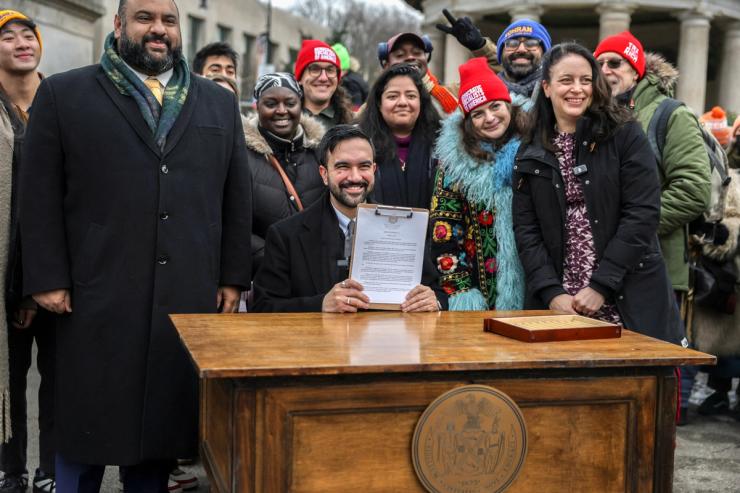
On Saturday, Zohan Mamdani spent 45 minutes discussing traffic in Queens; then he mentioned a conversation with Trump about Venezuela. Mamdani and his allies in the New York chapter of the Democratic Socialists of America are intensely aware of the need to succeed in the mundane work of governing, and his early appointments are experienced hands from the city’s permanent government.
 Jeenah Moon/Reuters
Four days in, he’s getting good reviews: Mamdani may be trying to “normalize previously radical ideology on top of basic municipal competence,” writes the Manhattan Institute’s Nicole Gelinas. “But if we get the basic municipal competence part in some city departments as a byproduct of this cleverly wicked strategy, that is actually ... good.”
That doesn’t mean Mamdani’s ambitions are any less revolutionary. The socialist podcaster Daniel Denvir recently described the plan as to beat Trumpism “and then build a social democratic and then socialist order to permanently displace it.” The DSA sees itself as a new national party, operating like a coalition partner to Democrats — but without a ballot line. In the meantime, traffic and rats.