




The News
Numerous barriers could keep Western companies from investing the huge sums required to revive Venezuela’s struggling oilfields, industry insiders said, testing US President Donald Trump’s influence over top fossil fuel CEOs.
Trump said soon after US forces arrested and exfiltrated Venezuelan leader Nicolás Maduro that US companies would “spend billions of dollars, fix the badly broken infrastructure… and start making money for the country,” while Secretary of State Marco Rubio said Washington is pressing Venezuela’s interim government to scrap a law that requires oil projects to be at least half-owned by the state, which he said would unlock “tremendous demand” from private investors.
But there are other, huge barriers to confront, from the legitimacy of the current Venezuelan leadership to the fact that Venezuela’s oil and gas sector needs up to $110 billion in fresh investment, according to Rystad Energy. Companies including ExxonMobil and ConocoPhillips would have to reverse their posture toward a country in which they are still mired in massive legal disputes over prior drilling projects. Oil markets largely shrugged off Maduro’s arrest, a sign traders don’t expect a flood of sanction-free barrels back on the market anytime soon.
In this article:

Tim’s view
The dilemma facing top US oil executives is clear: In a world already awash in oil, and in which their shareholders have tended to frown on expensive, high-risk capital spending, is it worth plowing tens of billions of dollars into a country with decrepit infrastructure and major unresolved governance problems just to please an audience of one in the White House?
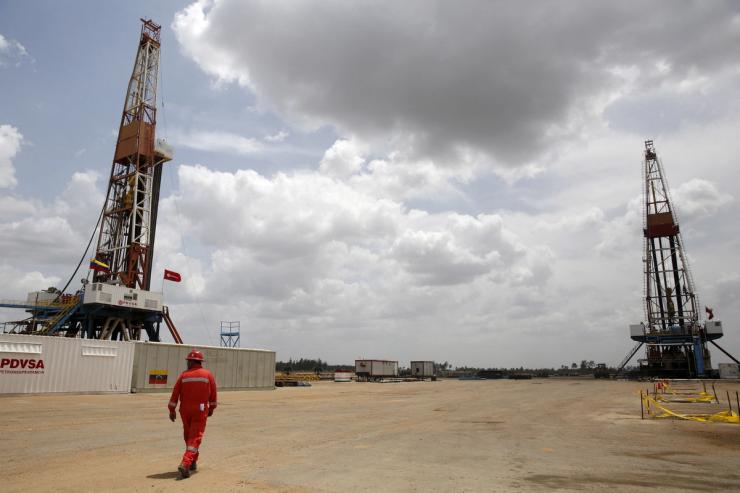
Venezuela has the world’s largest known untapped oil reserves, but production has fallen to one-third of the peak it hit in the early 2000s because of mismanagement, unpaid debts, labor shortages, and Western sanctions. Returning to that level would mean increasing production by about 2 million barrels per day, a feat that by Rystad’s estimate would require $20 billion more in capital spending than the top five US oil companies combined spent globally in 2024.
An immediate challenge is who the counterparty for such deals would be, Amos Hochstein, a top energy adviser to former President Joe Biden, told Semafor. Trump dismissed the idea of welcoming Nobel Peace Prize-winning opposition leader Maria Corina Machado, and instead said that for now the US will work with Maduro’s deputy, Vice President Delcy Rodríguez. Oil companies learned hard lessons in Iraq and elsewhere, Hochstein said, about the risks of making multi-decade investments in countries where they could be seen as war profiteers: “Why fly in a bunch of private equity people and oil executives just to do business with the same illegitimate government that was there yesterday, except for Maduro?”
Another problem is the global oil market, which is already oversupplied and looking at its lowest prices in years, with some forecasts averaging below $60 per barrel this year. Under those conditions, big new capital projects are hard to justify. And even a relatively modest increase in production from Venezuela could drive the price down further — possibly good for car owners, but counterproductive for US companies (and their workers) that are still focused on getting the most out of their domestic shale fields, which would be “eviscerated” by competition from Venezuela, said Ed Hirs, an energy economist at the University of Houston.
As Rubio described, there are also obstacles in Venezuelan law and in how the state-owned oil company PDVSA is managed that would need to be resolved — which could be challenging as long as Rodríguez, a former PDVSA official, remains in power, said Luisa Palacios, managing director of energy transition finance at Columbia University’s Center on Global Energy Policy and an ex-chair of the refining company Citgo, which was previously owned by Venezuela.
The next question is how Chevron CEO Mike Wirth and Exxon CEO Darren Woods — who, according to The Wall Street Journal, weren’t given advance notice of Maduro’s ouster — will navigate this moment, and what kind of risks they are willing to shoulder in support of Trump’s geopolitical agenda. “They have deep pockets and can easily allocate tens of billions if the terms offered by the new government are attractive,” said Dan Pickering, chief investment officer at the Houston energy investment firm Pickering Energy Partners. But, he noted, “they aren’t going to invest out of goodwill, they are going to invest to make money.” Exxon didn’t return a request for comment. A Chevron spokesperson said the company is “focused on the safety and wellbeing of our employees, as well as the integrity of our assets” and that it “continues to operate in full compliance with all relevant laws and regulations.” White House energy official Jarrod Agen did not return a request for comment.
Given that new drilling projects are typically a 20-year investment, and Venezuela’s future — immediately, and following Trump’s term in office — remains so uncertain, it looks like a very high bar for investors, Palacios said. “There are just a lot of other places to put your money.”

Know More
One other obstacle the White House will need to contend with, Hochstein said, is blowback from Gulf countries and from China. Chinese refineries have the most to lose if Venezuelan oil is kept off the market or redirected to the US; China also extended some $100 billion in credit to Venezuela on the expectation that it would be repaid in oil. And if the US does come to control Venezuela’s oil, and has the country withdraw from OPEC, Gulf countries and Russia would lose considerable sway over global oil prices.

Room for Disagreement
The intervention is good news for US refineries, Palacios said, which will benefit from a boost of the particular heavy crude found in Venezuela, which had been in shortfall from Canada recently. In the short term, it’s likely that Chevron will expand its operations, and that it will more easily find a more sustainable solution to the sanctions-exemptions mess it has been battling for years. And Wall Street seems happy: Share prices for Exxon, Chevron, ConocoPhillips, Halliburton, SLB, and Baker Hughes were all up Monday morning.

Notable
- Trump’s oil “empire” has given him “an economic and geopolitical lever no US president has had since Franklin D. Roosevelt in the 1940s,” Javier Blas writes in Bloomberg. And while the global market may not need Venezuelan oil now, it could be much more valuable in the 2030s when other sources have started to wind down.