


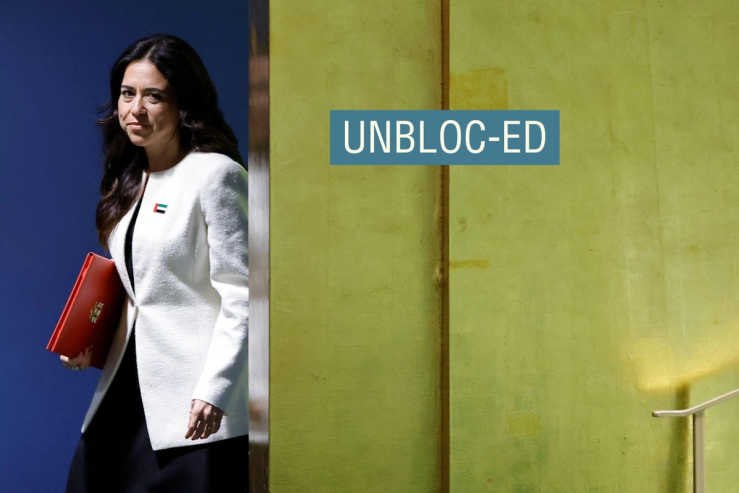
Frustrated by decades of unproductive trade negotiations between the Gulf Cooperation Council and the EU, Abu Dhabi is finding that going it alone can be more efficient. Talks with the EU on a comprehensive economic partnership agreement (CEPA) have been “advancing rapidly” since their start this year, UAE Minister of State Lana Nusseibeh said at a briefing in Abu Dhabi on Thursday, alongside an EU commissioner.
The UAE is the EU’s largest export destination for goods and services in the Middle East and North Africa. The deal will build on the UAE’s more than 30 CEPAs — free-trade-style pacts that incorporate services and other forms of economic cooperation. Such deals helped the UAE hit a record non-oil trade volume of $816.7 billion last year, up about 15% annually, The National reported.
The move reflects Abu Dhabi’s broader shift toward one-to-one economic and strategic alliances, including with major powers: The UAE is among a small group of close US allies attending the White House’s Pax Silica summit today. The meeting is focused on deepening collaboration in AI, energy, critical minerals, and digital infrastructure. For the Trump administration, it’s a potential win that could reduce allies’ dependence on China, and for the UAE, it’s central to its diversification push.