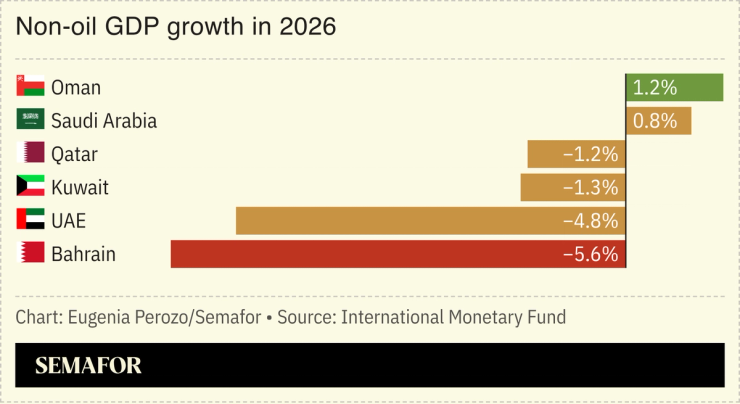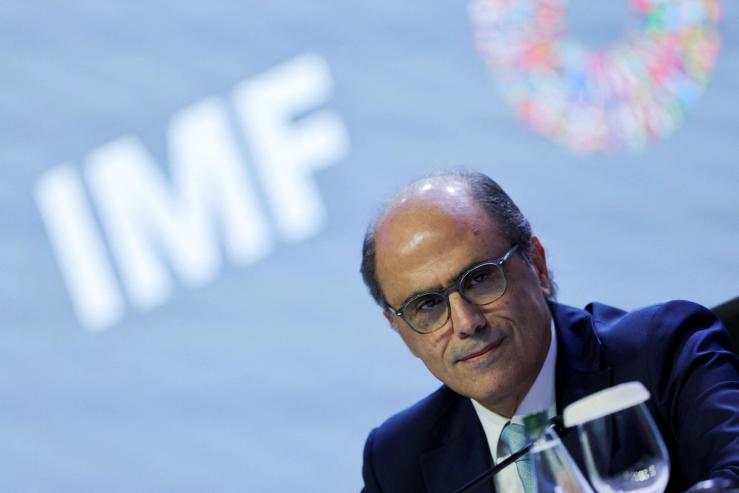
Gulf economies as a whole are expected to shrink 4.8% this year, almost matching the COVID-19 shock, with non-oil output receding in four countries. “This conflict has disrupted energy production, shipping, tourism, trade, and confidence,” Jihad Azour, director of the IMF’s Middle East and Central Asia Department, told reporters in Dubai.
Non-oil activity, a key metric watched by businesses in the region, is expected to rebound to 4.5% growth in 2027 if the conflict is resolved. Financial buffers are also weakening, with the region’s current-account surplus expected to narrow to 1.3% of GDP, from 5% last year, while the combined fiscal deficit is expected to widen to 2.3%, from 0.8%, according to the IMF.
Oman is the outlier, having implemented economic reforms before the war and remaining relatively unscathed by the conflict. Worst-hit has been Bahrain, the smallest Gulf oil exporter, which has long relied on its neighbors to prop up its economy. With debt levels now at more than 150% of GDP and foreign reserves down 50% since March, the kingdom is reportedly in talks for a cash infusion led by the UAE, according to Asharq Bloomberg.