




The News
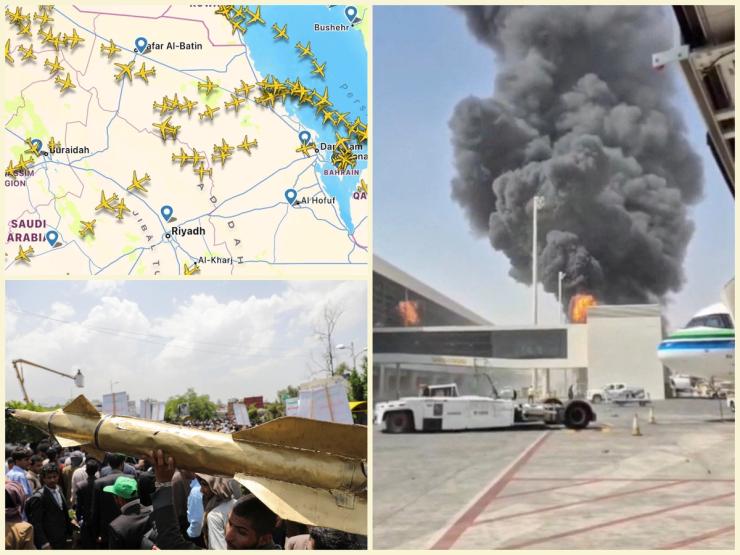
Several people were wounded in another likely Houthi attack on Riyadh’s King Khalid International Airport on Saturday, the third strike this week on the gateway to Saudi Arabia’s capital. Earlier attacks killed four people. Flights were canceled or diverted, and airport operations were suspended.
Hours of silence and speculation in the aftermath added to a sense of fear in Saudi Arabia and across the region. Rumors of injuries circulated in the afternoon, flights were canceled, Canada’s embassy warned citizens to avoid the airport at 5:34 p.m. The US followed at 8:03 p.m. Al Arabiya TV, which usually switches to breaking news if firecrackers are heard in other countries, was airing reruns. Saudi authorities finally acknowledged the incident at 8:34 p.m.
There are definitely security considerations to withhold information during an attack. But the insistence on projecting calm is starting to backfire. Firms in Riyadh were telling their employees to work from home tomorrow, and people have been spooked for weeks. Since the US-Iran war began on Feb 28, Gulf governments have restricted media coverage and criminalized social media posts, even as everyone living here could see and hear explosions themselves.
For months, Riyadh seemed relatively insulated from the war (sorry, “conflict,” as many officials in the region prefer to call it). Its airport remained open as travelers fled attacks elsewhere in the Gulf, and Saudis rallied around the flag, deeming any expressions of concern as unpatriotic. The messaging also seemed coordinated, with official statements followed by a flood of pledges of allegiance on social media.
Now this confidence appears to be fraying. And in a war that is as much about economics as explosives, this may be the vulnerability that the Houthis, and Iran, are banking on.
Saudi-backed Yemeni government forces had pushed back the Houthi advances around Bab el-Mandeb, the Red Sea shipping chokepoint this week. But in a similar move to the substantial losses that Iran had been dealt by the US and Israel earlier in the war, the Houthis chose asymmetric targets. The Iran-backed group has escalated attacks on Saudi oil facilities and civilian aviation, declaring Saudi airspace a military operations zone.
The timing matters. Riyadh hosts the World Petroleum Congress this week, with CEOs from ExxonMobil, Shell, TotalEnergies, and BP expected, followed later this month by the Future Investment Initiative and Wall Street’s billionaire financiers. Organizers insist both events will proceed, according to Reuters. But it’s certain that some of these executives — or their boards — will have second thoughts. Some US officials who were planning to attend the events in Riyadh this month are reconsidering.
At stake is not just some meetings, but a questioning of the kingdom’s pitch as a safe home for trillions in financial assets, data centers, and new industries.
The repeated airport attacks provide a sense that a major escalation is close. President Donald Trump said on Saturday that the US may join strikes on the Houthis and will decide quickly. If that happens, it’s likely the region will remain the punching bag for any Houthi or Iranian response.
— Matthew Martin, Manal Albarakati, Lauren Morganbesser, and Shelby Talcott contributed reporting.

Notable
- Ambulances and helicopters were sent to collect the wounded from Saturday’s attacks. The kingdom may be short on missile interceptors or are “struggling” to take out the Houthis’ rockets, The Wall Street Journal reported.