




Faisal’s view
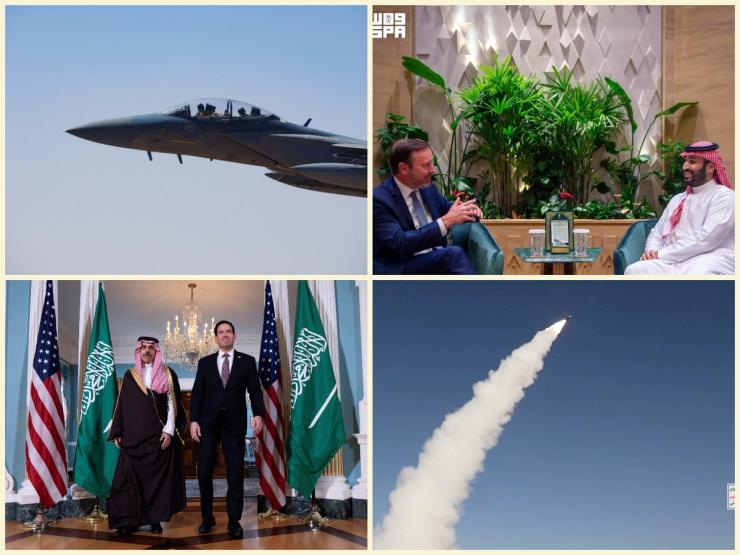
Two statements by US Senator Chris Murphy and Secretary of State Marco Rubio signal that Washington takes Gulf security seriously. They have come at a critical juncture for Saudi Arabia and the region.
Senator Murphy’s comments carry weight because he has long criticized Saudi policy. Yet he traveled to Riyadh, spent two hours discussing his concerns with the kingdom’s leadership, and publicly stated that Washington can’t achieve its goals alone. This has brought him closer to Riyadh’s view: If the US aims to enhance regional stability, contain Iranian influence, and advance a two-state solution for Israel and Palestine, it must work with its regional partners.
Secretary Rubio — who is also the US national security advisor — affirmed Saudi Arabia’s right to defend itself against Houthi aggression and Washington’s intention to honor its defense and security agreements with the kingdom.
Together, these statements matter at a time when some in Washington advocate a narrower role for the US. They show that American leaders recognize that threats against the Gulf have global consequences. While Saudi Arabia has considerable military capabilities, experience in Yemen, and powerful allies like Pakistan and Türkiye, active US backing remains crucial, both strategically and politically.
I write this as a Saudi citizen whose country supports Yemen’s legitimate government. The military operation there aims to restore sovereignty and confront the Houthi militia that’s attacking not just Saudi Arabia and Yemen, but the arteries of the global economy.
The Houthis are sometimes misrepresented as a Yemeni faction vying to share power with others in the state. But their slogan — “God is the greatest, Death to America, Death to Israel, A Curse Upon the Jews” — is clear about their objectives and ideology.
Allowing them to consolidate control risks turning Yemen into a permanent breeding ground for international extremism and handing another Arab state to Tehran. We need only look at the painful legacy of Iraq to understand the disastrous consequences of allowing Iranian influence to swallow state institutions unchecked.
Beyond security, the economic risks are acute. An Iran-backed force dictating traffic through the Bab el-Mandeb Strait threatens another chokepoint in the region, a scenario the global economy can’t absorb as it deals with disruption in the Strait of Hormuz. Keeping these waters open, which can only be achieved through Saudi-led deterrence, benefits the kingdom, but also serves US and global interests.
Some observers may question why Riyadh has turned up the heat now. The answer is simple: It was the Houthis who shattered years of goodwill and unilaterally escalated against the Yemeni government. Saudi Arabia was always clear that it wouldn’t tolerate attacks in the Red Sea or inside its territory.
To truly understand Saudi foreign policy — which, at its core, balances diplomacy with resolve — I recently spoke to HRH Prince Turki Al-Faisal, the kingdom’s former intelligence chief, on the debut episode of the Arab Views podcast.
Prince Turki traced Saudi Arabia’s engagement in Yemen through the eras of King Abdulaziz and his father, King Faisal, describing a policy shaped by strategic restraint within limits. With the kingdom now facing persistent provocations on multiple fronts from regional proxies, “that restraint is no longer operable,” he said.
The Houthis appear to have mistaken Saudi restraint for an inability to act. With the militia stretched thin, Riyadh sees an opportunity to defeat it or force it back to negotiations. Washington’s support isn’t a favor to the Gulf, but rather a clear-eyed assessment of its own strategic interests. By standing firmly with Saudi Arabia, the US is helping protect global trade, confront state-sponsored terror, and ensure that diplomacy in the Middle East is backed by unyielding strength.
There is a question of responsibility, too. Saudi Arabia and other Gulf countries have suffered severe damage from the US and Israeli war against Iran. Yemen gives Washington a chance to show that they won’t be left to manage the regional consequences alone.
Faisal J. Abbas is an award-winning journalist and Editor-in-Chief of Arab News.

Notable
- Saudi Arabia has been fighting the Houthis in Yemen for almost two decades. This Council on Foreign Relations backgrounder explains the history of the conflict and examines the latest escalation.