




Amena’s view
Venezuela is not just another member of OPEC. It is one of the group’s five founders, present when the organization was conceived in Baghdad in 1960 as a counterweight to the “Seven Sisters,” the Western oil majors that held the upper hand over much of the world’s oil supply. Oil-rich states shared a common goal back then: regaining control over their own resources.
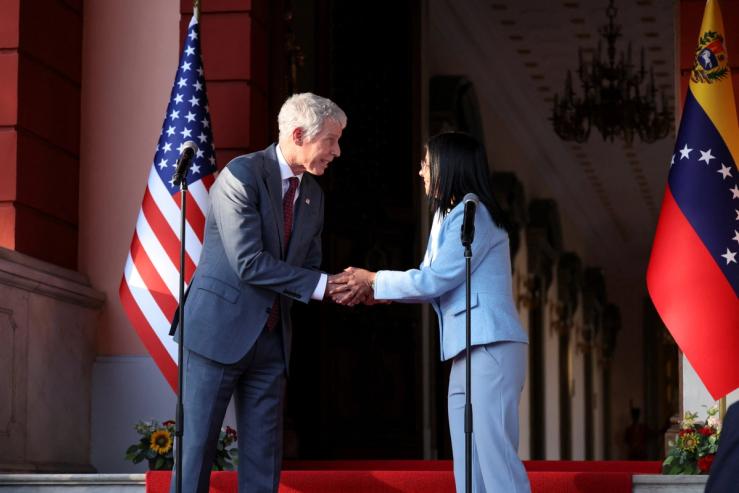
Fast-forward to 2026. US President Donald Trump removed Venezuelan President Nicolás Maduro, leaving the country in the hands of an interim government, and made little effort to hide his intentions. Trump said the US will control the sale of Venezuelan oil, while a recent agreement grants Washington sweeping influence over access, production, and exports. For Caracas to walk away from OPEC now would therefore represent a bitter historical irony.
Reports that Venezuela was considering leaving OPEC emerged just before the White House announced what it called “the biggest oil deal in world history,” claiming the agreement secured US majority control over more than 65 billion barrels of Venezuela’s proven reserves. That would exceed the roughly 46 billion barrels of proven reserves held by the US itself.
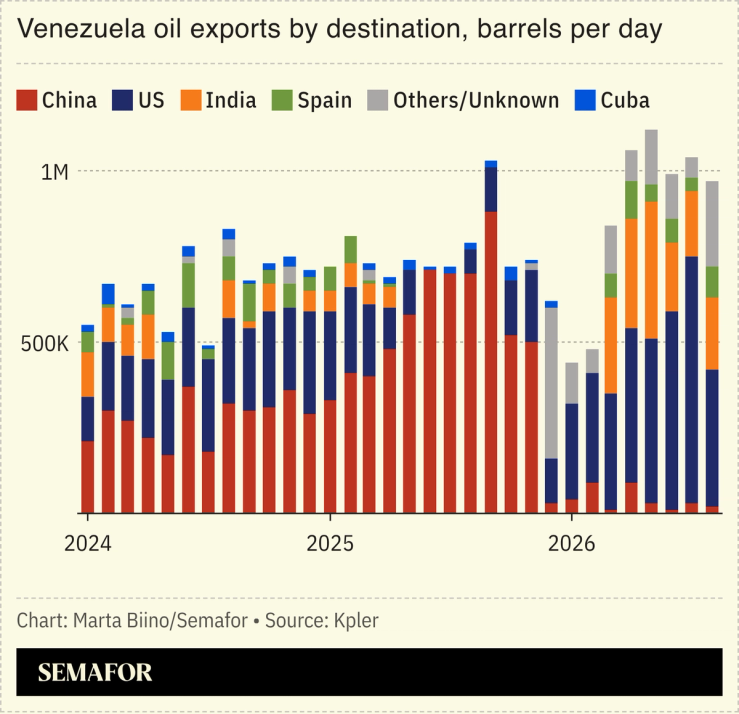
There are no indications that Washington is pressuring Venezuela to leave OPEC — just as there was no US intervention in the UAE’s decision to leave the group. Rather, Venezuela’s interim government appears to be weighing options that align with the interests of US companies considering investments in the country, which would not want to be constrained by OPEC production quotas.
But what does Venezuela gain by leaving OPEC?
Under the current arrangement, Venezuela, along with Iran and Libya, is exempt from production targets because all three countries faced sanctions or conflict that have disrupted output. There is also an understanding that quotas will not apply until production has sufficiently recovered. Leaving OPEC in the near term removes no meaningful obstacle to increasing Venezuelan output today.
What Caracas would lose is a seat at the table where major oil-producing countries set collective strategy. It would also weaken its claim to solidarity with a bloc created explicitly to prevent producers from being played off against one another by outside powers. That matters even more at a moment when control over Venezuela’s oil resources is being claimed by the world’s most powerful country.
For OPEC, Venezuela’s departure would be another blow to cohesion following the UAE’s exit in May and could encourage other members to question the value of staying.
Further complicating the scene is the reality that the US benefits from OPEC. US shale producers need an average WTI price of roughly $66 a barrel to profitably drill new wells, according to the Dallas Fed’s most recent energy survey. Trump understands this dynamic: His administration leaned on Riyadh to slash production in 2020 when collapsing prices threatened US drillers. A Venezuela freed from future OPEC discipline and adding barrels to an already well-supplied market could eventually work against that same domestic interest.
Some US officials see Venezuelan oil as a new source of supply to top up the country’s Strategic Petroleum Reserve, but the heavy, high-sulfur Merey crude isn’t technically viable. While the suggestion may be good for domestic politics in the US, the crude is better suited for the specialized refineries of the US Gulf Coast.
More importantly, Venezuela’s oil industry can’t be restored with a single infusion of capital. It will require sustained investment over decades to rebuild drilling, gathering, and export infrastructure degraded by years of underinvestment. The type of deal that spans multiple US administrations. Even if all goes to Trump’s plans, the additional production attributable to the new agreement could be relatively modest — perhaps around 200,000 barrels per day.
Caracas should be sober about what leaving OPEC would accomplish. Remaining inside OPEC costs Venezuela little today. Abandoning the group at a moment when sovereignty over its own reserves is more contested than at any point since the 1970s would surrender political leverage without delivering additional export revenue the country desperately needs.
Amena Bakr is the Head of Middle East Energy & OPEC+ research at Kpler, an independent global commodities trade intelligence company.

Notable
- The Trump administration hasn’t been transparent about how Venezuela’s oil revenue is being managed. A new “corrupt successor regime” could be entrenched without “accountability mechanisms or a clear democratic roadmap,” writes Roxanna Vigil, a former sanctions policy advisor at the US Treasury Department’s Office of Foreign Assets Control.