




The Signal Insight
Companies are 60% more likely to hit or beat their growth goals if their board works in close partnership with their chief executive, according to Spencer Stuart. Jordan Brugg, CEO of the executive search and leadership consulting firm, says its latest survey of more than 1,400 board chairs, directors, and CEOs around the world found a clear “dynamic board advantage,” in which companies outperform when their directors actively help shape the agenda rather than just reacting to it.
In the most “dynamic” boardrooms, 90% say there are high levels of trust between the chair, independent directors, and the CEO, compared with just 24% on the lowest-performing boards. Few companies have achieved that alignment, though.
Trust between the board chair, independent directors, and the CEO helps companies make bolder decisions faster and reduces the friction when discussing emerging risks or opportunities, Brugg says. But he sees senior executives and their non-executive directors increasingly moving at two different speeds, raising the risk of misunderstandings.
Brugg, who spent 22 years at Spencer Stuart before his fellow partners elected him to lead the firm in 2024, has worked on more than 300 CEO succession processes. Here’s what that experience has taught him about “the most important lever for driving performance — leadership.”
This interview has been edited for clarity and brevity.
Andrew Edgecliffe-Johnson: What’s changing in what your clients are asking for help with?
Jordan Brugg: Boards largely continue to operate the way they always have, with a traditional cadence of meeting, making decisions, reviewing materials, and engaging with management. CEOs, meanwhile, face incredible pressure today to respond quickly to new issues like AI adoption, activism, and generational workforce change. It’s very easy for the board and management to be misaligned, and it’s becoming easier for boards to think they’re supportive and aligned with management, but the CEO doesn’t necessarily feel that. We’re seeing outperformance where the CEO and the board or chair are more aligned, and the board is not only keeping pace with management but anticipating, helping set a forward-looking agenda. What counts is agility in the relationship, and trust.
How can CEOs and their boards unlock that?
We are starting to cultivate what we’re seeing as best practices. Right now a lot of those are around the relationship between a lead director or chair and the CEO and a lot around the agenda-setting for board meetings. Some believe the word “alignment” means that you can’t have a difference of opinion. The dynamic I’ve seen that’s worked the best is when no one mistakes alignment for a lack of challenge and a lack of tension. If you can have respectful differences and help one another form sharper points of view, you can have respectful discussion and divergence.
How do you create a “dynamic board advantage” if you don’t already have one?
It starts with building real trust between the lead director (often a chair) and the CEO. It is this director’s role to help the broader board understand the business through the lens of the CEO and management team, while helping the CEO see the business through the board’s lens. The CEO has a similar responsibility, ensuring the leadership team has the perspective from above the management structure and ensuring the board has transparency into the work of management. While a board isn’t part of management, it is a critical part of leadership effectiveness.
What are CEOs grappling with?
One, the pace of change: You can have a long-term vision but your strategic plan and one-year plan are changing rapidly.
Two, communication: Multigenerational workforces are wildly different in their information consumption and their needs and expectations of you as a leader.
Three, AI: A lot of CEOs will privately acknowledge they’re not seeing a return on their AI investments and they are in some cases still being rewarded by shareholders for making those investments. I’m wondering whether or not investors will lose patience [or] give those leadership teams time to deliver the returns. You have to get behavioral change and organizational change, and develop new skills — and you have to get buy-in. Generally speaking, [leaders have] underestimated how hard that is.
The CEOs we’ve seen be most successful are the ones who have aligned their stakeholders’ expectations on what they’re going to be driving towards, bringing the workforce along with them, and making targeted investments that drive the greatest ROI.
What’s the challenge for you in running a company where everyone’s an expert on CEO leadership?
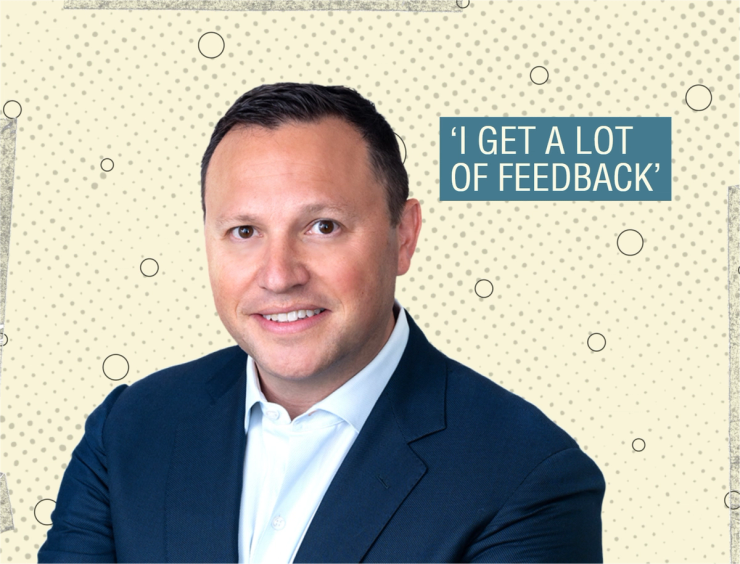
I get a lot of feedback! A large portion of my colleagues are experts at judging leadership performance. In some ways, that’s challenging. In other ways, that’s a great benefit. If you’re open to listening to people, there are an awful lot of observations that help make me a better leader.

Notable
- Turnover in US boardrooms has slowed, a recent Spencer Stuart analysis found, with this year marking the fewest number of new director appointments to S&P 500 companies for at least a decade. As boards sought more experienced directors, just 10% of the incoming class were aged 50 or under, while half of departing directors were in their 50s.