


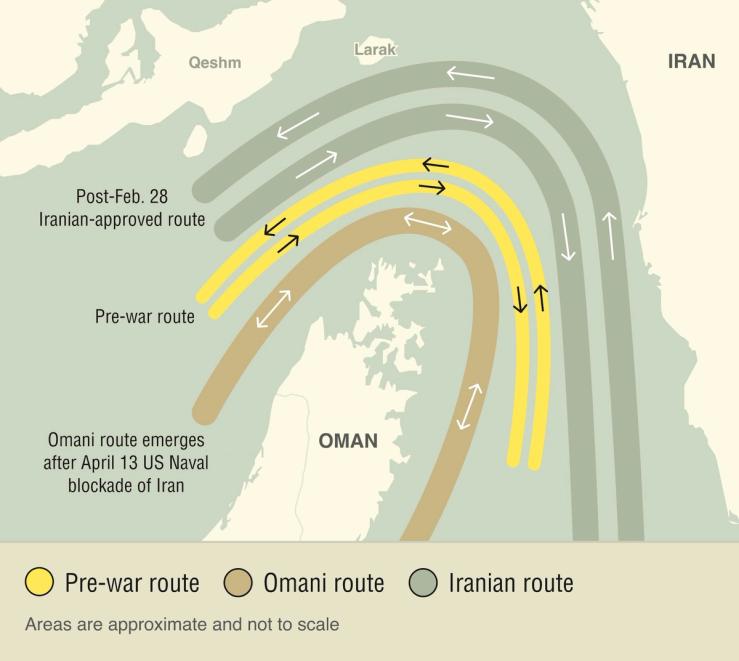
Before the mines, the drone strikes, and the tolls, the Strait of Hormuz functioned like a freeway, with two-mile-wide lanes for ships passing in either direction.
A fifth of the world’s oil and LNG transited daily, alongside crucial foodstuffs, petrochemicals, and other goods, mostly through the deep territorial waters of Oman. The traffic scheme was jointly proposed by Iran and Oman and adopted by the UN’s maritime body in 1968. Today that route is empty: Ships are steering clear because of Iranian mines, and a trickle of traffic is instead routing through temporary corridors hugging the Iranian and Omani coasts. Yet a new route is likely to emerge out of the expected agreement between Tehran and Muscat this week.
Those who predict the strait’s waning influence due to pipelines that bypass the maritime corridor, and the relocation of refineries and port operations are overestimating the ease of rerouting trade and underestimating the ability of Iran to retain strategic leverage, according to The Economist, which predicted Tehran’s hold on Hormuz will outlast the war with the US.