


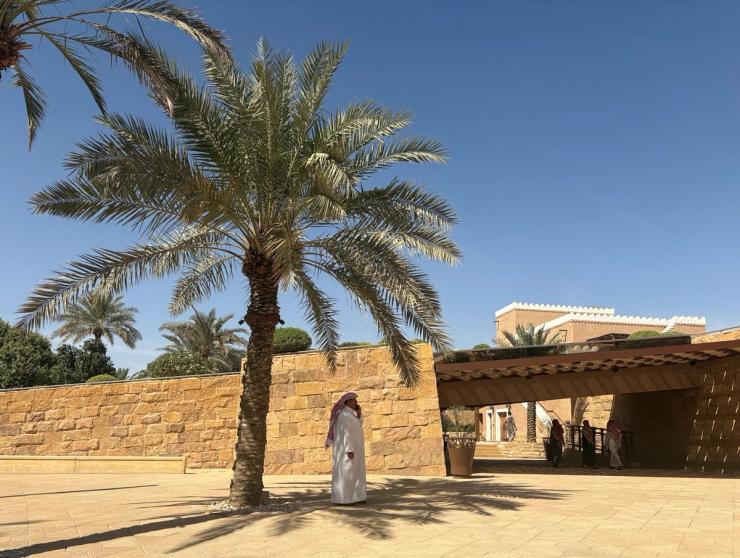
A Saudi-led group has pledged to plant 35 billion trees across the Middle East — an idea surely everyone can get behind. But what happens when extreme heat makes such projects essentially redundant?
That’s the question posed by Haya Alhusainan of the LSE Middle East Centre. Climate adaptation research has largely searched for measures that cut risk: heat warning systems, urban greening, better building design. They’re essential, she writes, but “often evaluated as though their effectiveness remains unchanged as climate risks intensify.”
Many of the Gulf’s solutions were designed for periods of blistering temperatures, not expecting those temperatures to become the norm. In Kuwait, for example, summer nights are warming faster than summer days, cutting the overnight cooling period that people and infrastructure need to function. Extreme heat therefore “evolves into a persistent environmental condition,” Alhusainan says, and strategies need to evolve. Because if the water runs out due to extreme heat, it won’t be much good having billions more trees.