




The Signal Insight
You rarely get paid $100 to work on your laptop and then take a nap, André Schwämmlein says, but that’s essentially what his company offers people who take its Greyhound buses between Boston and New York. A plane or train might cut 45 minutes off the journey, he says, but bus tickets are notably cheaper.
Schwämmlein, Daniel Krauss, and Jochen Engert founded Flix in 2011 to do for bus travel something akin to what Uber and Lyft have done to taxis. Five years ago, the Munich-based company jumped from Europe to the US by buying Greyhound Lines, whose intercity coaches have crisscrossed America since 1914.
Flix now serves 8,700 destinations in 45 countries, leveraging a network of more than 1,000 partner companies and vast amounts of data on where people might want to travel. And as the conflict in the Strait of Hormuz pushes up fuel costs for airlines and drivers, it thinks its pricing advantage gives it a chance to win over passengers who once shunned bus travel.
“We’ve seen quite a bit of a lift from higher airfares and air travel disruptions,” Schwämmlein says, which is helping fund investment in the Greyhound fleet. The new buses, equipped with free Wi-Fi, plentiful power outlets, air conditioning, and reclining leather seats, are “similar to flying premium,” he argues.
They also have more seats than older buses, allowing Flix to spread its own higher fuel costs over more passengers per journey. Such calculations are core to a company that talks of bringing a Silicon Valley ethos to a distinctly low-tech industry. Outside Greyhound, where it runs its own buses, Flix has an asset-light model which depends on data analysis to match other bus companies’ supply to demand.
“Most [transportation] companies start from the supply point of view and almost forget the customer,” says Krauss, who serves as chief information officer while Schwämmlein is CEO and Engert is a supervisory board member. But when Flix enters a new market, it doesn’t study existing bus routes; it looks at where people are traveling, by any means of transport, to model ideal networks to meet that demand.
US Department of Transportation data shows that bus travel has not fully recovered after collapsing during the pandemic, but the American Bus Association Foundation reported that the number of miles passengers traveled by motorcoach in the US and Canada grew 8.9% last year.
If you let data draft your market opportunity and focus on customers’ needs before suppliers’ cost structures, Krauss says, you can expand demand and reap higher profit margins than traditional operators make.
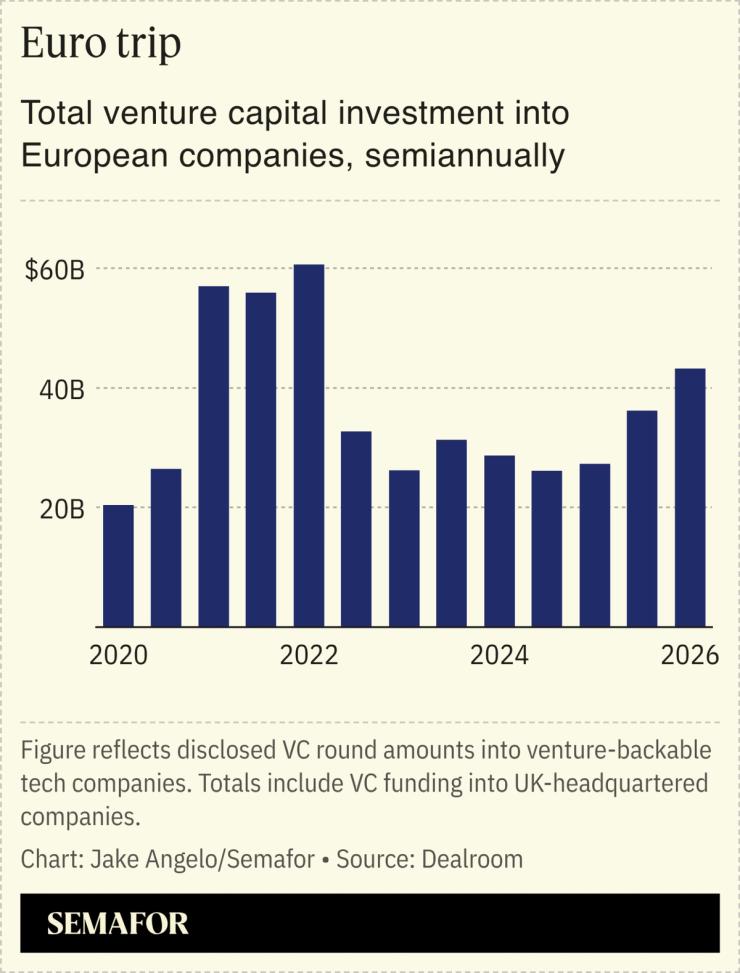
Backed by EQT and Kühne Holding at a reported €3 billion valuation, Flix has become a model for a continent that has struggled to spawn startups or “scale-ups” with global reach. And even as it invests in North American buses, European train services, and emerging markets, Flix’s founders are in no hurry to go public.
“We have no holding horizon, and we have no [internal rate of return] requirements,” Schwämmlein says. “We just have a legacy to build.”
This interview has been edited for clarity and brevity.
Andrew Edgecliffe-Johnson: You’re one of Europe’s most prominent scale-ups. How do you see Europe as a base for entrepreneurs?
André Schwämmlein: It’s good that we’re having this discussion with politicians and with other scale-ups on how [we can] create a more entrepreneur-friendly environment. You feel a different entrepreneur spirit in the US. It’s definitely harder in a fragmented market, so having one single market is key. But then [it’s about having] the global ambition, the motivation [and] drive to think big, and to accept that you can fail and that’s not a problem. That’s something where we have to step up as Europeans. A lot of it is mentality.
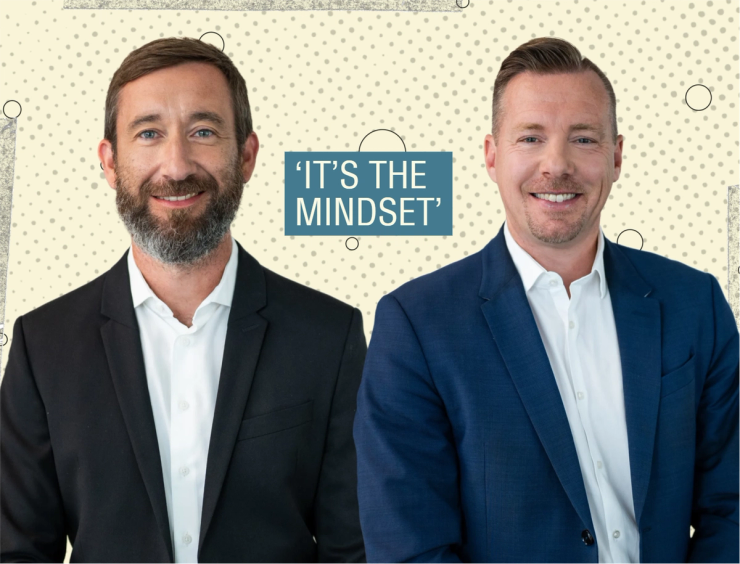
Daniel Krauss: It’s the mindset. People in Europe, particularly in Germany, tend to come very quickly to the politics and the regulatory [response]. Yes, there are things which can be done [to make it] more favorable to start a business, but we managed it. And that Western European attitude, like someone else has to take care of your own fortune — you can’t feel that in the US. Obviously some regulatory adjustments are needed, but it’s not always only the government that can be blamed for the difference between Silicon Valley and Berlin.
How does the Flix model work?
André Schwämmlein: We go to a country and we decide where we see demand, and then we look for the supply. So if you go into a market like Chile or Mexico, we’ll say we’re going to run between these cities, this is how the network should look, that’s what the data tells us. Because we can model a network in advance with the data we already have, and then we look for operators, and usually it’s people that are new to the industry.
Daniel Krauss: The data is almost like Newton’s gravitational constant, because this is how traffic basically works. And then with the data you can estimate very nicely, even in new countries, [what] a first draft of the network could look like. And sometimes that matches [an existing network], and then we reach out to bus companies [running those routes], but sometimes it’s totally different from what the incumbents would have done, and usually the data is better than the gut feel.
You’re expanding in a lot of places at the same time. How do you set geographic priorities?
André Schwämmlein: In every tech business, you assume that a US company is always a valid competitor. So we wanted to be in the US and a clear market leader in the US before [people] realized what we are building, but [Europe and the US] are actually [the industry’s smallest markets] globally. The big markets are the emerging markets: Mexico is three to four times the US in terms of market value. India, where we are also present, grows by the size of the European market every year. It’s mind-blowing. So Europe and North America comprise more than 80% of our business, but the growth will come from the Mexicos, Chiles, and Indias of this world.
What would I see if I went on one of the new Greyhound buses?
André Schwämmlein: The seating is very comfortable, it’s very easy to work there. The interior looks different; it’s not like this rotten seat. We appreciate the legacy — in the positive and in the negative — that we got with Greyhound. So the brand will stay, and we are very proud that it’s part of our group, but obviously what we want to achieve is that in 10 or 20 years people have a different image of Greyhound. What matters is you give us one chance, you try it out once — and then we have to deliver.
The three of you have quite distinct roles. What’s most important for getting that co-founder structure right?
André Schwämmlein: From the investments we do, we see more founder teams fail than succeed. It’s just very unusual that over a very long time you’re still the right people to run the company, that you’re still team members and friends. For the three of us, that’s still the case. We all have our roles, and we are very complementary. There’s a huge amount of trust, to the level of blind trust, and a lot of transparency, and that’s essentially the key. Obviously we are not going out every Friday, like in the early days, but [we have] this base of transparency, trust, and friendship, and we have a common goal. It can never be the three of us against each other; we always have to be together to help Flix succeed.

Notable
- This year’s collapse of Spirit Airlines prompted a 30% year-on-year increase in passengers on FlixBus and Greyhound buses overlapping with the carrier’s routes. Online search activity rose by 20% the week after Spirit failed. Industry advocates see ridership getting a more lasting boost from modernized buses, renovated terminals, and the fact that fewer young Americans have driver’s licenses.