


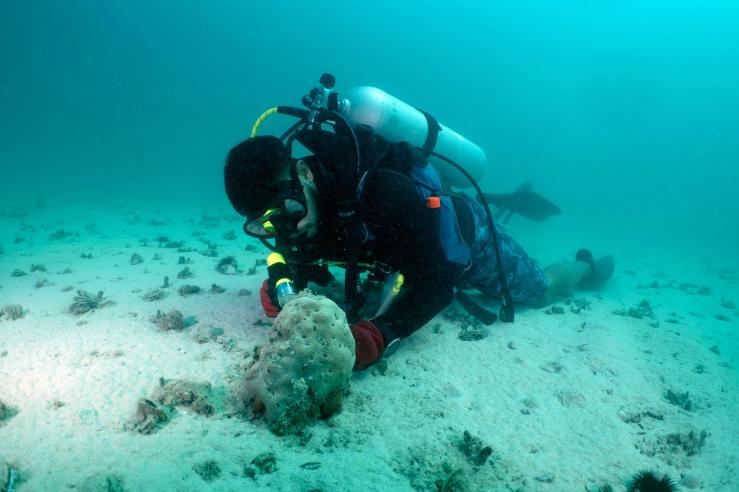
A three-year effort to map the oyster population in Abu Dhabi’s waters yielded more than expected, according to the emirate’s environmental agency.
Using old pearl diver maps, firsthand knowledge, and modern survey data, as well as Hawksbill sea turtle tracking (the endangered turtles are known to congregate around oyster beds), researchers found that oyster beds cover around 7% of Abu Dhabi’s marine environment. The effort resulted in a robust map of a crucial animal in the Gulf’s ecosystem, which the agency has pledged to help safeguard. Researchers found a relationship between oyster beds and gatherings of fish and whales. The mollusk is also a contributor to carbon storage: As they grow, oysters draw dissolved carbon from the seawater to produce calcium carbonate, the mineral that forms their shells.
The collapse of the Gulf pearling industry — which began in the late 1920s on the arrival of cheaper Japanese cultured pearls — brought widespread poverty to the region, until the discovery of oil shortly after. The ups and downs of the pearl trade became a parable in some Emirati circles for the need for the country to embrace the potential of technology: Ignore innovation at your peril.