



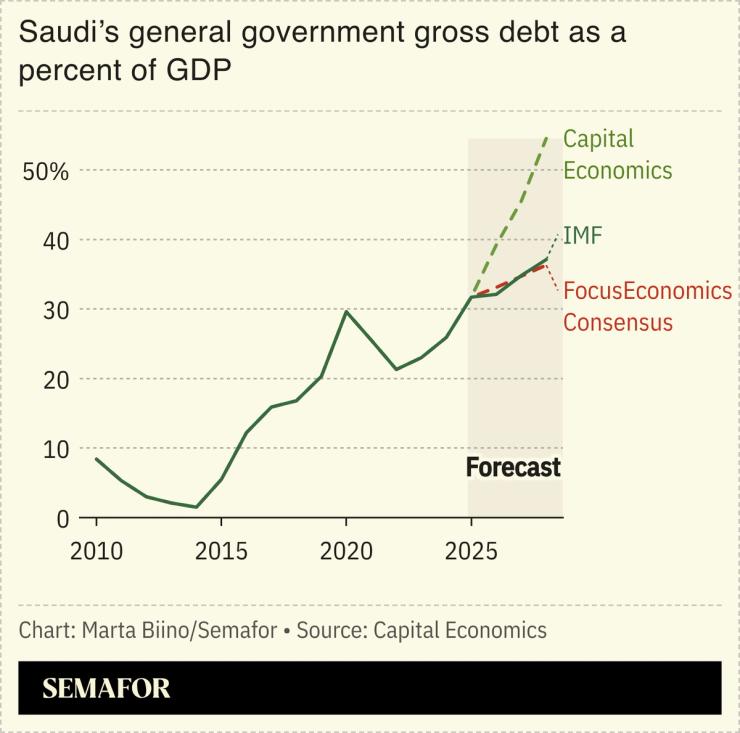
Saudi Arabia’s debt levels could reach 60% of GDP by 2030, which could push up borrowing costs and put pressure on the government to tighten spending, according to consultancy Capital Economics.
The kingdom’s debt levels, while low compared to most other countries, are expected to continue rising, based on the assumption that the oil price spike following the closure of the Strait of Hormuz fades and crude prices fall over the next few years, the firm said. Its projection is far worse than that of most other economists; the Saudi government’s own forecast is for debt of around 33% of GDP by 2028, up from 32% now.
The Saudi government has said that it is borrowing to invest in economic transformation projects and that its focus is on growing the non-oil economy. The Capital Economics scenario could also lead to higher government borrowing, which could crowd out private-sector firms.