
The Scoop
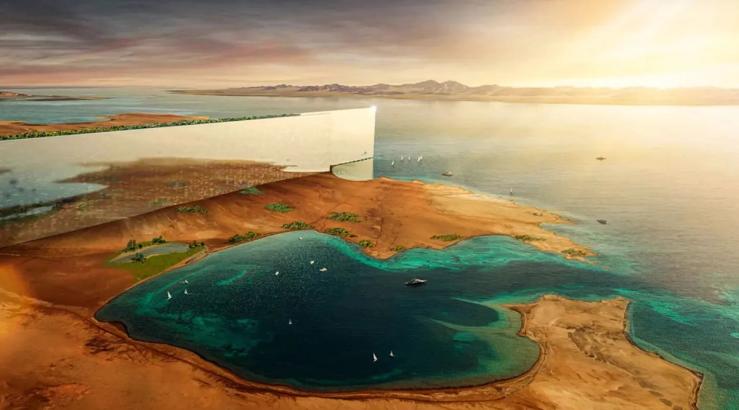
Saudi Arabia’s NEOM has delayed further work on The Line — the planned 170-kilometer long dual skyscrapers once projected to cost more than $1 trillion — until at least after 2030 as the kingdom’s sovereign wealth fund shifts spending toward developing infrastructure like ports and data centers.
NEOM — the company developing the northwest corner of Saudi Arabia which is controlled by Public Investment Fund and chaired by Crown Prince Mohammed bin Salman — has also postponed plans to develop tourism destinations along the Red Sea coast until after 2030, according to people familiar with the matter. Trojena, the mountain resort which had earlier been due to host the 2029 Asian Winter Games, will not receive new investments until after 2030 either, the people said.
What is left of NEOM are the more immediately practical, productive bits. NEOM plans to spend about $3 billion further developing OXAGON, the nascent industrial city that hosts a port on the Red Sea. That port has become a key part of Saudi Arabia’s efforts to create new trade routes following the closure of the Strait of Hormuz. The kingdom is investing in utilities and data connectivity there in a bid to attract AI firms to build data centers.
The decisions are the result of a strategic review conducted by NEOM’s Chief Executive Aiman al-Mudaifer after his appointment last year. As part of that review, NEOM has also further scaled down ambitions for how many people will live in NEOM by 2030: the target is now up to 100,000 people. At one point, NEOM executives had envisioned 1.5 million residents by the end of the decade before revising the forecast down to 300,000 two years ago.
NEOM did not immediately respond to a request for comment.

Know More
Pushing back work on The Line back until after 2030, and also significantly redesigning its twin mirrored skyscrapers, is part of efforts to make NEOM less costly to develop. However, it’s unclear when the redesign will be completed or when the project would get any new funding allocated to it, the people said.
Postponing development of one of the kingdom’s most iconic projects is the latest sign that Saudi Arabia is taking a more pragmatic view of its ambitions. Earlier in May, Public Investment Fund said it will stop funding LIV Golf after putting $5 billion into trying to make the breakaway league sustainable, and a few months earlier, plans to build a giant cube in Riyadh, known as the Mukaab, were also put on hold.
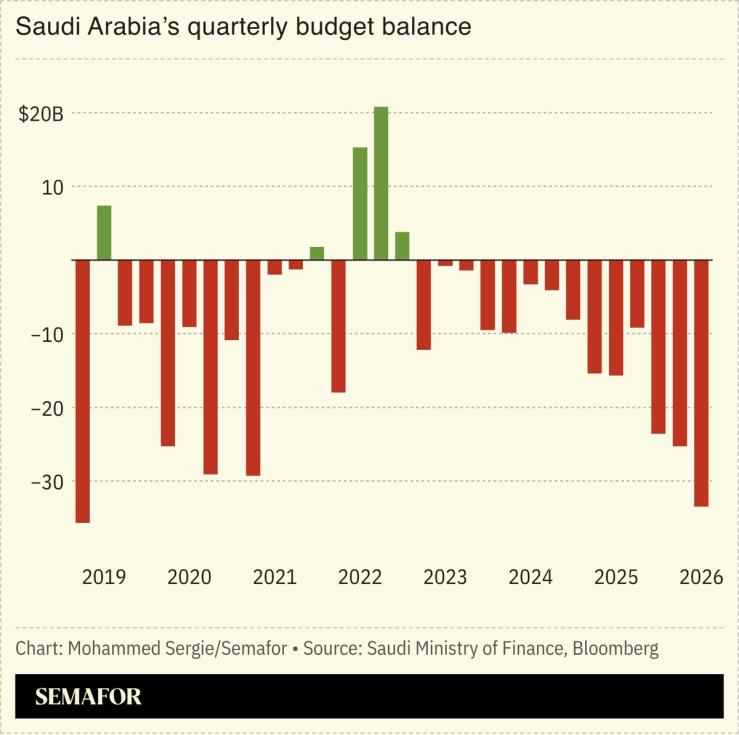
Widening budget deficits, lower-than-expected foreign investment, and questions about the feasibility of some of the PIF’s projects forced authorities to reassess priorities even before the Iran war hit economic confidence.
Saudi Finance Minister Mohammed al-Jadaan said last year that the government isn’t concerned with “ego” when it comes to making decisions about projects. “If we announce something and we need to adjust it, accelerate it and make it a priority more than others, or defer or cancel it, we will without blinking,” he said.

Notable
- Saudi Arabia recorded its biggest quarterly deficit since 2018 as the kingdom ramped up spending to offset the effects of the Iran war and a slowing economy.