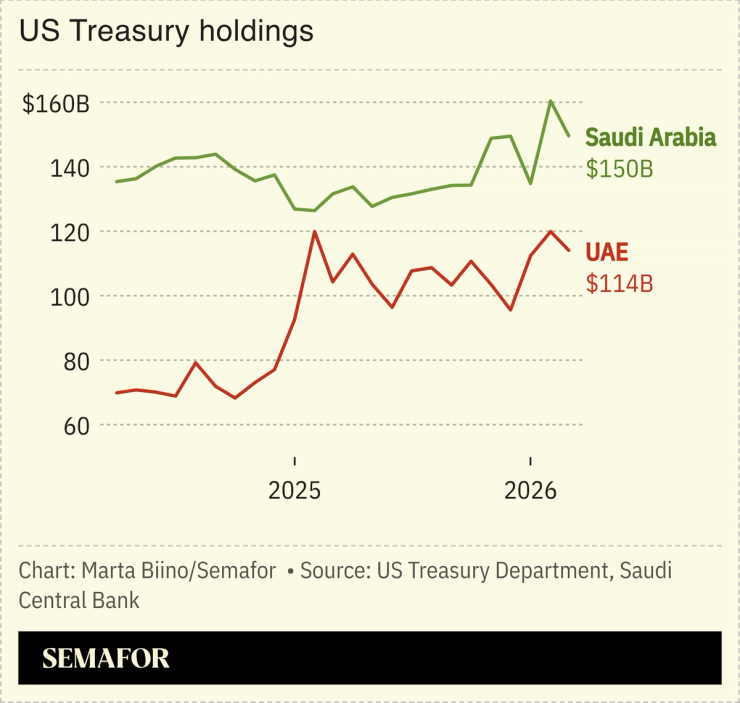
Saudi Arabia and the UAE trimmed their holdings of US Treasurys in March by nearly $17 billion, as the Iran conflict hit crude exports, their key source of dollar income.
The two countries are usually some of the biggest buyers of US government debt, ranking among the top 20 holders of treasury bills.
However, it is not just a question of oil revenues. The Saudi Central Bank, which manages the government’s foreign debt holdings, said in April that total foreign reserves rose in March to $497 billion, a six-year high, even as the US debt holdings fell. Saudi holdings of US Treasurys had also fallen in January but rose sharply in February, pointing to wider portfolio considerations influencing the changes.
While the drop in treasury holdings in March gives some indication of the impact the war is having on the ability of Gulf oil exporters to put crude revenues into US assets, they remain at historically high levels. The UAE’s holdings are up by $44 billion, or 63%, over the past two years, as the country has doubled down on ties to the US, and Saudi Arabia’s holdings are up by more than 10% over the same period.