




Wael’s view
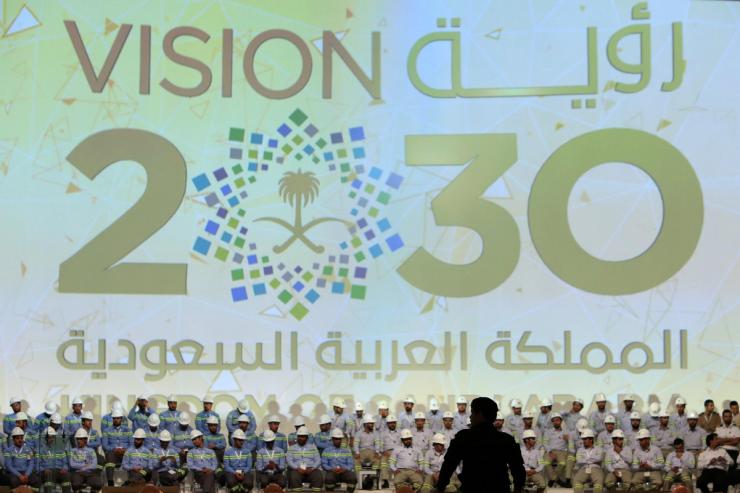
On paper, Vision 2030 is succeeding. The Saudi government’s latest annual report on its diversification strategy shows real GDP up 4.5% in 2025, while non‑oil activities now account for more than half the economy, and unemployment is at historic lows. The machinery of 1,290 initiatives and nearly 400 key performance indicators is performing as hoped.
But success measured only in numbers can be a trap. Much like Goodhart’s Law, when careers depend on hitting annual targets, it becomes tempting to tweak definitions or chase whatever is easiest to measure.
For me, the most important achievement of Vision 2030 is something you cannot plot on a graph: the way it broke the old culture of corruption.
The annual report talks carefully about “stronger institutions” and a “more predictable ecosystem for businesses and investors.” Behind that neutral language is a radical change. Deals that once depended on personal connections and informal payments now go through digital platforms and are governed by clearer rules.
Saudi Arabia’s score in Transparency International’s Corruption Perceptions Index placed it 45th globally last year, a significant improvement over the past decade. More telling is what happens on the ground. The government’s anti-corruption agency Nazaha conducted more than 32,000 raids and 4,800 investigations in 2025 alone, with expanded mandates covering major institutions and unprecedented transparency in monthly reporting.
This is part of a sustained enforcement apparatus embedded across government — and the reason investors now believe contracts will be honored and decisions made on merit.
Without the anti‑corruption drive, new startups would represent licenses on paper, not real investment. Women’s workforce entry would have been filtered through wasta, or personal connections, rather than rules. State megaprojects would deter private capital rather than attract it.
The kingdom also now ranks second globally in digital government maturity, with near‑perfect scores on the World Bank’s 2025 GovTech Index. That matters because digital platforms replace discretionary paper processes — where corruption thrives — with transparent, traceable systems where it cannot.
Less corruption is leading to a more vibrant private sector. SME employment hit 8.8 million, beating the 2027 target early, with loans to the sector at 11.3% of total bank lending. Registering a business now takes minutes, not months.
It is this progress, in sum, which has helped Saudi Arabia’s credit rating to reach AA-, non‑oil revenues to more than double since 2016, and foreign investors to take the kingdom seriously.
Yet what matters for the next five years are survival rates, revenues from private clients versus state contracts, and contract enforcement speed — indicators that determine whether today’s boom is short-lived or becomes tomorrow’s resilient private sector.
There is clear room for improvement. Women’s labor participation climbed to 36.6% from 22.8%, enabled by anti-harassment laws, commute subsidies, and reshaped workplaces. But women’s economic participation slipped in 2025 and remains concentrated in narrow sectors and lower‑value roles. The next phase must measure fit, progression, and diversity — not just headcount.
Private sector GDP contribution is still only in the high 40s, well below the 65% target, while the government’s Public Investment Fund’s balance sheet is nearing $1 trillion. The blurred line between public and private — state companies structured as firms, projects dependent on sovereign guarantees — may jumpstart sectors but is not sustainable. The real test is whether genuinely independent companies create the most new jobs by 2030.
Environmental performance tells a similar story. Recycling rates have tripled and 64 gigawatts of renewable power plants are planned, but Saudi Arabia’s position on a global Environmental Performance Index barely moved over the past five years. Counting megawatts is easy; measuring cleaner air and secure water supplies is harder — yet that is what sustainability must mean.
Saudi Arabia’s World Happiness Report ranking rose from 37th to 22nd, life expectancy is near 80 years, and 1.75 million volunteers are now active. These indicators approximate how people experience change, and should be a main focus.
The final phase of the Vision 2030 initiative must embrace uncomfortable qualitative measures: Do graduates feel prepared? Do founders find the regulatory environment predictable? Do women feel safe and fairly promoted? These require surveys and a willingness to publish unflattering findings.
Vision 2030 built a culture of measurement. The risk is that culture becomes an end in itself. The final phase should deepen what will outlast the Vision: trusted regulators, a self‑financing private sector, matched skills and jobs, sustainable environmental policy, and institutions so clean no one remembers corruption as the hidden tax once levied on every deal.
If the first decade ended an old way of doing business, the last five years must lock in that change so it cannot return.

Notable
- Some Vision 2030 goals have been accomplished more easily than others, while other elements have evolved since the strategy was launched in 2016, according to Annelle Sheline, Kristian Coates Ulrichsen of the Baker Institute.