




The News
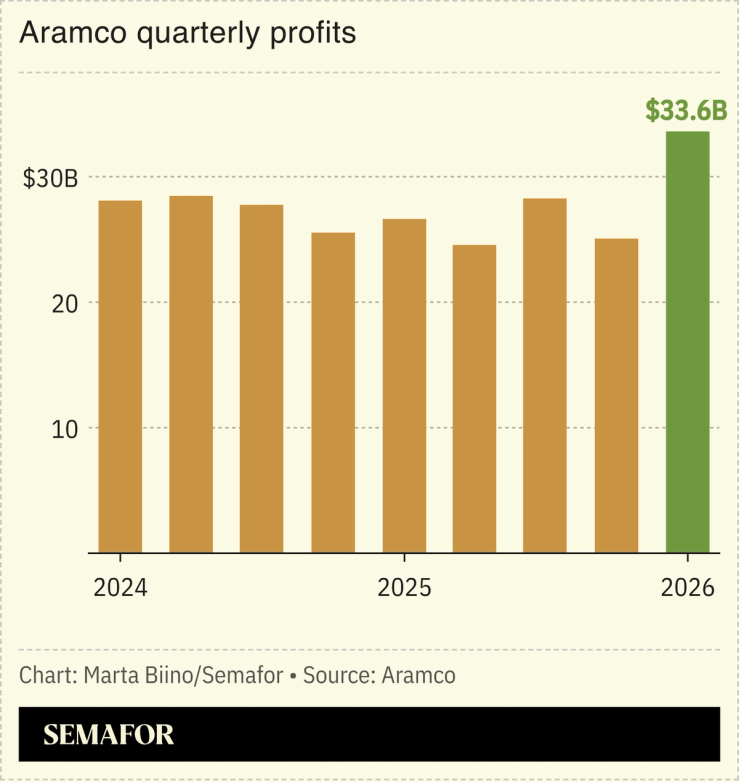
Aramco’s profit jumped in the first three months of the year after surging oil prices helped offset lower exports from the closure of the Strait of Hormuz, justifying the strategic value of the kingdom’s decades-old investment in pipelines that bypass the chokepoint.
The company, which provides more than half of government revenues, also bumped up its quarterly dividend payment by an additional $742 million. Most of that cash goes to the Saudi finance ministry and the Public Investment Fund.
Aramco’s East-West pipeline — which has been moving 7 million barrels of oil a day from the Gulf to the Red Sea — “has proven itself to be a critical supply artery, helping to mitigate the impact of a global energy shock,” chief executive Amin Nasser said in a statement.
The pipeline has been critical not just for Aramco, but also for the Saudi state. While other Gulf countries contend with massive drops in their exports, the kingdom has been able to maintain flows and bring in hard currency.
Aramco’s average selling price of its crude rose from $64.1 a barrel in the last quarter of 2024 to $76.9 a barrel. Oil prices have hovered around $100 a barrel so far this quarter.

Know More
Even with Aramco’s higher profits, the government said last week oil revenue had declined, which — along with higher state spending — contributed to the widest budget deficit since 2018.
The dynamic may reflect the government forgoing some income from domestic oil sales because it had to boost fuel subsidies to maintain its cap on prices in the kingdom. It may also indicate that the higher royalty rate that Aramco pays on elevated crude prices didn’t kick in because overall volumes were relatively lower due to the closure of Hormuz.