


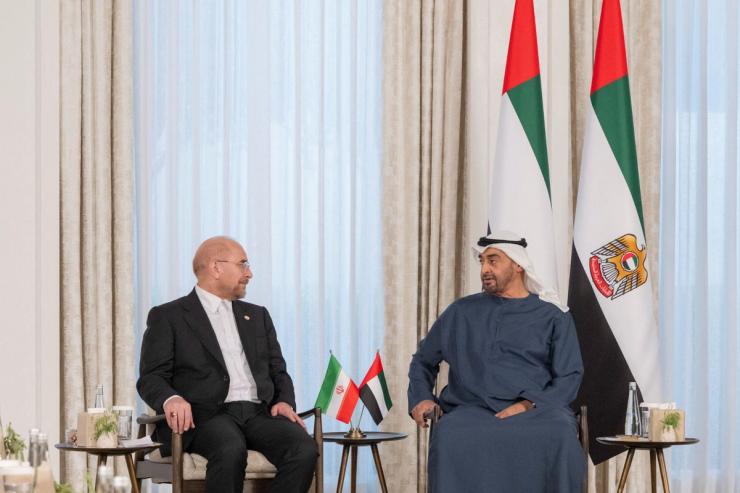
Iran is reviewing the latest US peace proposal, though its initial response was more measured than President Donald Trump’s optimistic assertion that a deal was “very possible.” If a concord can be struck and the war brought to an end, UAE residents will be among those breathing the biggest sighs of relief after their country was singled out for Iranian attacks again this week while other Gulf states were spared.
Iranian officials denied responsibility for the attack on Fujairah Port on May 4, but also said the UAE “should not serve as a nest for Americans and Israelis and their military forces.” In response, the UAE said its international relations were a sovereign matter, and “no party has the right to use them as a pretext for threats.” UAE President Sheikh Mohamed bin Zayed had a rare phone call with Israeli prime minister Benjamin Netanyahu this week, following the latest Iranian attack.
Still, Iran has always used the UAE as a route to international markets, and Dubai in particular was full of Iranian businesses and bank deposits before the war. That economic lifeline has now been cut. Tehran may also be seeking to exploit the schism between Abu Dhabi and Riyadh by creating “tension between the Emirati desire for retaliation and the Saudi wish for calm,” as The Economist put it.