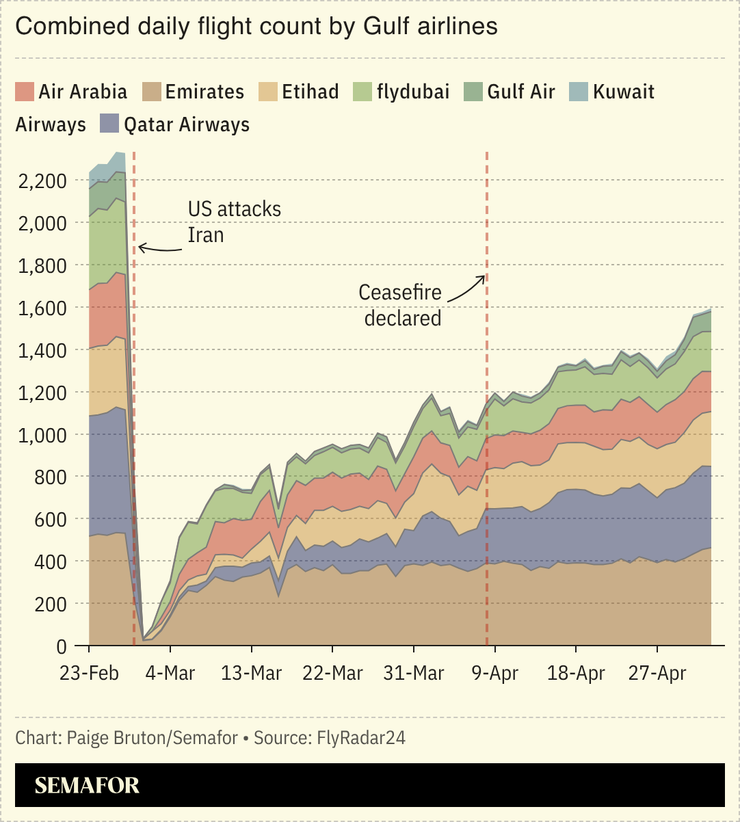
Renewed Iranian strikes on the UAE on Monday forced incoming flights to stay in holding patterns or reroute, before operations returned largely to normal overnight.
The episode was a reminder of the aviation sector’s fragile position: Dubai International Airport had only just returned to what CEO Paul Griffiths described as full capacity, after operating at 38% of its normal rate for most of April. In an interview with The National, he said first-quarter passenger numbers were down 21% year-on-year, but he predicted “very strong passenger growth numbers over the next few months.”
Doha’s Hamad International is recovering more slowly. Qatar Airways is targeting 150-plus destinations by mid-June, from a prewar peak of roughly 170. Riyadh is also in a phased recovery, with Saudia now running roughly half its capacity before the crisis and British Airways due to restart services on May 20. Other European carriers, including KLM and Lufthansa, have suspended service across most Gulf routes through late June and beyond. The risk of further wartime disruption remains high, and elevated fuel costs add another challenge, but local carriers could at least face a market with fewer international competitors for a while.