


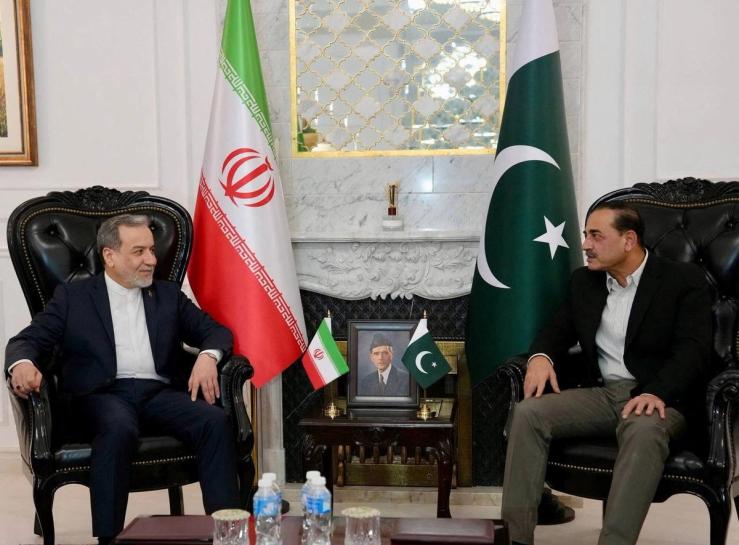
Pakistan has become one of the most consequential players in the Iran war, taking on a risky mediation role that draws on its ties with Tehran while keeping its financial lifeline with the Gulf intact.
The nuclear-armed country — which shares a 900-kilometer (560-mile) border with Iran — is energy-poor, and its fragile economy leaves little room for geopolitical missteps.
For now, Islamabad is maintaining a delicate balance: It has kept US-Iran talks alive and secured ongoing Gulf funding. But Iran’s latest proposal, delivered via Pakistan and focusing on reopening the Strait of Hormuz, was rejected by US President Donald Trump, amid frustration that Tehran has not made concessions on its nuclear program.
Whether Iran is negotiating in good faith is reportedly at the center of Abu Dhabi withdrawing some support for Islamabad, according to the Financial Times. The UAE’s demand for a $3.5 billion loan repayment from Pakistan put its IMF program at risk. Saudi Arabia stepped in with $3 billion to plug the gap, building on closer ties that include a mutual defense pact. UAE officials deny a direct link to mediation, but the timing is notable.
Pakistan is navigating a complex field: rivalry with India, a volatile Iran next door, and a less unified Gulf still shaped by the Saudi-UAE rift that predates the war. Gulf leaders are scheduled to meet in Jeddah on Tuesday to discuss the conflict, the Strait of Hormuz, and Pakistan’s mediation efforts.