



The Signal Insight
When Iran launched missile and drone strikes against the Gulf on Feb. 28, Dubai faced an immediate test of its defenses and a longer-term threat to confidence. The city’s brand — a safe, efficient, business-friendly hub for capital, tourism, logistics, and talent — was suddenly under scrutiny from investors, multinational executives, and residents who had chosen to build their businesses and lives there.
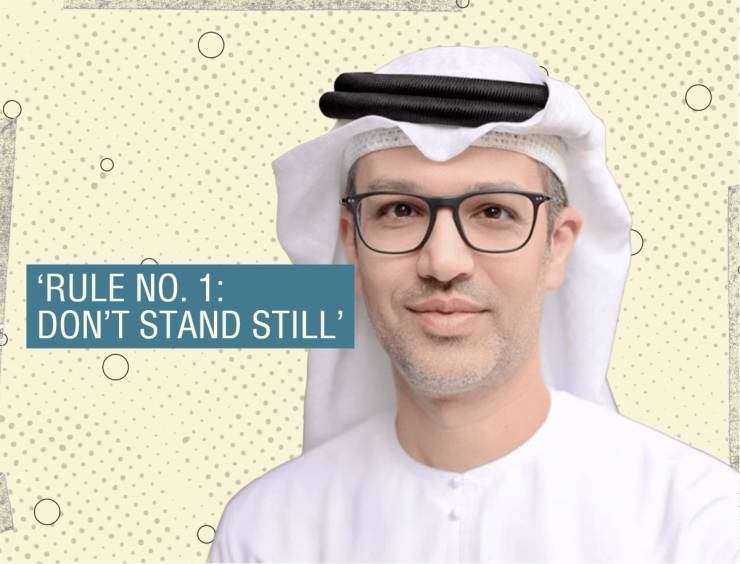
Hadi Badri, who is tasked with enhancing the city’s global appeal as CEO of the Dubai Economic Development Corp., says the government had to overcome the instinct to turn inward. Instead it engaged, quickly and regularly sharing information with investors and businesses, and listening to concerns to project confidence that Dubai would emerge stronger.
In an interview on the sidelines of Semafor World Economy in Washington, DC, Badri describes a crisis response rooted in data: His team now tracks 200 economic indicators each day to get early alerts of stresses that broader, lagging metrics might miss. Dubai’s long-term goals, including the city’s “D33” economic targets for 2033 and its population growth forecasts, remain intact.
Here’s how he describes the lessons Dubai learned from previous crises, and why he believes a leadership “moat” will make this conflict look like a “speed bump.”
This interview has been edited for length and clarity.
In the early days of the conflict, what mattered most?
It’s very easy in crisis mode to insulate, to step back. And actually for us, it was really important to step forward and make sure that people, whether they’re individuals, investors, or businesses, feel that the government is there to support them and they’re not in it alone.
What did that engagement look like?
There are tens of thousands of investors and professionals who are living in Dubai, who are spending their time going to work every day and building the new Dubai. We set up webinars to engage with them, to explain to them our defense system, because this was all new. People needed to understand what system we had in place to keep them safe. And also [we wanted] to be able to share the actions that we were taking, share the data that we were getting on the health of the economy and how we were planning to navigate, and also to capture their input. In that moment, it’s really important to be able to make sure that people feel heard.
Did that require a conscious push inside the government?
Firstly, we had to walk the talk with them as well. Internally and externally, it was really important for us to really up our game and amplify the engagement, the communication, to make sure that people felt that they could reach out to us, engage with us, ask the tough questions and get the answers. And the reality is some of the tough questions we couldn’t answer because it’s a very fluid situation.
What did you see in the economy, and how did you monitor it?
We track 200 metrics for the economy on a day-to-day basis to really gauge what’s going on in logistics, in tourism, and so on. Now, it’s fair to say some of the sectors have significantly reduced volumes. We do have far less tourists coming into Dubai than we did pre-this period. But we’re having more tourists now coming in than are leaving. So that’s a good sign. Equally, on the logistics front, we haven’t had the same kind of disruptions that you would expect [because] we had invested during the COVID period to diversify. So yes, maritime logistics has been affected, but air cargo has really shot up. And Emirates has been investing over the past few years to double its capacity in air cargo and has been able to take a lot of the volumes that would otherwise be for sea onto their air cargo to make sure that we have the right stocks in place. We have four to six months of food supplies in Dubai, and we keep reiterating that to our residents to make sure that they’re feeling comfortable.
What changed once you built that system?
This is where we convened with the private sector and with the government entities and said, look, we need to have a good pulse on what’s happening. If you take logistics as an example, the logistics champions of Dubai got together. Every 48 hours we have a call. And it was a forcing function for us to say, Jebel Ali is closed, but how about we open up a few other ports? Let’s work on that. Let’s create this green corridor with Oman that allows for products to come in and out.
Has the conflict changed Dubai’s long-term economic agenda?
D33 is our North Star. It’s the Dubai economic agenda. It was set three years ago. His Highness has a very clear vision for what we want to achieve for Dubai by 2033 to celebrate 200 years of the Al Maktoum family ruling Dubai. And so we’re staying the course on that. Actually, none of the KPIs have changed.
For us, it’s really about how do we make Dubai a top three global city? How do we double the size of our economy? How can we be more productive? How can we become the world’s leading talent hub? All those targets we stay the course on. Now, we have to adapt, as we do whether there’s a challenge or not, because the world is changing so quickly. There’s so much velocity of change every month, whether it’s geopolitical or technology-related. And so we are always adapting the “how” for what we want to achieve. The “what” is very clear.
We are looking at reprioritizing some of the initiatives that we have in flight. We have over 100 projects that we’re working on at the moment. Some will be paused. Others will take their place in terms of bandwidth, mindshare, and investment. But the reality is, a lot will be fast-tracked as a result of this so that we can emerge stronger.
Will more of Dubai’s own capital now stay at home?
Dubai will continue to invest in itself. But the model of Dubai is really to get private-sector investment to come and be part of the success story. And that’s domestic investment and that’s also international investment. Our foreign direct investment last year was up 50%.
We see that as a real sign of confidence. Now, what we’re experiencing today is a bit of a speed bump. But we’re confident that we’re going to be able to get back on track because the medium- and long-term fundamentals of Dubai, of the UAE, of the region, we believe are still intact — and actually, we think, can be even more positive going forward.
How do you restore confidence when safety has come into question?
In fact, the people that are in Dubai today are taking quite a different approach. They’re saying, ‘We didn’t know that Dubai and the UAE had this defense system. So actually, it gives us even more confidence.’ It doesn’t dent in any way the safety and security aspect. They’re saying, ‘We now know that actually we are safer and more secure in Dubai than maybe anywhere else in the world.’ So that has been amazing — to see everyone come together as a community to say, what can we do as individuals, as businesses, to help other individuals and businesses? Also, it’s really important to remember Dubai had its challenges in the past, whether it was the global financial crisis [or] COVID.
Our fiscal position today is also very different. Dubai’s government debt is down 75% relative to what it was during COVID. Our fiscal surplus is 4% of Dubai’s GDP. For every $100 that we spend, we collect $115. And there aren’t many nations in the world that are able to say that. So we don’t need foreign capital. We attract foreign capital because we want people to be part of the success story.
What did the financial crisis and COVID teach Dubai officials about moments like this?
The reality is we have to rethink all the time. How do we diversify? How do we make sure that we’re not overly indexing on one sector versus another sector? The whole machinery of Dubai, the thinking, the implementation, was all about: How do we diversify and add more sectors that can contribute to GDP, more source markets in terms of tourists, more source markets in terms of FDI? There was a rethink on the back of COVID, where we proved business resilience around supply chains — Dubai did incredibly [because] our ports and airports were open while others were closed.
What has this required from you personally?
For me as a leader, it’s really been about being patient, being proactive, and being positive. And those sound like obvious things that a leader should do. But actually, in a time of crisis, it’s not so easy, ramping up the engagement and helping people understand that out of every crisis, Dubai has emerged stronger.
The analogy I like to use with the team is to say that Dubai was built from pressure and adversity. We actually get stronger as a result. Diamonds are built from pressure. Pearls are a sign of adversity. They come out because of adversity. And Dubai is the crown jewel of our region. It has been, it will be. And so this is only going to make us stronger.
Our teams understand that this is fluid. They understand that Dubai has a track record of recovery. Out of the global financial crisis, it took us two years to fully recover. And three years later, we actually set a new high-water mark. The same in COVID.
What is Dubai’s moat?
Rule No. 1, don’t stand still. When I was meeting investors in New York recently, the concept of a moat kept coming up. Investors like this word, “moat.” And so it made us reflect, what is the moat for Dubai?
The moat for Dubai is really about leadership and them taking decisions within hours, not months. The moat is about the residents and the businesses in Dubai who, despite all the challenges, keep going. They go to work every day. They keep building out of Dubai. The moat is about how we continue to engage with the private sector as a government so that they’re part of this journey, and so we create opportunities for them to invest. And the moat is about avoiding inertia, because it’s very easy in a moment of crisis to just stand still. And so we spring into action.
Final question: Has this conflict tarnished Dubai?
Not tarnished because of this conflict. Strengthened because of this conflict. The community has come together in a way that I cannot describe. And people are doubling down. People are saying, “I am here.” People are saying, “I want to contribute not just to the economy, but anything I can do to really support the new Dubai going forward, I’m ready.” The reality is that if you’re on social media and you want to get followers, you put “#Dubai,” and then all of a sudden your followership goes up. That’s what Dubai has created. It has created an amazing brand, an amazing community.
Where I see Dubai in five years, I hope, [is] very well on its way to delivering its D33 objectives that were set by leadership as we have been achieving over the past three years. A much stronger community, international investors who are saying, “I really am glad that I was bold enough to go in and put my money in June or in September, 2026, because look at the payback and look at what it’s achieved for me.” And a city that really proves time and time again, even on the back of this situation, that we come back stronger.

Notable
- Some international coverage of wartime Dubai has been tinged with schadenfreude, but love letters from UAE-based journalists have provided an antidote. Yaroslav Trofimov, The Wall Street Journal’s chief foreign affairs correspondent, wrote of a sense of “personal insult as Iranian missiles started raining.” A columnist for The National argued that trust in the government and the country’s resilience will outlast the skepticism.
- Dubai announced it’s building a new $9 billion metro line this week.
This story was updated to clarify Badri’s comments about Dubai’s fiscal surplus.