



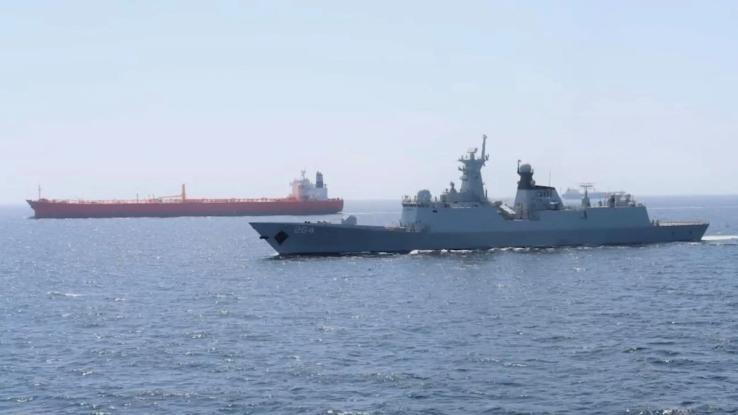

Matthew’s view
If I had one takeaway for the Middle East from last week’s meetings at Semafor World Economy, it is that it is impossible to overstate how much Gulf trade will be reshaped by the crisis in the Strait of Hormuz.
The narrow waterway has served as the region’s main artery for commerce since the dawn of major seaborne traffic in the 1960s, but Iran’s closure of it has demonstrated the reality of a long-threatened nightmare scenario. Now that Tehran has proven it can bring regional trade to a halt, and that the US and the Gulf’s other allies have been unable to prevent it, a scramble is underway for alternatives.
In closed-door conversations with Gulf diplomats and government officials at Semafor World Economy in Washington, DC, I saw a growing resolve to build new trade routes. Iran has overplayed its hand, they argue. Some even talk of a long-term goal to make the Strait of Hormuz irrelevant. That may be an overreach, but it indicates the direction in which the region is heading.
The UAE is set to boost the capacity of oil pipelines that take crude to Fujairah’s port, which lies outside the Gulf. The port of Khor Fakkan, which also sits outside the strait, could see a wave of investment to diversify the UAE’s trading capacity further. Bahrain will start trucking aluminum exports through Saudi Arabia to regional customers, and on through the kingdom’s western ports to international markets. A plan for a second causeway between the island nation and Saudi Arabia may be accelerated. A long-discussed Qatar-Bahrain route may also finally get moving, along with further momentum for a region-wide rail network.
At the center of it all is Saudi Arabia. The kingdom has used this moment to rapidly move forward on its goal of becoming an international logistics hub. Forty years ago, it built an underground pipeline to allow it to move oil from its Eastern Province fields to the west coast for export. The heavy investment involved seemed an unnecessary luxury until last month, when it suddenly became essential.
Saudi Arabia has also launched a raft of new shipping lines through its west coast ports since the war began. A port constructed at NEOM — intended to bring in goods for construction of the nascent region — is now a crucial lifeline for regional trade. Riyadh has also liberalized rules to ease overland trade, for example allowing foreign-owned empty trucks to enter the country to pick up goods for export.
The kingdom will not easily let go of its new status. It will look to invest further in new oil export pipelines, cross-border cables for data centers, and shipping lines to bring in goods and ensure its growing non-oil exports have a route to market. The India-Middle East-Europe Economic Corridor (IMEC), a Biden-era plan to build new trade routes through the region, is also back on the agenda. Diplomats tell me the proposal is once again getting attention from policymakers in the Gulf as well as in Washington.
None of these initiatives will solve today’s problem with the Strait of Hormuz closed. Some may fall victim to regional political rivalries and never materialize. Even so, the region will never be the same again.

Notable
- If Iran continues to control the state, tolls could equate to $50 billion dollars per year, 80-90% of which would be paid by Gulf States, the Atlantic Council wrote in a new brief about the potential outcomes of the war.