




Wael’s view
In March 2012, Saudi Oil Minister Ali Al-Naimi gathered a small number of journalists in Doha to deliver what he intended as reassurance. Iran was threatening to close the Strait of Hormuz. “If you believe Hormuz will be closed,” he told the group, myself included, “I will sell you the Empire State Building.”
He was not wrong to be confident. For decades, the Hormuz threat was the Middle East’s version of mutually assured destruction — rhetorical, ritualistic, and ultimately self-defeating. Iran needed the strait open as much as anyone else.
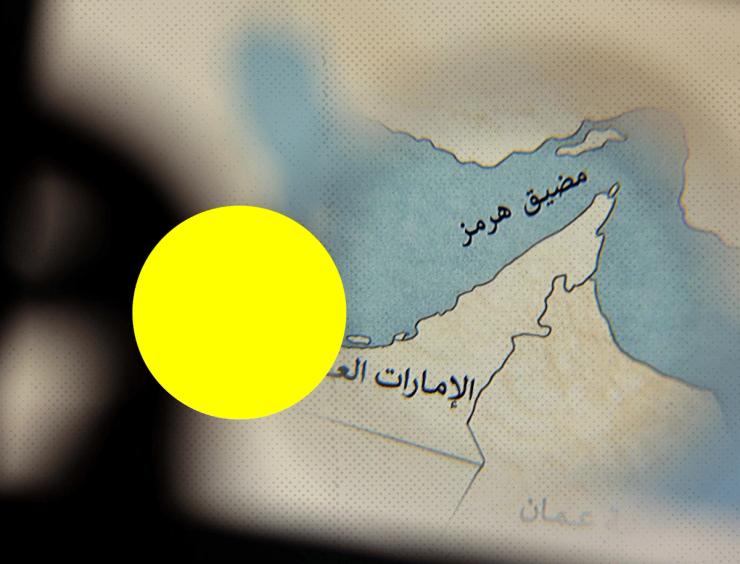
Until it didn’t. Since Iran effectively closed the strait in response to the US and Israeli bombing campaign, transit rates through the world’s most critical energy corridor have fallen from more than 130 vessels per day to just 7 or 8. More than 800 ships were stranded in the Gulf, including 426 oil tankers carrying an estimated 172 million barrels of crude. Between 12 and 15 million barrels per day were removed from global markets — the largest oil supply shock on record.
And nothing — no military coalition, no legal invocation, no emergency session of the UN Security Council — has been able to stop it.
The most consequential outcome of the conflict, thus, is not the ceasefire, the decapitation of Iran’s leadership, or the destruction of its military infrastructure. It is what Iran has learned: that controlling the strait is achievable, and that the world, when confronted with that fact, will negotiate rather than fight.
The ceasefire has not restored the old order. It has instituted something new. Vessels transiting Hormuz now face fees of up to $2 million per ship, a figure that would have seemed satirical a decade ago. Iran’s Revolutionary Guard Corps determines access conditions and pricing by nationality. Payment is accepted in Chinese yuan and dollar-pegged stablecoins.
Washington’s interest in Hormuz, meanwhile, runs deeper than securing energy for allies. US President Donald Trump recently said that “China gets about 90% of its oil from the Hormuz Strait” and that it would be “nice to have other countries police that with us.” The exact figure is contested, but the strategic logic behind it is not. Trump sees Hormuz as leverage over Beijing — on trade, on technology, on Taiwan. The administration’s position has been less about reopening the strait unconditionally and more about extracting a contribution from China for the policing effort. Beijing, for its part, called for de-escalation and stayed home.
The result is a paradox. Iran wants to monetize Hormuz; The US wants to condition access to it. Both, for entirely different reasons, prefer a managed strait to a free one. The era of Hormuz as a global commons — open, unpriced, ungoverned — may be over not because one side won, but because both sides have found the new arrangement useful.
Al-Naimi’s joke worked because it rested on a solid premise: that closing Hormuz was so self-destructive, so universally damaging, that no rational actor would do it. The premise is gone. What replaced it is more consequential than the closure itself — permanent friction, institutionalized leverage, and a geopolitical architecture that neither Washington nor Tehran has any incentive to dismantle.
Yet he was also right that Hormuz would never simply be “closed.” What happened instead is that it — like the Empire State Building within two years of Al-Naimi making those comments — was sold.
Wael Mahdi is an independent commentator specializing in OPEC and Saudi Arabia’s economy, and co-author of “OPEC in a Shale Oil World: Where to Next?”

Notable
- If Iran is successful in imposing a toll on ships passing through the Strait of Hormuz, Gulf states will pay almost 95% of the levy to Tehran which could total around $14 billion a year, The Wall Street Journal reported.