




Mohammed’s view
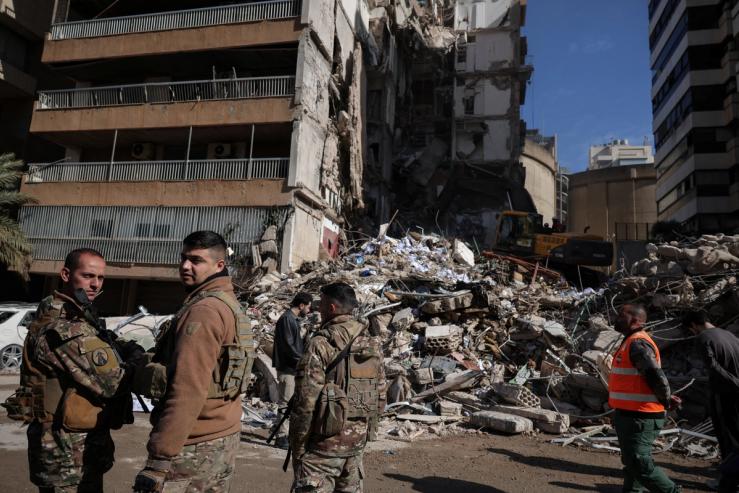
Yesterday’s ceasefire began with moments of relief in the Gulf, followed by another round of Iranian missile and drone strikes on the region, with the Strait of Hormuz still largely shut. In Lebanon, Wednesday was one of the deadliest days the country has seen, as Israel flattened buildings in Beirut and other cities, killing more than 250 people in strikes it said targeted Hezbollah militants.
Ceasefires are rarely clean, but this one seems more fraught than most — a reminder that this war now involves almost a dozen countries, not just Iran, Israel, and the US. Observer Research Foundation-Middle East’s Mahdi Ghuloom writes that Gulf interests were barely considered in the agreement, and several governments in the region are pushing back against Iran’s proposal to maintain control over which ships can pass through Hormuz.
Sultan Al Jaber, ADNOC’s Group CEO and the UAE’s minister of industry and advanced technology, said: “Conditional passage is not passage. It is control by another name.” He added that the strait can’t be weaponized because the consequences are global; this week, the reality of disrupted physical oil flows will begin to catch up with paper markets.
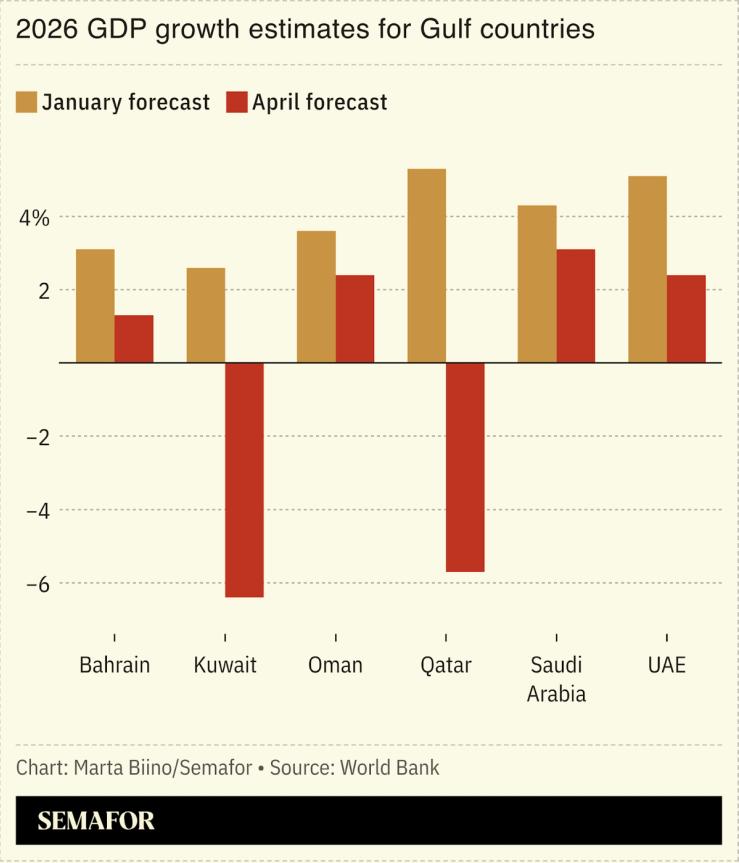
For Gulf economies, six weeks of war have reversed what was supposed to be a banner year. While Goldman Sachs expects oil to average more than $100 a barrel in 2026 if Hormuz stays closed for another month, not every Gulf state benefits. Oman’s exports are unrestricted and Saudi Arabia and the UAE can still move some of their crude, but others can’t, and all are suffering from slower growth and weaker tourism. The World Bank adjusted its forecasts and now expects Gulf growth to slow to 1.3% this year, from 4.4% in 2025, while Gulf officials estimate tourism losses of as much as $32 billion.
All eyes are on the talks this weekend in Islamabad, with the rhetoric from both sides remaining sharp. US President Donald Trump said US forces will stay in place and more weapons and troops are being sent. “Our great Military is Loading Up and Resting, looking forward, actually, to its next Conquest,” he posted.

Notable
- Gulf states are concerned that they will have to contend with an emboldened Iran that retains control of the Strait of Hormuz, writes Yaroslav Trofimov in The Wall Street Journal.