


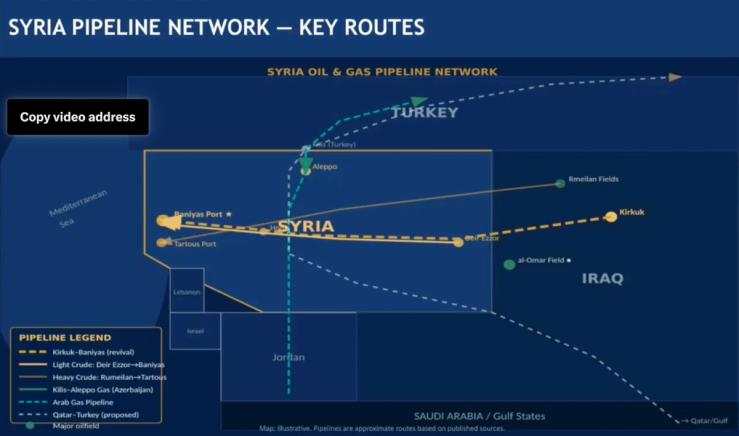
For decades, Iran’s threats to close the Strait of Hormuz if attacked were largely ignored. Saudi Arabia and the UAE invested years ago in pipelines that allow part of their crude exports to bypass the chokepoint, but Bahrain, Kuwait, and Qatar remained trapped by geography. Now there is momentum behind new rail links and pipelines, though neither offers a quick fix. Saudi Arabia launched a 1,700-kilometer rail logistics corridor linking Dammam and Jubail ports to Jordan. The route can carry trains with more than 400 containers each, part of a broader effort to redirect trade north.
Longer term, shifting trade routes for oil, gas, and other commodities will require pipelines. Tom Barrack, the US ambassador to Türkiye, said regional rivalries and security threats have long prevented cross-border energy pipelines. But in a presentation in Washington last week, he argued those obstacles could be overcome with a network through Syria, which is no longer under Iranian control. Even Israeli Prime Minister Benjamin Netanyahu wants a piece of the action, although an Israeli route may be unpalatable to many countries in the region that blame Israel for helping spark the war.