




Matthew’s view
Anyone hoping that US President Donald Trump’s appearance at a Saudi-backed event in Miami would illuminate the path forward for the US and Israel’s war with Iran left disappointed. Saudi officials had little to say about how the kingdom was coping with the impact of the conflict. The takeaway of the event was instead to demonstrate how intertwined both countries remain.
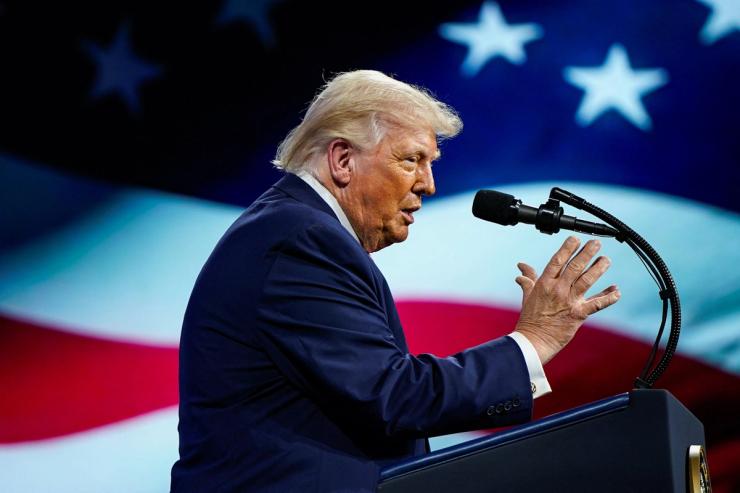
Trump’s speech was at times entertaining, rambling, repetitive, and combative. It did not contain much new information on the Iran war, and offered a little something for everyone from the hawks (“America is ending the threat posed by this radical regime”) to the TACO traders (“we’re negotiating now and be great if we could do something”).
Saudi officials equally didn’t offer up much new information on how the biggest conflict in the region in decades, and the consequent closure of vital oil and shipping routes, was impacting the kingdom’s economy.
The governor of the country’s nearly $1 trillion sovereign fund and the chairman of its oil company both barely acknowledged the war, beyond a brief mention that the kingdom’s economy was “strong, stable, and resilient” and the fund’s portfolio was diversified. That’s despite the Public Investment Fund also boasting that it had invested over $170 billion into the US in the past nine years. Outside Saudi Arabia, the US is by far the biggest bet the PIF has made.
Many of the plans to diversify the Saudi economy need some combination of US partnership, technology, and goods: The kingdom’s nascent new airline and its autos cluster rely heavily on American firms; ambitions to become an AI hub need US expertise, semiconductors, and customers.
Saudi Arabia is also proving its usefulness as a US ally. The kingdom’s investment more than 40 years ago in a pipeline to move its oil away from the Strait of Hormuz is only now paying off, both economically and strategically. Without it, oil prices would be much higher, and pressure on the US to reopen the strait either diplomatically or by force would be even greater.
No one left Miami any wiser about how the Iran war will unfold, or what its consequences would be, but there was little doubt that Saudi Arabia still sees the US as its most important global partner.

Notable
- At FII, President Donald Trump also claimed he “saved” the Middle East from Iran, and said Saudi Arabia should join the Abraham Accords.