




The News
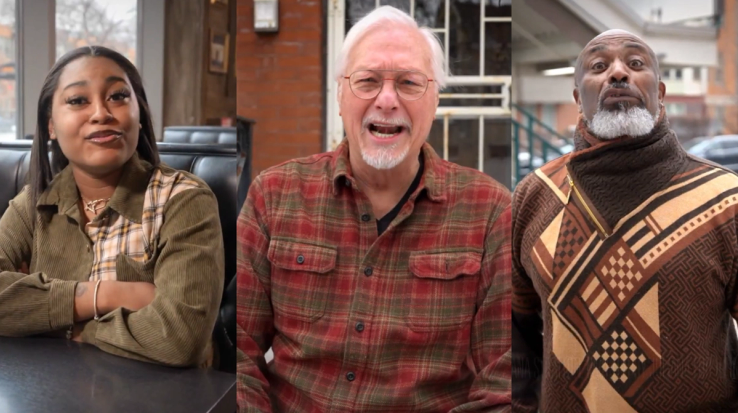
The first ad for Illinois Lt. Gov. Juliana Stratton’s Senate campaign couldn’t be played in full on TV. “They Said It” began with one Chicagoan saying “F— Trump,” then another, then four more — including Democratic Sen. Tammy Duckworth.
Stratton didn’t say the four-letter word herself, appearing instead next to Gov. JB Pritzker and promising to “abolish ICE.”
The ad was meant to get voters and reporters talking, and it worked. Stratton defended it in a TV debate (a moderator wondered what “happened to when they go low, we go high”) and got free earned media after being outspent on TV all year. (Online, the f-bomb was not bleeped.) We talked to Adam Magnus of MPWR Media Strategies, who produced the ad, about how the first truly memorable spot of the midterms came together.
“Four words repeated over and over again was an attempt to lay the breadcrumbs and give people an outlet, which many these days don’t think they have, for how to make things a little bit better,” he said.
This conversation has been edited for length and clarity.
In this article:

The View From ADAM MAGNUS
Where did the four-word, four-letter line come from?
We’d been throwing around that slogan since last year, maybe October. It came from driving around the state and talking to people. I can’t tell you how many times that exact phrase, “F— Trump,” showed up on T-shirts and bumper stickers. I’d be interviewing a voter for an ad, about Trump, and they’d say it. If you’re a Democrat, you can’t begin to explain all the ways that your life is being impacted, so you go with the emotional response.
The wording was our way of capturing voter sentiment. Our opponent had been on air for eight and a half months before we were about to go up for the first time. How are you going to break through quickly? There is this large, empty lane for where the energy is in the Democratic Party.
No one had heard Juliana speak, so we wrote a “F— Trump” ad that was true to our candidate, who’s a deeply energetic and progressive person. In the first 24 hours after we put it up, 1.5 million people viewed it.
Did you expect the skeptical question about it right away, in the debate?
She gave a great answer defending it. The debate was actually covered through the lens of the ad. It very quickly allowed Juliana to claim the “fighter” lane. Who’s going to take on Trump in a more aggressive way? Our opponent was not perceived as very aggressive. We had an opening. I believe that the “fighter lane” in the Democratic primary right now is the largest voting bloc available.
How did you find a half-dozen voters who were comfortable saying this on camera?
We found 11 people to pick from, and we were careful. Sometimes you recruit people, and it hasn’t been explained to them exactly whether they’re going to be saying positive things or negative things in the ad. We told them: You have to be willing to say “F— Trump,” on camera. They knew what to do, and it was interesting to see how they loosened up.
At first, some of the people were a little shy or demure. Then they got going. One woman finished and said: That was the most cathartic thing I’ve done in months. It was almost like a cleansing exercise for people. The guy in the ad who’s sitting on a stoop? He didn’t want to stop. He just kept going: F— Trump, f— Trump!
So did Sen. Duckworth tell you, “Yes, I want to say this,” or did someone have to sell her on it?
She was made aware of the concept and had no problem saying it. Juliana and the governor don’t. It was agreed that the most effective ending to the ad was them not quite doing it. That was part of the gimmick.
I wouldn’t be surprised to see other candidates try this approach, or something like it, but I don’t think it works for everyone. I think it takes the right election, the right tone, and it has to be for someone who really embodies the line. If it feels forced, then people can see through it. Remember, this went right up after what happened with ICE in Minnesota. This was a perfect confluence of what voters were feeling at the time, about that issue and about the race.
What’s your take on the criticism the ad did get? In the debate, again, it was framed as a retreat from the positive “we go high” line from Michelle Obama.
Most of the people who were filmed for that ad? My guess is, if you could press rewind on their lives to 2016, they wouldn’t have felt comfortable saying ‘F–k Trump’ on camera.
But people have gone through something that is hard to explain. The way to talk to them should change at times, too. And that’s what the ad was. It shouldn’t be judged through a lens of how Democrats talked in 2016.

Notable
- Josh Barro asks where an “adolescent” mood among the Democrats is taking them. “Donald Trump has set off a race to the bottom that has made other elected officials — Democrats and other Republicans alike — wonder why they should have to think about policy like grown-ups when he clearly has no intention of doing so.”