




The News
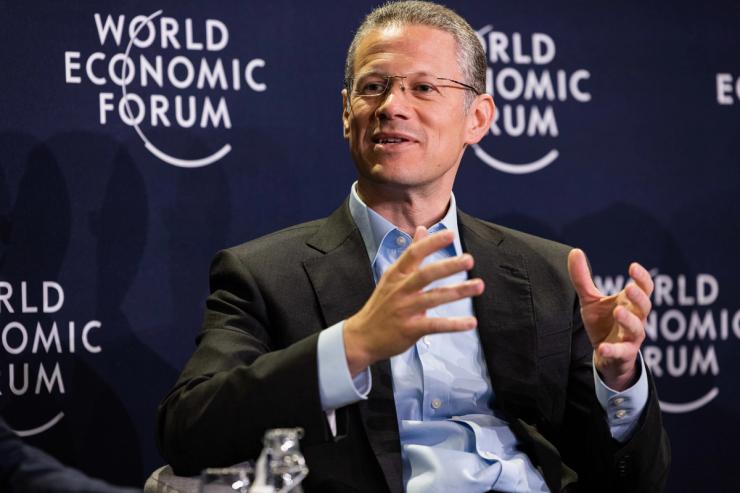
Badr Jafar — special envoy for business and philanthropy to the UAE’s minister of foreign affairs, and CEO of Sharjah-based conglomerate Crescent Enterprises — is fielding a flood of questions from investors with skin in the game. But it’s not the ones you might expect. “The question I am hearing from global investors is not ‘Should we leave?’ It is ‘How do we position for the recovery?’ That is a fundamentally different conversation,” he told Semafor.
Jafar points to the UAE’s track record and its ability so far to blunt Iran’s relentless attacks as evidence that the more pessimistic narrative — that the region is fundamentally exposed — is misguided. Betting against the UAE, he argues, means betting against the “most connected commercial platform between Europe and Asia, backed by the largest concentration of sovereign capital on earth.”
The mood in Dubai reflects that resilience, Jafar said. At a recent charity event, hundreds of millions of dollars were raised for malnourished children worldwide, in an act of “resilience [that] cannot be manufactured. And it cannot be bombed away.” (Jafar is an investor in Semafor.)

Q&A
Mohammed Sergie: What is the wrong question businesses are asking about the UAE right now, and what is the right one?
Badr Jafar: The question being asked in most boardrooms is: “Is the UAE still safe?” That is the wrong question. The right question is: “What happens to the global economy if the UAE’s role in it is diminished?”
The distinction matters enormously. The first question treats the UAE as a lifestyle destination for expatriates and a parking lot for sovereign capital. The second recognizes what the past five decades have actually built: A set of cities that now function as irreplaceable connective tissue for global commerce.
Jebel Ali port doesn’t serve Dubai. It serves six continents, handling more than 20 million containers a year, connecting to more than 180 ports worldwide. Emirates airline isn’t a carrier. It is critical global infrastructure — connecting more than 150 destinations across more than 80 countries. When those systems went offline for even a day, the disruption was felt from Mumbai to Munich. That alone should tell you something about what is at stake.
There are two camps in the commentary right now, and both are wrong. The pessimists say the dream is over: The UAE was always a mirage, and now the desert wind has arrived. The optimists insist nothing has changed and business as usual will resume shortly. Both are missing the more important question — not whether the UAE survives this crisis, but how central it becomes on the other side of it. The relevant precedent is not the 1990 invasion of Kuwait. It is the rebuilding of every global city that has absorbed a shock and emerged more essential than before.
What should investors in the UAE be concerned about, and how is the UAE dealing with these threats?
Serious investors should be honest about what is real. The tourism hit across the Gulf is significant — an estimated $600 million a day in lost visitor spending across the region. The Strait of Hormuz disruption is severe. Flight cancellations numbered in the thousands. Stock markets suspended trading for a few days. In the UAE, eight people have been killed, each of them a resident who called this country home. None of this is trivial, and anyone who tells you otherwise is not being straight with you.
But the picture that gets less attention — and deserves more — is this: The UAE’s air defences have intercepted more than 90% of all incoming threats. Critical infrastructure — power, water, health care, digital systems — has continued to function without disruption. Not a single major multinational has announced a withdrawal. BlackRock and Brookfield, among many others, have publicly reaffirmed their commitments.
The UAE is not responding to this crisis with improvisation. It is deploying the institutional depth it has spent 50 years building. The same long-term planning that diversified the economy — non-oil activities now account for more than 77% of GDP — also ensured that critical logistics, energy, and trade systems were built with strategic redundancy. That foresight is not an accident. It is being validated, in real time, under conditions that no economic simulation could have replicated. The countries that invested in resilience are the ones that will emerge from this more essential, not less. That is how infrastructure shocks work: They reward the prepared.
Are the UAE’s economic foundations solid enough to help it emerge from this crisis with its global network model intact?
The foundations are not just solid — they were specifically designed for this kind of stress test. The UAE’s sovereign wealth funds hold more than $2 trillion in assets, roughly four times GDP — a fiscal buffer most G7 governments would envy. The regulatory and trade architecture that has attracted a record $45 billion in FDI in 2025 — the country ranks among the top ten globally for FDI inflows — has not changed.
Thirty-five Comprehensive Economic Partnership Agreements now span markets from India and Kenya to the Eurasian Economic Union. Dubai International Airport served more than 90 million passengers in 2025 — the highest of any airport in the world for international traffic. These are not optional amenities. They are embedded infrastructure for which the world has no easy substitute.
The broader economic picture matters too. The UAE’s GDP has grown from $40 billion in 1980 to more than $500 billion today — through the Iran-Iraq war, the Iraqi invasion of Kuwait, the 1998 oil-price collapse, the global financial crisis, the Arab Spring, and a global pandemic. That history is directly relevant to this moment: The tanker war of the 1980s brought violence to the Strait of Hormuz, attacks on energy infrastructure, and threats to Gulf shipping — and the UAE emerged from it more connected and more indispensable than before. Each subsequent crisis produced breathless predictions. Each time, the UAE absorbed the shock, adapted, and accelerated. That pattern is not coincidence. It is the product of deliberate structural choices, and those choices are more deeply embedded today than at any previous moment of stress.
The global economy is entering a period of structural realignment. Supply chains are being rethought. Capital is looking for nodes that are not just profitable but durable. The cities and systems that prove they can absorb a shock of this magnitude and keep functioning will become more central to global commerce, not less. History is unambiguous on this point.
As the UAE’s special envoy for business and philanthropy, what conversations are you having with global investors and business leaders right now?
I have spent the past two weeks in direct contact with multinationals, investors, and business leaders across every sector. The conversations are sober. Nobody is pretending the situation is comfortable. But the question I am hearing is not “Should we leave?” It is “How do we position for the recovery?” That is a fundamentally different conversation, and it tells you something important about how serious, long-term capital is reading this crisis.
These are investors who understand that the UAE’s role in the global economy is now too embedded to unwind. They understand that the emirate sitting at the intersection of Europe, Asia, and Africa — handling a fifth of global re-exports, providing financial services to markets that have no comparable alternative in the region — does not become irrelevant because of a military confrontation it neither sought nor provoked.
What I tell them is the same thing I would say publicly: The investment thesis for the UAE does not rest on the absence of risk. No honest pitch for anywhere makes that promise. It rests on a demonstrated history of resilience, a uniquely diversified economic base, and a set of physical and financial connective assets that serve not just the Gulf but Asia, Africa, and Europe alike. That thesis has not changed. If anything, the stress test has clarified it.
Why do you think it’s foolish to bet against the UAE?
Because the bet against the UAE right now is not a bet against a country recovering from a crisis. It is a bet against the single most connected commercial platform between Europe and Asia, backed by the largest concentration of sovereign capital on earth, governed by institutions that have spent 50 years preparing for exactly this kind of test. That is not a bet I would take.
But I want to close with something that no balance sheet can capture, because it speaks to a quality of resilience that is harder to model than GDP and more durable than any fiscal buffer.
On the evening of March 7 — as air defense alerts were still sounding across Dubai — I had the honour of co-hosting a major fundraising event held at the Burj Khalifa. The occasion was the 11.5: Edge of Life campaign, launched this Ramadan by His Highness Sheikh Mohammed bin Rashid Al Maktoum, Prime Minister of the UAE and Ruler of Dubai, to combat childhood malnutrition worldwide. The philanthropists, business leaders, and representatives of international foundations who had gathered showed up in force. And they gave. By the end of the evening, pledges exceeding $300 million had been secured. It is, to my knowledge, the largest sum ever raised for humanitarian causes at a single fundraising event.
I mention this not as a public relations exercise. I mention it because a community that responds to missiles by raising hundreds of millions of dollars for malnourished children on other continents is a community whose values are not contingent on circumstances. That kind of resilience cannot be manufactured. And it cannot be bombed away.

Notable
- Dubai has become a platform, “less a rooted place with people and history than a blank slate for the exchange of capital,” a characteristic that could make it more vulnerable to a potential exodus, Richard Florida, a University of Toronto professor, writes for The New York Times.