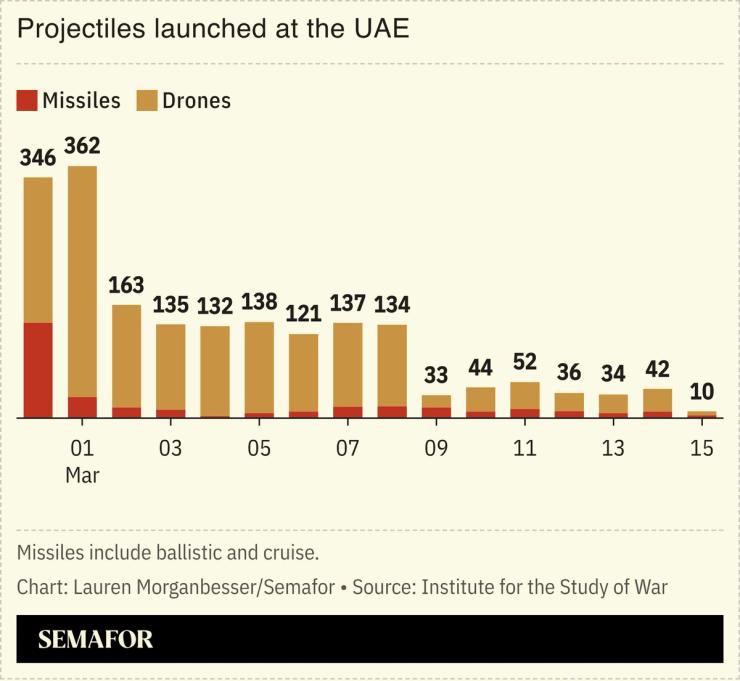
Gulf countries’ security tie-ins with the US — from hosting American bases to huge hardware purchases and bilateral defense treaties — have been more of a liability than a source of protection over the course of the war.
With Tehran targeting Gulf states because of those links, some regional leaders are beginning to consider how to reduce their exposure to the US. This process has been happening for some time — Gulf states have been building up security ties with China for years — but it may now accelerate. They are likely to have to do more for themselves, too. Despite years of heavy defense spending, Gulf armed forces are underpowered in relation to the threats they face. It is notable that US President Donald Trump’s call for help to reopen the Strait of Hormuz was directed at Asian and European powers, not regional ones.
There is no sign of a fundamental rupture, though, with Oman’s foreign minister — who has been the most vocal in the critique of the region’s US-led security architecture — saying many parties are “betting that aligning with the United States may lead Washington to reconsider some of its decisions.”