




Mohammed’s view
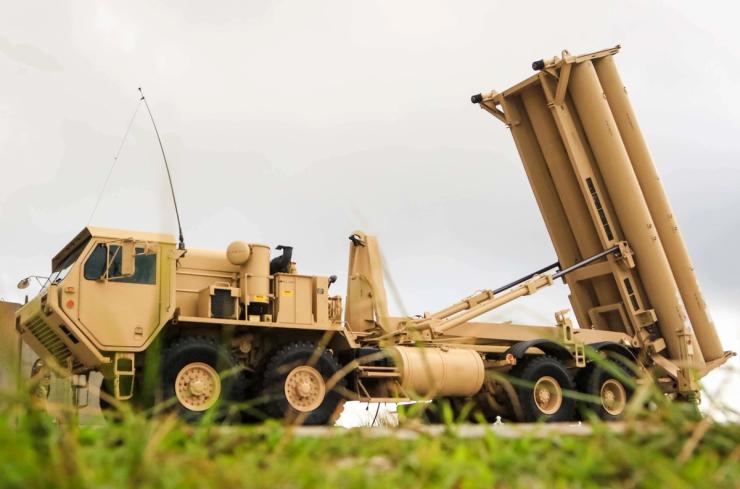
The UAE is bearing the brunt of the US-Israel-Iran war among the bystanders, withstanding more than 700 missile and drone strikes since Saturday. Casualties and physical damage have been remarkably limited, thanks to extensive air defense systems. Here in a Dubai suburb, as I write this, these systems are in action, with loud booms punctuating the day.
Each interception costs more than $1 million. “For every $1 Iran spent on drones, the UAE spent roughly $20-28 shooting them down,” according to Kelly Grieco, senior fellow at Washington’s Stimson Center. So if the war drags on and Iran increasingly targets critical infrastructure — as it did in today’s strikes in Qatar and Saudi Arabia — the cost of defense, and Gulf leaders’ willingness to stomach this affront to their countries, may alter their calculus. Attacks on desalination or power plants would be catastrophic, making the region effectively uninhabitable.
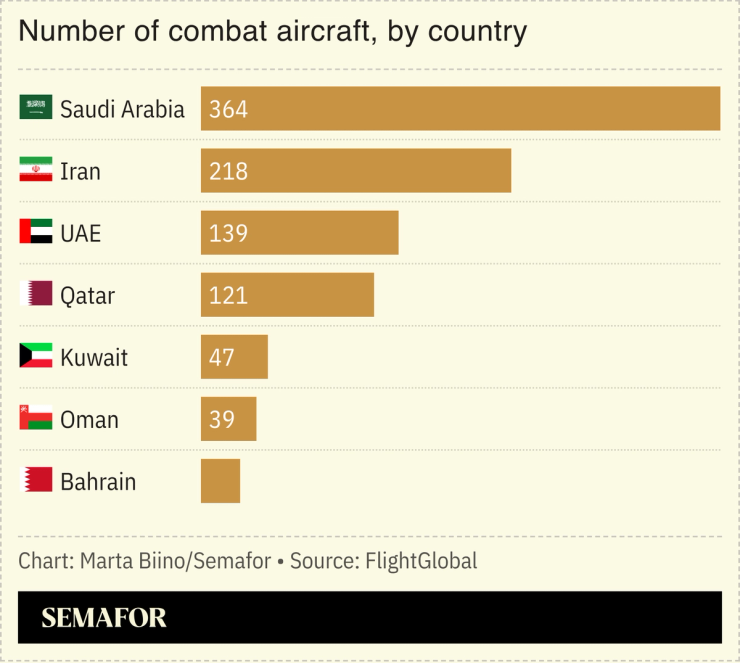
What Gulf states can bring to the fight has long been clear. This is not 1991. Kuwait, Qatar, Saudi Arabia, and the UAE each spend more than 5% of GDP on defense and operate some of the world’s most advanced combat air fleets. At some point, deterrence could shift from absorbing blows to delivering them, adding another layer of escalation to a complex war without a clear end game.
Expats in the region — as my colleague Manal Albarakati reports — appreciate Gulf states’ efforts to keep them safe. Goodwill and confidence are critical. When this war ends, the Gulf will return to what it does best: economic development. But that depends on maintaining security to be able to attract global capital and foreign talent.

Notable
- Iran likely hoped that striking the Gulf would compel de-escalation. Instead, Gulf states are increasingly leaning toward the US-Israeli position that Tehran must be stripped of its offensive weapons that threaten the region, writes The Wall Street Journal’s Yaroslav Trofimov.